Affiliate links on Android Authority may earn us a commission. Learn more.
I’ve spent the last decade and a half dual-wielding an Android smartphone alongside the latest iPhone. As an enthusiast, I like trying different hardware, switching up how my phone works, and, especially, having control over the software experience. It goes without saying that I’ve dipped my toes in the foldable market as well, first with the excellent OnePlus Open and next with the somewhat lackluster Pixel Fold. Much as I’m excited about the prospect of getting another foldable phone, there have been a number of sidegrades in the category that have brought me back to my candy-bar flagship.
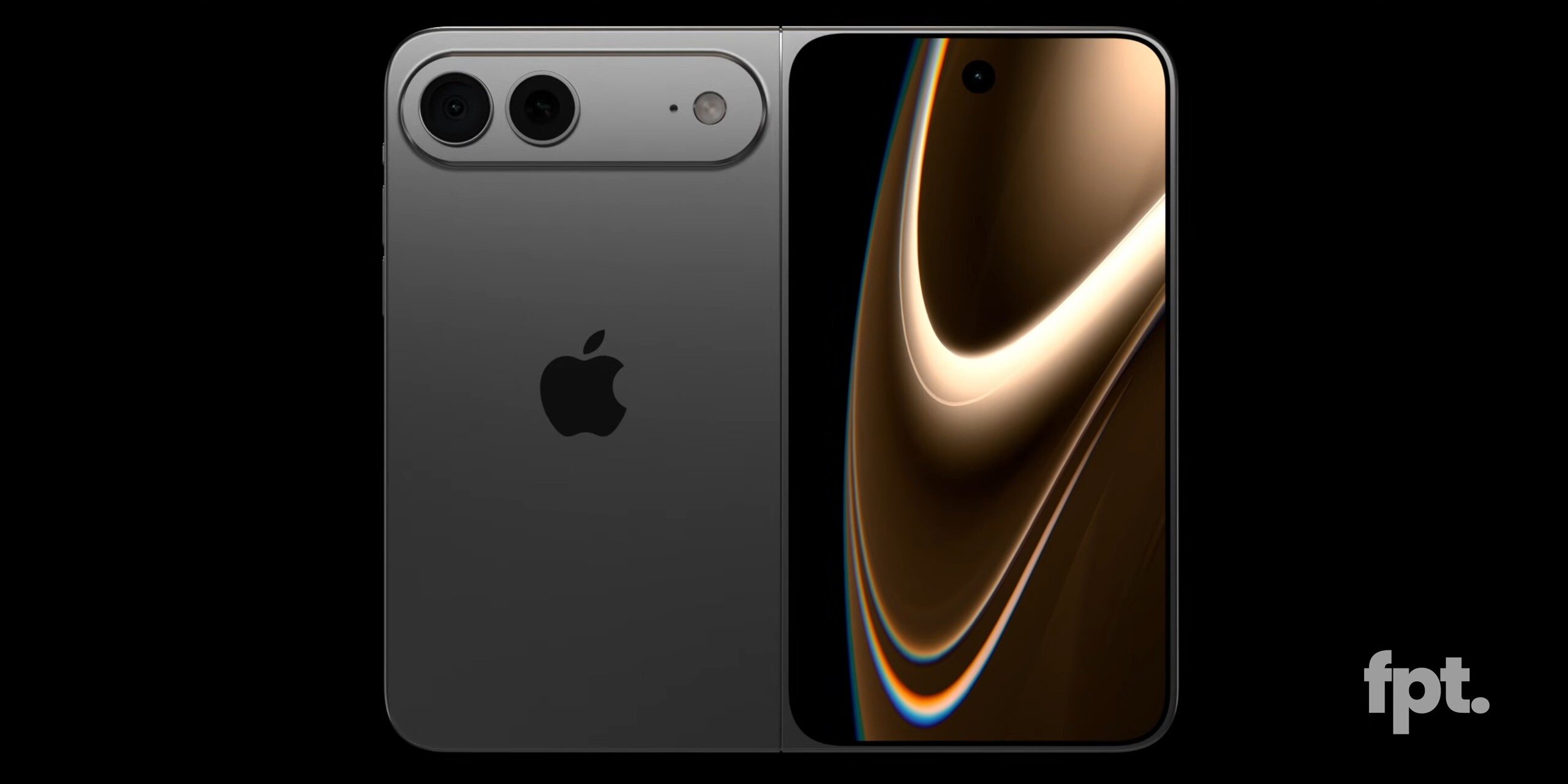
But with rumors building around Apple’s first foldable iPhone, I have to admit I’m more than intrigued. Apple has a history of waiting for a product category to mature before jumping in. If the rumored iPhone Ultra is finally Apple’s answer to foldable phones, it could have a big impact on the market. More importantly, it could change what we expect from a phone that doubles as a tablet.
My hopes for Apple aren’t that it’ll copy Samsung, Google, and others. Instead, I want it to bring its own spin to the category and fix some of the biggest problems with foldables today. If Apple can get these five things right, I might finally swap my SIM card full-time from my Pixel 11 Pro to what may truly be the iPhone Ultra.
If I am spending top dollar on a foldable phone, I do not want to see a giant crease running down the middle of the screen every time I open it. I’m aware of the enormous technical challenges here, and to be fair, Android foldables have come a long way in minimizing the crease. Between improved hinge designs and advances to the actual folding displays, creases on newer foldables are far less obvious than they used to be. But they are still there. I can see them in bright lights and feel them under my finger. And you definitely can’t miss them while watching a movie.
I have high hopes that Apple will make strides toward solving this problem. Part of that solution could be dual ultra-thin glass that sandwiches the OLED panel between two layers of flexible glass. Rumors have been swirling that this is part of Apple’s magical plan to make the crease disappear. We’ll see.
But it goes without saying that this is one area where Apple could really make an impact. Apple usually takes its time with new hardware categories, and one reason for that is its focus on getting the details right. If the iPhone Ultra opens up to a genuinely flat display with little to no visible crease, it would immediately stand out.
Productivity is one of the biggest reasons I like large foldable phones. Once you have a large internal display, you can do things that simply aren’t practical on a regular phone.
I can have a browser open next to my notes, keep a messaging app in a floating window, or drag information from one app to another – you get the idea. It’s this promise of computer-like flexibility that makes the idea of a foldable feel more like a tiny computer than an oversized phone.
That is why I would be disappointed if Apple’s solution was simply a basic split-screen mode. I’m hoping that Apple’s recent moves to incorporate flexible windowing and floating windows in iPadOS were experiments to see how they would work on a folding iPhone. In my book, having that level of free-form multitasking is going to be an essential for the iPhone Ultra.
I want to be able to resize windows, move them around, keep multiple apps open, and quickly switch between different tasks. If I am researching something, I should be able to keep my browser, notes, and a document visible at the same time.
A foldable gives Apple a huge canvas to work with, and I want the software to take full advantage of it.
This is probably the biggest deal-breaker for me. One of the biggest compromises with Android foldables is their cameras. Almost all manufacturers have had to make compromises to the camera setup to fit within the foldable’s dimensions. That usually means smaller sensors, less capable telephoto cameras, or an overall camera system that is a step below the company’s regular flagship.
I take a lot of photos with my phone, so I am not keen on making that trade-off. I want a large primary sensor, excellent low-light performance, and a proper periscope telephoto camera with good reach. I admit, it’s a long shot that Apple will be able to plop the iPhone 18 Pro’s camera setup into its folding iPhone. But I’m still hoping that the company manages to pull a minor miracle here and give users a true-blue Ultra smartphone complete with flagship cameras.
Apple has spent years building its reputation around smartphone photography and video. It would make little sense to compromise that experience just to make the foldable a little thinner.
Steve Jobs famously criticized the stylus in 2010, but Apple came around to it with the Apple Pencil for the iPad lineup. Now, I’m not expecting a built-in stylus in the upcoming foldable, but support for the Apple Pencil would seal the deal for me.
Once you unfold a phone and reveal a display roughly the size of a small tablet, it becomes immediately obvious that you should be able to draw or take notes on it. After all, it’s really just an iPad mini folded down.
Samsung used to offer stylus support on its foldables, so it’s not as if the feature isn’t achievable. If it means adding an extra millimeter to the phone’s dimensions, that’s an absolutely fair compromise in my book. Apple already has a strong Apple Pencil ecosystem on the iPad and especially the iPad mini, so it has most of the pieces in place.
Being able to mark up a PDF, sign a document, jot down a quick idea, or make a sketch on the unfolded screen would make the iPhone Ultra much more useful and give it an actual use case for a lot of productivity enthusiasts. Well, beyond watching videos and running two apps at once.
Circling back to the screen, the other big issue I’ve had with foldable displays is their reflectivity. Years ago, the OnePlus Open solved the issue with a matte screen protector, and I’m hoping Apple can come up with a better solution for the same problem. Moreover, it is well-positioned to do so.
Apple’s pricey nano-texture displays are specifically designed to reduce reflections without making the screen look hazy. If Apple can bring similar technology to the inner display of a foldable, it could be an absolute game-changer.
Imagine opening the iPhone Ultra outdoors and comfortably reading an article without constantly adjusting the viewing angle. Or sitting under bright office lights without seeing your own reflection across the entire screen. That possibility sounds enticing to me even if Apple decides to charge a small premium for an optional upgrade.
It might sound like a small feature, but it is exactly the kind of thing that could elevate Apple’s foldable and make it feel much more polished in everyday use.
Look, I’m already pretty intrigued by the possibilities surrounding an Apple foldable. I have an entire ecosystem of iPad apps that would be right at home on an iPad mini that fits in my pocket. But for the nosebleed prices Apple is expected to command, it’s fair to expect more than just a folding iPhone. That is why Apple cannot win me over simply by making an iPhone that folds.
The iPhone Ultra needs to be better than today’s foldables in the areas that matter most. I want a genuinely crease-free display, proper multitasking, flagship-level cameras, Apple Pencil support, and an inner screen that does not turn into a mirror under bright light.
None of these features are impossible. The technology already exists in some form. The challenge is integrating everything together without making the phone too thick, heavy, or expensive. And if Apple wants to make a splash with its next foldable, some, if not all, of these features would go a long way in doing so.
Thank you for being part of our community. Read our Comment Policy before posting.