
Affiliate links on Android Authority may earn us a commission. Learn more.
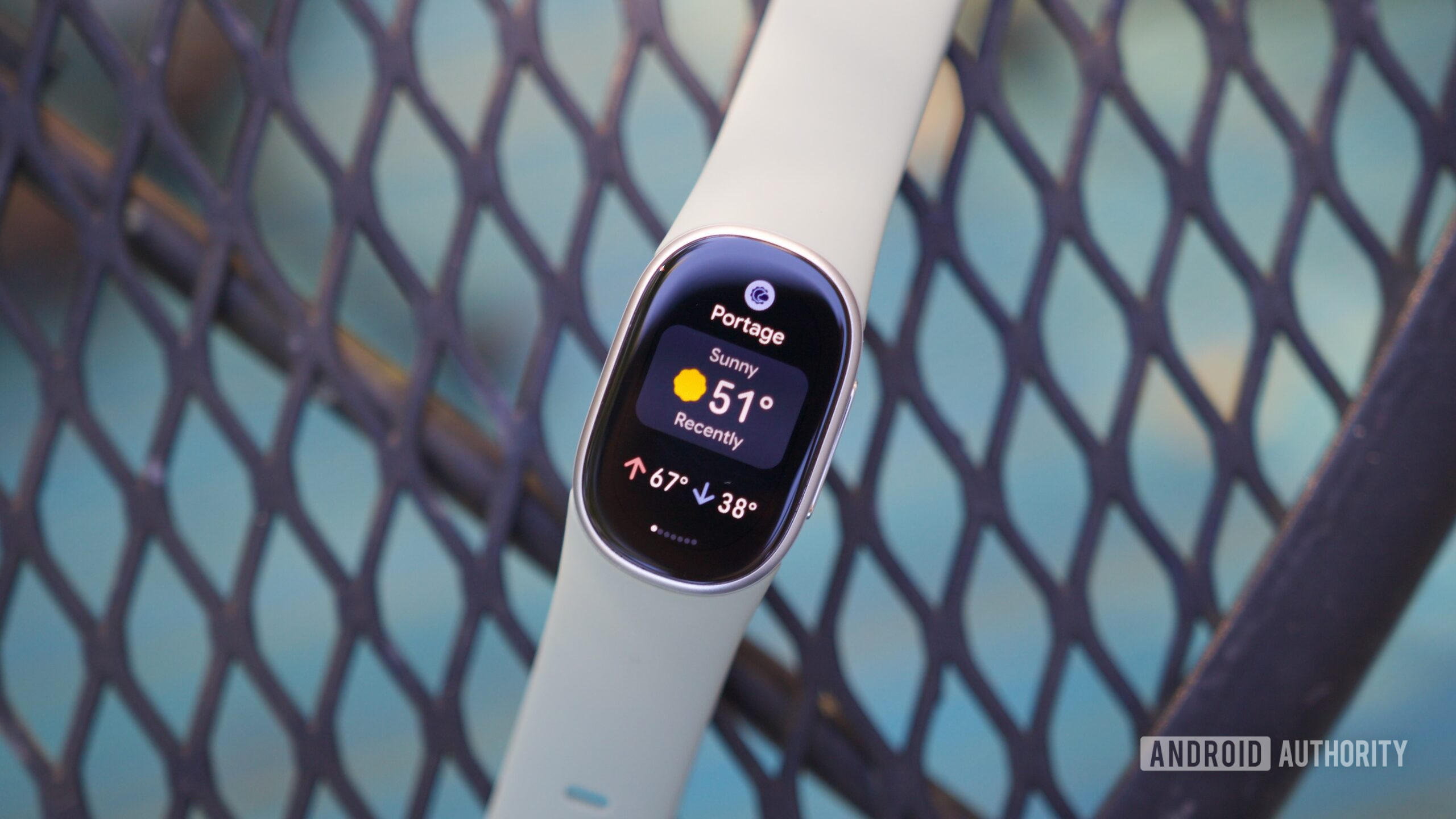
The Fitbit Edge was announced earlier this month and is only days away from hitting store shelves. The new wearable builds on the success of the Fitbit Air. The Edge offers largely the same tracking experience as you’d get with the Air, but pairs it with an interactive AMOLED display.
As tempting as the Fitbit Edge is, it’s far from the only option out there. If you are looking for Fitbit Edge alternatives, here are five devices worth another look.
The Fitbit Edge is an excellent device if you want more than ultra-basic fitness tracking but don’t necessarily need deeper app support and more robust smart features. If you wish the Edge had a few more apps or features, your best bet might be to upgrade to a smartwatch.
The Google Pixel Watch 5 is a natural alternative to the Fitbit Edge. Team Google builds both, and many of the fitness features onboard will look similar. The big difference is you get the full Android Wear experience, including third-party apps, microphone and speaker capabilities, and the full power of Google Gemini. The larger display on the Pixel Watch 5 is also much easier to navigate. You’ll even get several additional sensors, including NFC for digital payments through Google Wallet.
Of course, nothing is perfect. The Pixel Watch 5 isn’t going to compete with the Edge’s 7-day battery life and, unlike Fitbit, it doesn’t have iOS support. It’s also quite a bit more expensive at around $399, which is a lot harder to swallow than the Edge’s $180 asking price.
While the Fitbit Edge is getting a fair amount of attention, it was the Fitbit Air that kicked off this newer Fitbit generation. Google decided the world wanted powerful fitness features in a cheaper, no-frills package, and it’s a formula that has actually worked out quite well for the company.
The two devices are actually quite similar when it comes to tracking fitness data, though the Edge adds an ambient light sensor to the mix. Even the battery life is almost identical, with up to seven days on the Edge as long as the always-on display feature is turned off.
What really sets these two fitness trackers apart is the display, or the lack of one in the case of the Fitbit Air. The result is a very small and lightweight band that works well but requires an app to actually examine the data. If you don’t care about using the Edge as a timepiece and don’t mind having to pull out your phone regularly, you’ll save around $80 here.
The Samsung Galaxy Fit 3 is a highly affordable fitness tracker with a price tag of around $70. Samsung’s budget darling not only has a 1.6-inch AMOLED display and battery life of up to two weeks, but it even manages to price itself lower than Fitbit’s screenless Air model.
As you might guess, the Galaxy Fit 3 makes cuts elsewhere in order to achieve rock-bottom pricing. It offers heart rate monitoring, SpO2, sleep tracking, and other basics, but it also cuts out a few key features like continuous heart rate monitoring, skin temperature, and ECG.
The Fit 3 might not have quite as many advanced fitness features, but that’s not necessarily a bad thing. Some people want high-end sensors but don’t care about a display, while others want the whole package. Fitbit covers these two scenarios well between its Air and Edge models, but what about folks who only care about more basic fitness tracking features but would like basic notifications, the ability to view data from their wrist, and a screen that also lets it double as a timepiece? That’s exactly the space the Galaxy Fit 3 occupies.
Some people want the benefit of fitness tracking without necessarily wearing a device that stands out like a sore thumb. If you’re looking for something that blends in seamlessly and is barely noticeable, the Oura Ring 5 could be worth a further look.
Like the Fitbit Air, there’s obviously no display here, but what really makes the Oura Ring 5 stand out is its design, materials, sizing, and weight. Finally, a smart ring that actually looks like real jewelry.
It doesn’t just look good; it’s also capable of handling basic fitness tracking features and yet still manages around 6 to 9 days of battery life. Just be aware that it doesn’t go nearly as deep down the fitness road as other options on this list, but it makes up for it by providing arguably one of the best sleep tracking experiences on the market.
The Oura Ring 5 is great if you want something less intrusive on your body, but be aware that it is also more expensive at $399, with a $5.99 subscription required if you want to make the most of the device.
The Fitbit Charge 6 might be a few years old now, but it’s still one of the most obvious alternatives to the Fitbit Edge. The two trackers have a lot in common, including many of the same basic fitness sensors.
The Edge pulls ahead by offering a few extras like blood pressure trend reports and loss of pulse detection. Likewise, its display is bigger, brighter, and a bit easier to interact with. Battery life is pretty comparable across the two trackers, though the Edge has a slight advantage that might translate to an extra day of battery life.
If I’m honest, the Edge is a more powerful, comfortable, and lighter device. The good news is that these advantages are small enough that the Charge 6 is still a great value. Not only can you find it on places like Amazon for around $135 (about $25 lower than MSRP), but it also supports digital payments. This is a major difference, as the Edge removed NFC altogether.