Trump Mobile apparently failed to obtain necessary authorizations to operate the international calling portion of its phone service, Sen. Maggie Hassan (D-N.H.) wrote in a letter to the company today.
Her letter said Trump Mobile also doesn’t appear to have submitted a required plan for fighting robocalls. Trump Mobile’s key business partner, Liberty Mobile Wireless, did make a robocall database filing, but it was not complete, Hassan said.
Hassan’s letter raised questions about Trump Mobile’s security related to a report that hackers stole personal data of 3,615 customers and Trump Mobile’s previous confirmation that a vendor it uses exposed customers’ personal data on the Internet. Hassan alleged that Trump Mobile failed to follow multiple FCC filing rules that are supposed to help ensure the security of mobile services.
“The apparent absence of authorization for Trump Mobile international services raises questions about who is providing or reselling the international telecommunications services advertised by Trump Mobile, the authority under which those services are being provided, and the company’s commitment to complying with requirements designed to safeguard national security,” Hassan told Trump Mobile CEO Patrick O’Brien.
Referring to the recent data breach, Hassan said it’s worrisome that a ransomware group “claimed that when it notified Trump Mobile of the breach, the company responded that ‘[w]e have no team to handle this.’” Trump Mobile also seems to lack a robust customer authentication process and offers “streamlined service activation that can make it easier for scammers to obtain US numbers,” Hassan wrote.
Trump Mobile, which has a trademark and name licensing deal with the Trump family, advertises that its customers can call more than 230 countries and territories. “Yet a search of the FCC’s International Communications Filing System suggests that Trump Mobile does not hold the necessary authorization for these services under Section 214 of the Communications Act of 1934,” wrote Hassan, the top Democrat on the US Congress Joint Economic Committee.
Hassan said the authorization process requires disclosure of foreign ownership so the FCC can assess potential national security risks. These FCC filings are required both for carriers that operate their own networks and Mobile Virtual Network Operators (MVNOs) like Trump Mobile, which resell other carriers’ mobile service, Hassan’s letter said.
Hassan’s letter cited a 2012 ruling against a different carrier, in which the FCC said “international telecommunications carriers that fail to obtain Section 214 authority may endanger important public interest considerations involving national security, law enforcement, foreign policy and trade policy.” She also cited the 2021 revocation of China Telecom Americas’ authorization, in which the FCC said that a carrier controlled by a foreign government could be used to “access, monitor, store, disrupt and/or misroute US communications” for the purpose of espionage.
Hassan asked questions about Trump Mobile’s ties to Liberty Mobile Wireless, an MVNO based in Florida. Trump Mobile officials told The Verge in February that Liberty Mobile is the “enabler” and “backbone” of Trump Mobile, and that Liberty Mobile handles much of Trump Mobile’s technical, legal, and financial operations.
Trump Mobile officials’ statements to The Verge indicated that Trump Mobile and Liberty Mobile are run by the same people. Hassan’s letter asked whether Trump Mobile owns, operates, or controls Liberty Mobile.
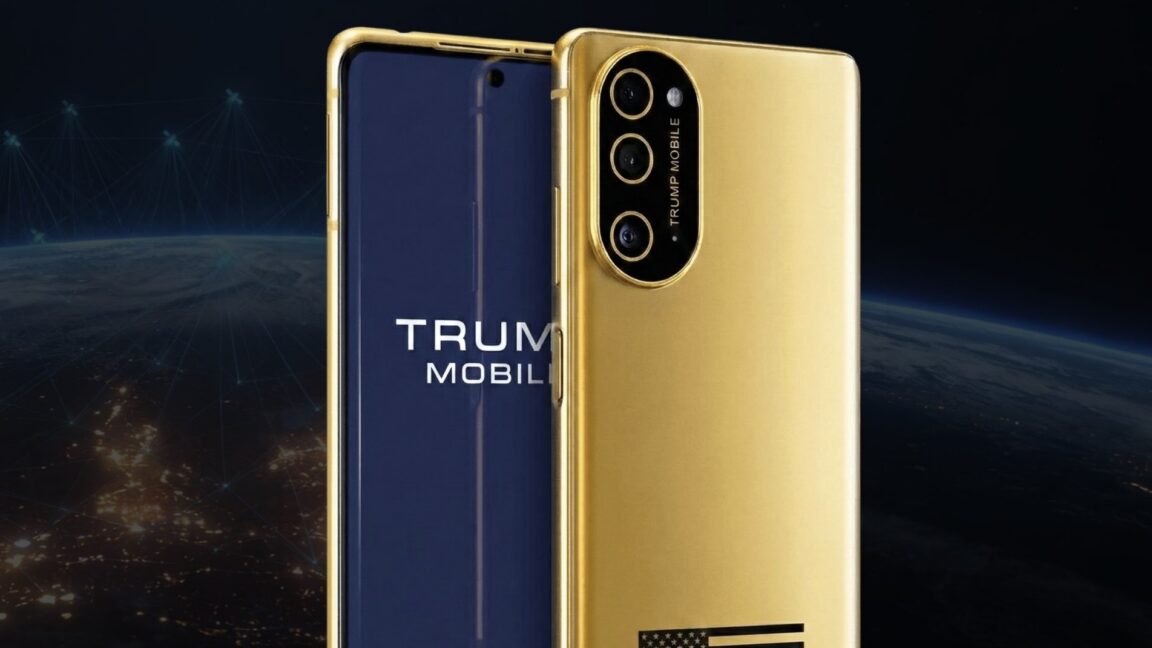
Trump Mobile emerged last year, claiming it would sell a phone made entirely in the US. Trump Mobile quickly abandoned that claim but couldn’t deliver the promised phone on time. Preorders shipped nearly a year late, and the phone’s price increased from $499 to $749. Hassan’s letter noted that the phone itself is reportedly “a near exact match for the HTC U24 Pro, a phone launched in 2024 and manufactured in China.”
Hassan said she found evidence that Trump Mobile and Liberty Mobile both failed to submit required information about efforts to verify customer identities. Hassan wrote:
Concerningly, Trump Mobile and Liberty Mobile also seem to have weak scam prevention efforts. They do not appear to have included “a description of their ‘know-your-customer’ [KYC] processes in their robocall mitigation plan,” which is required in annual Robocall Mitigation Database (RMD) filings. Liberty Mobile’s most recent filing does not appear to include KYC information, and a search for Trump Mobile and T1 Mobile LLC, its operational business name, in the database yielded no filings under those names.
Failure to comply with RMD rules can be punished with fines, removal from the database, and an order requiring other phone companies to block the offending carrier’s phone traffic. Hassan quoted an FCC enforcement advisory issued in February of this year, which she said “made it clear that compliance by MVNOs like Trump Mobile and Liberty Mobile is especially important because ‘[r]esellers of voice service that serve end-users are often in the best position to identify customers that are the source of apparently illegal traffic.’”
Hassan’s letter asked O’Brien a series of questions related to the data breach, Trump Mobile’s ownership structure, its relationship with Liberty Mobile and other carriers, its systems for subscriber verification, compliance with various legal obligations, its FCC filings, device sales, and which countries supply parts for Trump phones. She requested a response by October 29.
We contacted Trump Mobile, Liberty Mobile, and the FCC today and will update this article if we receive any comments.
FCC Chairman Brendan Carr has proposed stricter Know-Your-Customer rules, but that doesn’t necessarily mean he would be quick to investigate Trump Mobile. Carr is an enthusiastic Trump supporter and backs Trump’s claim of power over historically independent agencies like the FCC. Carr recently refused calls to take action on a complaint that Trump commercials violate laws against using taxpayer funds for propaganda.