Affiliate links on Android Authority may earn us a commission. Learn more.
Buying a flagship phone used to mean grabbing the fastest (or second fastest) processor on the market. That’s increasingly not always the case, and I’m not talking about Google’s new Tensor G6 in the Pixel 11 series. As flagship silicon gets more expensive, manufacturers are starting to put cut-down versions of familiar high-end chips into phones that still carry a premium price tag.
At first glance, that sounds like a terrible deal. Why would you pay hundreds — or even thousands — for a phone that doesn’t have the full-fat version of its processor? But there’s a good reason this could actually be a positive development for consumers, particularly as the cost of flagship silicon continues to spiral.
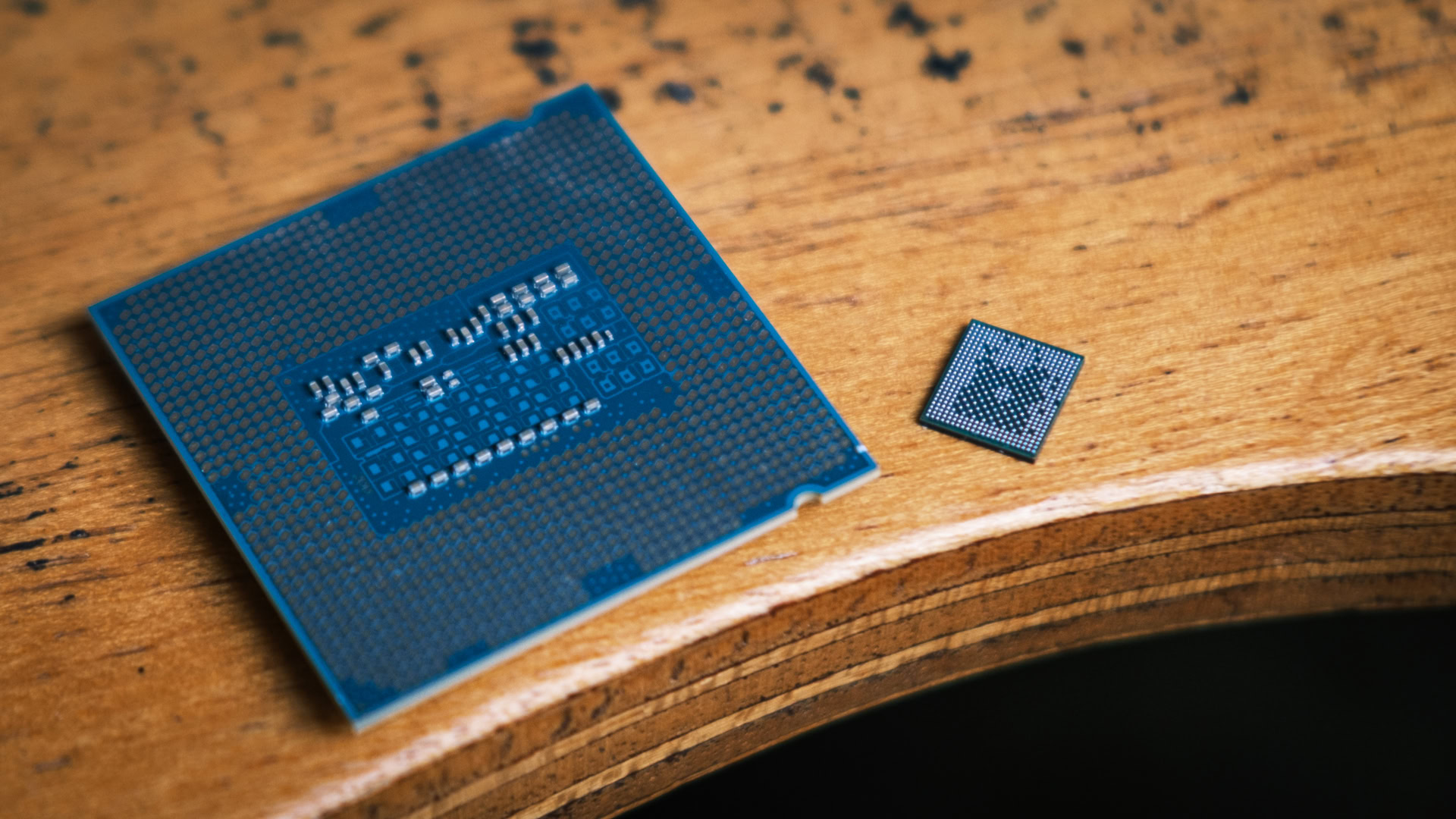
If you’re familiar with the PC and laptop space, you might be at least somewhat familiar with the concept of “binning” processors. After all, this is mostly what physically separates Intel’s i3, i5, and i7 CPUs or AMD’s Ryzen 5 or 7 ranges. It’s often the same physical CPU core, but with cores that don’t work (or don’t work well enough) disabled. Similarly, processors that remain stable at the highest clock speeds are sold as flagship parts, while those only capable of lower clock speeds are discounted.
This allows companies to sell parts that didn’t quite make the cut at lower prices, improving the overall profitability of expensive silicon wafers. The same often applies to desktop-class GPUs as well, with cheaper parts similar to their more expensive counterparts, just with unsuitable cores disabled or underclocked. Don’t think of the parts as defective; processors are specifically designed to be binned in this way. Everything else still works; it’s just that the performance profile is trimmed to suit how the silicon turned out off the manufacturing line.
When it comes to smartphone processors, this phenomenon is less common and certainly not a mainstream consideration when choosing a new high-end device. For example, the iPhone 17e features a binned version of Apple’s A19 silicon but with four GPU cores instead of five, but this is hardly a compromise given the price difference with Apple’s top-end handsets. However, that all started to change once phones with higher price tags began shipping with less-capable versions of familiar hardware.
The ever-increasing cost of cutting-edge silicon manufacturing techniques, along with CPU architecture development and licensing costs, is making the best mobile silicon increasingly difficult and expensive to produce. Year-on-year reports that Qualcomm is increasing Snapdragon Elite pricing were putting the squeeze on the bill of materials even before the recent RAM crisis. Reports suggest this year’s upcoming Elite chip could cost over $300 a piece, compared with under $200 just a few years ago.
To help offset low yields and increase wafer profitability, Apple, MediaTek, and Qualcomm have begun selling lower-grade flagship silicon to their smartphone partners. Qualcomm has adopted this strategy for its new Snapdragon 8 Elite Gen 5 V Series, dropping the Adreno 840 GPU to two slices, down from three, but otherwise leaving the chip unchanged from the 8 Elite Gen 5. This is a little bit different from the Snapdragon 8 Gen 5, which appeared to be a last-gen chip with lower clocks, but the principle is similar — reusing parts as much as possible to reduce waste, increase profitability, and provide more choice to the market.
In theory, at least, these chips present a release valve for the ever-increasing cost of flagship-tier performance. Parts with slightly lower clocks or a disabled GPU core (or two) will still provide high-end performance, with a ballpark ranging from 40-10% of the fastest chips on the market, depending on the age of the architecture and specific compromises.
But equally important is that consumers still benefit from the latest silicon components that are key to other equally important parts of the smartphone experience — camera image processing, machine learning for AI, and faster, better-connected modems for blazing-fast connectivity. We end up with the bulk of the important parts in exchange for slightly less peak performance, which is often overkill outside of very extreme use cases anyway.
While it’s not clear exactly how much of a discount Qualcomm and co. offer on binned silicon, savings in the $50-$100 range could provide relief for manufacturers, especially in light of spiraling memory costs. Ultimately, that’s potentially good news for consumers too, helping to keep flagship smartphones at more familiar price points without letting us down on AI, photography, and other sought-after features.
And really, this is the best argument for buying a phone with a cut-down chip: you shouldn’t necessarily care that it’s missing a core or is slightly lower-clocked, provided you’re getting something back for the compromise.
MediaTek’s strategy appears to be the same as Qualcomm’s, but what we’ve seen so far is far less transparent, which is a concern. Benchmarks suggest that the upcoming iQOO Neo 11 Extreme Edition comes with an 11-core Arm Mali-G1-Ultra GPU instead of the 12-core model found in the standard Dimensity 9500, but the phone appears to use the same chip naming convention. Similarly, the Dimensity 9500s has been spotted in at least two different GPU configurations out in the wild, as has last year’s 9400+.
On paper, dropping a single GPU core may slice 10% off peak gaming performance or so, which is hardly a game-changer. However, without clarity about the differences, there’s a risk of more homework for consumers to understand exactly what they’re buying and avoid disappointment when shopping for the very best hardware.
You’d be rightly livid to believe you’d purchased one of the fastest chips around, only to see it struggle to lock in the frame rates that other phones are capable of. And this is the part where binning stops being a clever way to make better use of silicon and starts becoming a marketing problem.
While desktop-class CPU and GPU product ranges are reasonably well understood, mobile is often far murkier. Qualcomm’s 8 Elite Gen 5 vs Gen 5 vs Gen 5V is not exactly the most comprehensible naming scheme. However, MediaTek’s recent examples are even more headache-inducing.
Consumers may have to consult benchmarks and take deeper dives into their phones’ hardware, lest they risk falling for a deceptive marketing ploy. While that’s good news for my line of work, it’s not everyone’s checklist when researching an upgrade. And that’s a shame, because the whole point of a cheaper, cut-down chip should be to make expensive technology more accessible, not to make buying a phone more complicated.
The only real reason to avoid binned silicon is if you’re looking for absolute maximum performance. If you’re a hardcore mobile gamer, benchmark enthusiast, or simply the kind of person who wants to know they’ve bought the fastest phone available, then you probably want the full-fat version of the chip. And while we should certainly expect the best of the best for phones priced at $1,200 or more, it’s worth weighing up exactly what you’re getting for that extra money.
For everyone else, a cut-down flagship processor could actually be a very sensible compromise. If you’re saving a meaningful amount of money while still getting the same modern modem, AI capabilities, camera processing, and most of the CPU performance, giving up a little gaming performance doesn’t sound like a particularly bad deal. In fact, for the vast majority of smartphone owners, you’ll probably never notice the difference.
The problem comes when manufacturers don’t pass those savings on. A cut-down chip in a cheaper phone is one thing. A cut-down chip hidden behind confusing branding in a phone that costs just as much as its full-fat equivalent is another entirely.
So, should you buy a phone with a cut-down CPU? I’d say absolutely if the savings are meaningful and the pros and cons are clear. However, if you’re paying flagship money for flagship performance that’ll remain top-of-the-line for years to come, you’ll want the highest-spec version.
Binning isn’t inherently a bad thing. In fact, it’s arguably one of the better ways for manufacturers to address the ever-increasing cost of producing cutting-edge mobile silicon. It lets companies get more usable chips from every wafer and gives consumers a way to access near-flagship performance without necessarily paying for the absolute best version. Silicon vendors just have a duty to let us know exactly what we’re buying.
Thank you for being part of our community. Read our Comment Policy before posting.