With his new film about a Romanian family’s life in Norway, Cristian Mungiu wants you to consider the limits of your tolerance
With his new film about a Romanian family’s life in Norway, Cristian Mungiu wants you to consider the limits of your tolerance
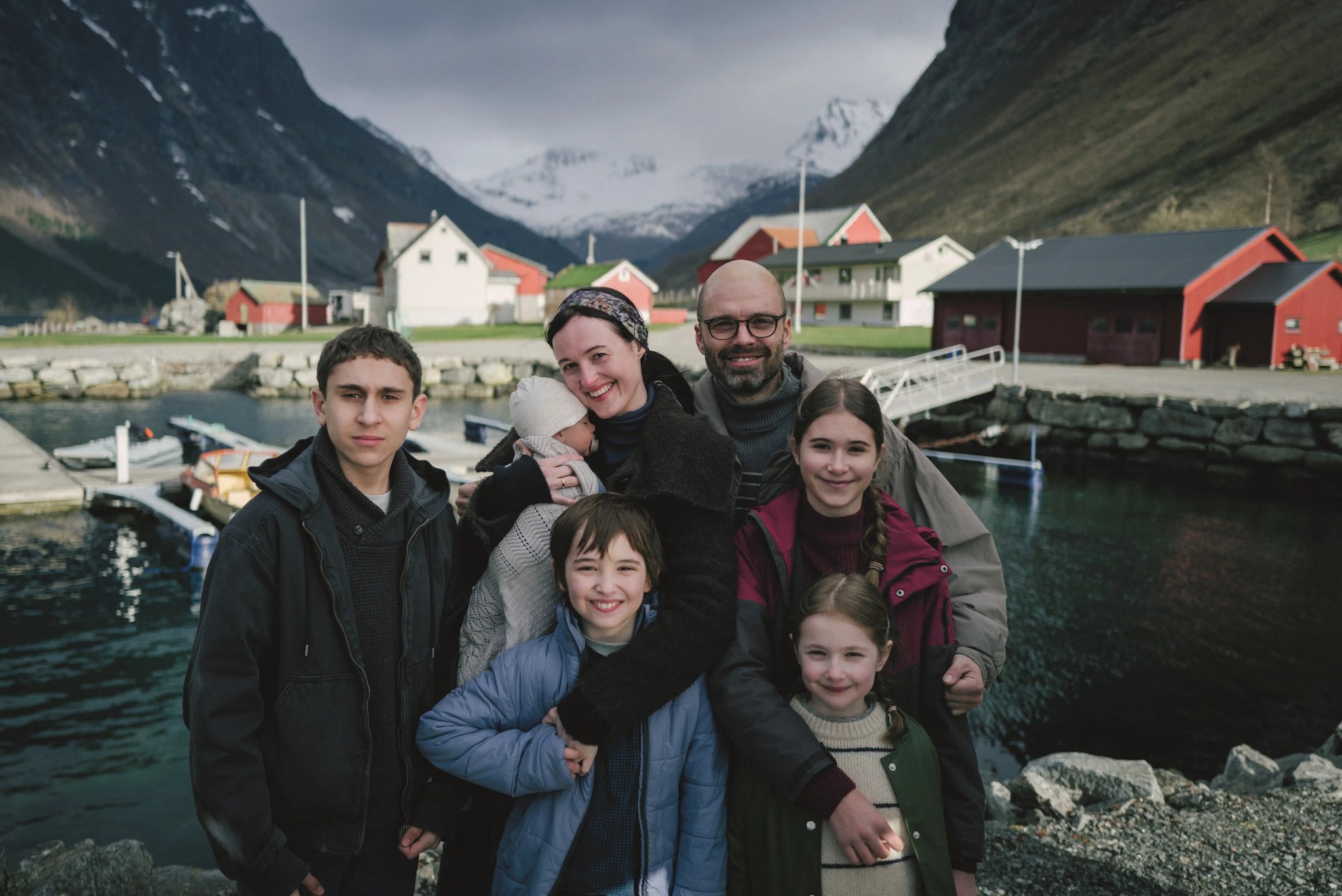
Cristian Mungiu’s sixth feature, Fjord, concerns a family on trial. They seem like good people, God-fearing. They’ve just moved from Romania to a small hamlet nestled in the fjords of rural Norway. There is Mamma (Renate Reinsve), Tata (a bald and bespectacled Sebastian Stan), and their passel of children. They are an openly religious and proselytizing family. The parents, unfashionably, believe in punitive consequences to actions. They would never be accused of gentle parenting. All ought to be well, only Norway in 2026 is extravagantly suspicious of the devout — their famous tolerance reserved for the secular.
Fjord starts quietly and builds subtly. We are with the family as they are introduced to their places of learning, employment, and worship. A second, Norwegian, family serves as their foil. Sort of. Questions arise, about what counts as discipline, what as punishment. To those wanting answers, objective analysis, which is to say a kind of measured purity, Mungiu says, come down to the mud with us! In the morally complex world of the movie, nothing is spared — a piano chord, a passing remark, hems of clothes — all are cast in a different light. We are all the more enriched for it.
The Verge spoke with Mungiu, who is himself Romanian, about how his early tenure in journalism informs his writing, what it was like living under Nicolae Ceaușescu’s dictatorial reign, Marxist literary theory, and the challenges and pleasures of thinking for oneself.
This interview has been condensed and edited for clarity.
I’d like to start with you at Cannes, where you said the question that Fjord raises is: Are there good minorities and bad minorities? I wonder if this question has changed for you since.
Not so much. I think that as much as we need to understand that there are good values in society, like tolerance for all the other minorities and inclusion of those who are different than us, we should always focus on this idea that sometimes even if there are minorities with whom we don’t share the same values, we need to be tolerant to those as well. If not, what makes us believe that we have a more liberal, progressive view on the world?
Of course, there is a limit. We all need to condemn violence, and we all need to be on the same side of helping people out.
But whenever we talk about, for example, religious beliefs, even if we are people who don’t share such beliefs, it’s good to be tolerant with them, if they want to share different views. You need to let them be.
“Even if there are minorities with whom we don’t share the same values, we need to be tolerant to those as well.”
There are so many people next to us who share a lot of irrational beliefs, from reading the horoscope to believing in alternative medicine. We let them be. Why would we condemn people for being religious? It’s good to try to convince them that actually it’s good to see that your beliefs are based on something rational, because eventually, we all influence the lives of others, and it’s good to make choices based on rational things. But you need to advance little by little, step by step. I don’t believe in this way of imposing views on others and making rules for others to change what they think. If you do that, you will only radicalize people.
You said you kept chancing upon articles about immigrant families in Nordic countries. Is reading the news part of your practice? Otherwise, where have your ideas come from?
I read a lot of news every day, and I keep a lot of these articles in special folders under different themes. And it took years before I decided to make a film based on the ideas in these articles, because in the beginning they are very spectacular. They are just informing us about something spectacular that has happened. While for me, the film should be something deeper, more profound, in the sense that I’m trying to figure out why those things have happened and what do they tell us about the world around us?
I try to avoid the sensational part of it and to try to dig down, and to understand what is it that it could tell you about your own life, and this is what I did for the original story as well. I needed some eight years from the moment when I read about it to the moment when I decided to make a film out of it.
Tell me more about your excavation process. Can you walk us through what is actually happening in those eight years? And specifically, can you tell us about the moment in the process when you go from research to fiction? What does that leap look like, or maybe it’s seamless?
It’s fair to say that I haven’t used all these 10 years to investigate. But I was aware all the time that this exists. For example, I decided to talk to this family who was involved in the most prominent case, in the most spoken-about case, from three years ago. I talked to them. I talked to their children. I went to Norway. I met their relatives. I went to see the house where everything happened. I took advantage in that moment to investigate more, and I met everybody that I could who was involved in that case. And people who were willing to talk to me. I talked to lawyers. I talked to all the press that covered the case. I talked to the translator they were having when talking to the police. I talked to the Barnevernet [Norwegian child welfare agency]. I talked to the NGOs who were involved a lot in such cases. Later on, I was a witness to the trials they were having on children issues. So I did my best to find all the points of view of people involved, not only in that case but in other cases.
And finally, I crafted the screenplay based a lot on the arguments that I was recording. I didn’t have to invent much. I just needed to organize the material, but I didn’t need to build a lot on what are the arguments of each of these two sides.
The fictional part of the film comes a lot from this second family, which is fully fictional, and that gave me the possibility of following the film from the point of view of the adults. I needed to be with the family, but I wanted to balance this point of view of the family with the point of view of another family with children and sharing the values of the society in which they live, a family with whom they need to communicate with because they are secluded in this fjord at the end of the world, and it was important for me to see how these values collide, and what changes in this process of being forced to communicate with others.
Tell us about your time as a reporter, early in your career. How did you decide to turn to film?
I started working in the press in 1987, and also this was a part of me getting closer to what I wanted to do. I wished that I could become a storyteller, and I wished already at that age — I was 19 — that I could become a filmmaker. Back then, becoming a student at the film school during communist times wasn’t really a fair process, so it wasn’t for me. So I was starting to get closer to becoming a writer. This is what I thought I could do. I started writing. And then I got to this newspaper, and I started practicing my writing and taking pictures. Two activities which were as close as I could to becoming a filmmaker without being able to become one on the spot. A lot of my style of writing screenplays today is still based on that period in which I learned how to write a piece of news.
But happily, you know, the wall fell. Communism collapsed. It was very passionate to be in the press for a while because people were hungry for what they were calling “truth” after such a long period in which we didn’t have a free press.
My style of writing was shaped in that period. I am not bringing, when I describe things, my own point of view. I’m describing an external situation, the way in which these things manifest, but I don’t draw the conclusion. I depict a situation, and I encourage you to use your critical spirit to understand the way it manifests. I am encouraging you also to take on this responsibility as a spectator, in which I’m not guiding you through the story. You have your freedom of interpreting based on facts, and making sure you analyze the facts. If you’re just analyzing what the characters say, you might be very easily manipulated. Manipulated, because, as you know, in cinema, characters lie, and are as manipulative as people are in real lives.
So it’s not that you wanted to be a filmmaker as such, but that you wanted to be a storyteller, and you found film?
I wanted to be a storyteller, and I thought that I’m going to be a writer. Then I was undergoing this period in my life in which I was watching a lot of films, very popular films.
Also being influenced by the Romanian films that I could watch in the period, which were very strange. Maybe it was, in part, the censorship, but probably it was also that the people that were encouraged to make films were not very talented. But they seemed to be made with people looking like us, and apparently using the same language as us, but actually nothing like that ever happened in reality. They were psychologically so unbelievable, and the dialogue was also a message that somebody wrote in the right order grammatically, and it was pure propaganda.
So, we started developing this idea that it shouldn’t be this complicated to make films. You just need to co-opt reality.
I want to tell you something funny about the message that I got today. Following a lot of these cases in the Nordic countries and talking to so many people, I became some sort of an expert.