Affiliate links on Android Authority may earn us a commission. Learn more.
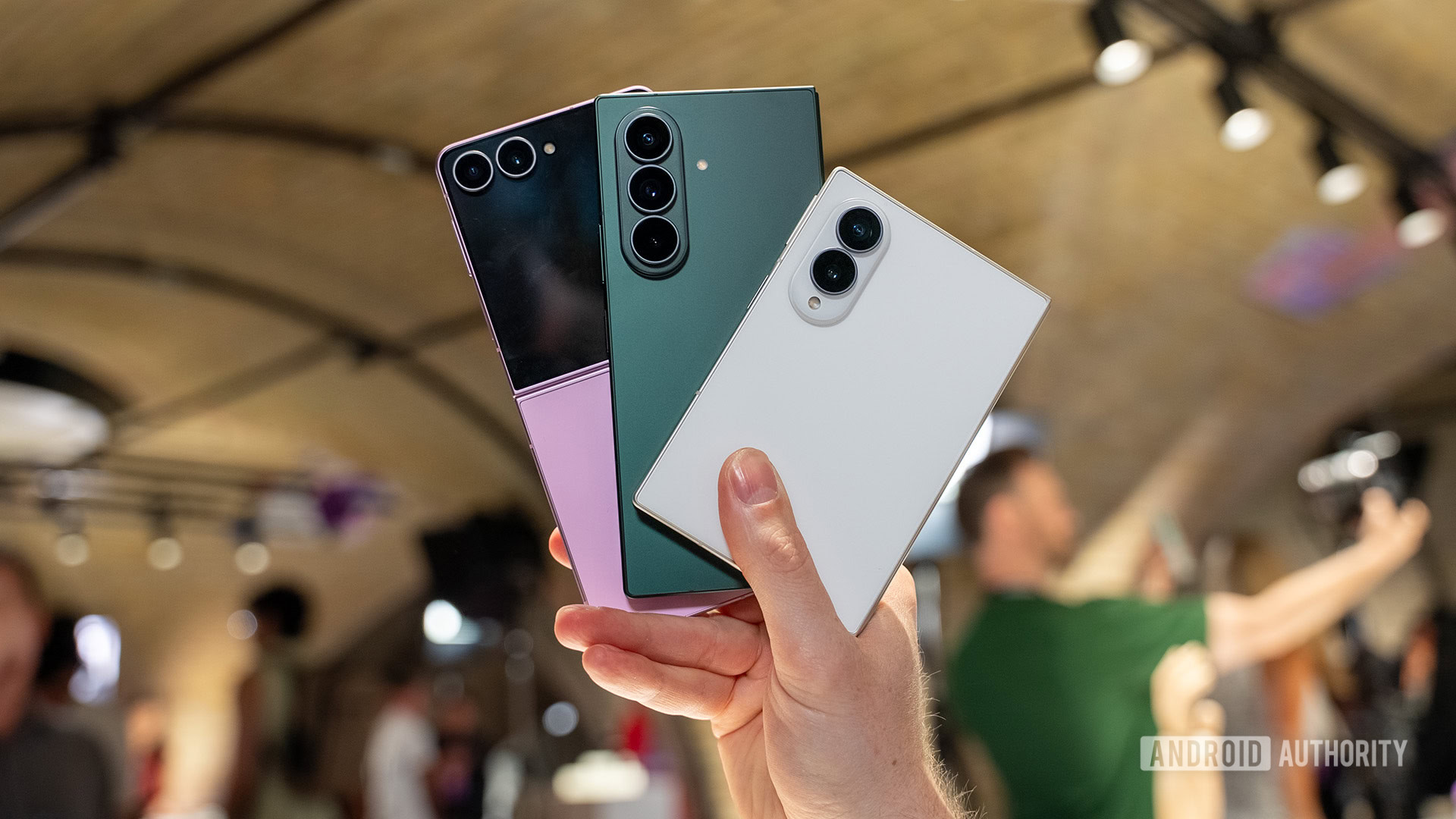
Samsung has finally announced the Galaxy Z Fold 8, Galaxy Z Fold 8 Ultra, and Galaxy Z Flip 8 at its Unpacked event. All three smartphones deliver slim designs, powerful chipsets, and silicon-carbon batteries. On the surface, it’s impressive stuff.
However, there’s one problem I have with these new foldable phones. Samsung is sticking with an IP48 rating once again, and I’m completely sick of it.
Samsung’s Galaxy Z Fold 6 and Flip 6 foldables debuted an IP48 rating back in 2024, which was considered pretty good for the time. Previous Galaxy foldables and rival devices from Google and HONOR had an IPX8 rating, meaning they were water-resistant but not dust-resistant.
However, an IP48 rating doesn’t actually mean that a phone can withstand dust. All it means is that it’s protected against objects 1mm in size or larger — and dust is much smaller than that. Basically, Samsung is saying that the phones are protected against bits of wire and small pebbles.
In other words, your new $1,200 or $2,100 Galaxy foldable isn’t rated for protection against lint-filled pockets, sand at the beach, or even a particularly dusty table. Now, I should note that Samsung’s previous hinge designs allowed some debris to be ejected from these devices, but you know what would give greater peace of mind? Proper dust protection. After all, even budget Android phones have better dust resistance.
The sad thing is that almost all major foldable phones now offer superior IP ratings to Samsung’s latest foldables. The HONOR Magic V5 and vivo X Fold 5 launched with IP58 ratings last year, meaning they’re protected but not completely sealed against dust. Meanwhile, the Pixel 10 Pro Fold was the first foldable phone to offer an impressive IP68 rating, which means it’s indeed sealed against dust ingress.
The Pixel 10 Pro Fold’s IP rating came with a thick design, but 2026 shows that a full-fledged IP68 rating doesn’t have to come at the expense of a thin form factor. HONOR’s Magic V6 was released earlier this year and carries IP68 and IP69 ratings. Furthermore, it measures roughly 9mm thick when folded.
Other brands are also still churning out foldable phones with perfectly acceptable IP58 ratings in 2026. This includes the OPPO Find N6, vivo X Fold 6, and HUAWEI Pura X Max. And these phones still deliver thin designs, bigger batteries, and more well-rounded cameras than Samsung’s new devices.
In fact, Samsung and Motorola are the exceptions this year, as the new Galaxy foldables and Razr 2026 phones all pack IP48 ratings. US buyers are therefore left with Google if they want a foldable phone with certified dust resistance.
I’m guessing real-world durability won’t be a problem for the Galaxy Z Flip 8, Z Fold 8, and Z Fold 8 Ultra. But I really can’t see myself buying a ~$2,000 phone if it doesn’t have some sort of dust protection, lest I want a “crunchy” hinge or worse.
People are tired of babying foldables, and most other smartphone brands have realized this. It’s time for Samsung to get in line.
Thank you for being part of our community. Read our Comment Policy before posting.