
During a lengthy news conference on Friday, NASA provided a detailed overview of how it plans to return astronauts to the lunar surface as soon as 2028 as part of its Artemis Program.
Although much of the information behind these plans has been previously reported at Ars Technica and elsewhere, this marked the first time NASA has laid them out in detail and acknowledged some substantial changes in the architecture.
Most notably, for SpaceX’s Starship vehicle, the revised plan calls for the Orion spacecraft to dock with the Starship lunar lander in high-Earth orbit before transiting to the Moon. And for Blue Origin, the mission architecture includes four launches of the New Glenn rocket, but no spacecraft-to-spacecraft refuelings. Additionally, the Blue Origin plans allows for the possibility of its Blue Moon lander rendezvousing with Orion in low-Lunar orbit.
During the presentation on Friday, NASA officials said they continue to anticipate launching the Artemis III mission—a demonstration involving docking with both Blue Moon and Starship near Earth—by “summer” 2027. And they are still tracking toward a 2028 launch of Artemis IV, which would involve an actual landing on the lunar surface.
“This is an achievable path we are on right now,” NASA Administrator Jared Isaacman said. “We have the mandate, we have the resources, and the support from our stakeholders to be able to execute, and that’s what we intend to do.”
It is commendable that Isaacman and his leadership have taken a hard look every element of the Artemis Program and sought to make changes where they can help the lunar lander companies execute and accelerate their plans. But can they hold to those dates?
The biggest ask SpaceX engineers had in meetings with NASA in early 2026 was removing the requirement to dock with Orion in a near-rectilinear halo orbit around the Moon. This required more energy and had other difficulties associated with it. When NASA canceled the Lunar Gateway earlier this year, it solved this problem for SpaceX.
Now SpaceX will fuel a Starship lunar lander in low-Earth orbit before docking with Orion in high-Earth orbit. The crew will fly to the Moon inside Orion before two of four astronauts transfer into Starship for a landing on the Moon.
A key question surrounding SpaceX’s architecture is the number of refuelings required to top off a Starship for a lunar mission. On Thursday a NASA Safety Panel reported that the current number of tanker launches is “about 22.” SpaceX founder Elon Musk said that estimate was wrong, and that the actual number will be six to eight.
During a question-and-answer session on Friday afternoon, NASA officials declined to put a precise number on the refueling launches required. A lot of uncertainty remains in the lift capacity of Starship, as well as in how much cryogenic methane and liquid oxygen will boil off in orbit and how efficient the process of transferring propellants from one ship to another will be.
However, NASA Administrator Jared Isaacman said this of the estimate of 6 to 8 launches proffered by Musk: it was possible, but represented the “ultimate potential end state” of Starship.
In response to NASA’s call for a faster approach to reaching the Moon, Blue Origin has modified its plans such that it would no longer require refueling between vehicles for initial missions.
Under the concept of operations released Friday, a New Glenn rocket (this could be an expendable version of the smaller 7×2 variant of New Glenn, or a reusable 9×4 rocket) would launch three “transfer stages” to low-Earth orbit. These transfer stages are modeled after the Blue Moon Mark 1 lander, but have some significant modifications.
Then New Glenn would launch the Blue Moon Mark 2 lander into orbit, where it would rendezvous with the transfer stages that will push the stack to the Moon. This is not new information, as Ars first reported this architecture in March. However, NASA did reveal a potentially significant change on Friday.
The chart shared by NASA showed Orion docking with the Blue Moon lander in an elliptical lunar orbit, approximately 8,500 km above the Moon’s surface. However NASA is also working to have the option of docking with Orion in low-Lunar orbit.
According to Jeremy Parsons, the manager of the Artemis Program for NASA, such an orbit a few hundred km above the Moon would significantly reduce the propellant needed by Blue Moon to bring astronauts down to the lunar surface and back up. This mass could be used elsewhere on the vehicle. The lower orbit would also offer more, and faster opportunities for astronauts to get off the lunar surface if needed. In short, it makes some aspects of a lunar landing significantly easier for Blue Origin.
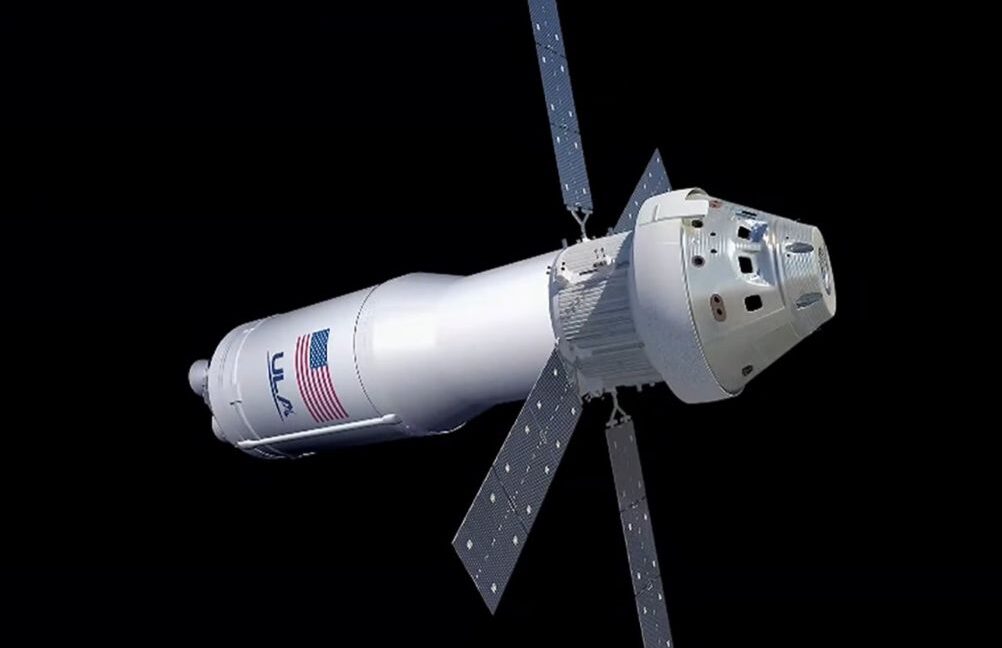
As part of this, NASA announced Friday that it is working with United Launch Alliance to develop an “extended” version of the Centaur V upper stage. In concert with the core stage of the Space Launch System, this upper stage would allow Orion to reach low-lunar orbit.
This is a big deal. It has long been a point of embarrassment for NASA that Orion, with its low-performing Service Module, does not have the delta-V capability to launch from Earth, reach low-lunar orbit, and return to Earth for splashdown in the Pacific Ocean. But no one had seemed prepared to fix this problem before.
“Getting Orion to low-Lunar orbit means solving propulsion and spacecraft integration problems that were left unaddressed for far too long,” Isaacman said Friday.
Instead, NASA created workarounds like the Lunar Gateway, which was put in a near-rectilinear halo orbit that Orion could safely reach. The burden of performance to reach the lunar surface was pushed on to the lunar landers and the companies developing them.
Given the urgency of the situation, NASA has been trying to help lunar lander companies in any way they can, Isaacman said.
“We’re listening to the data, and looking at what’s happening around us,” he said. “What progress are our landing partners making? Where are they struggling? What can we do to be helpful? Their lives get easier if we can get Orion closer to the Moon, substantially. We could choose to continue on our track and say, maybe they’ll show up and meet our timelines. Or we can say well let’s start turning those knobs to help.”