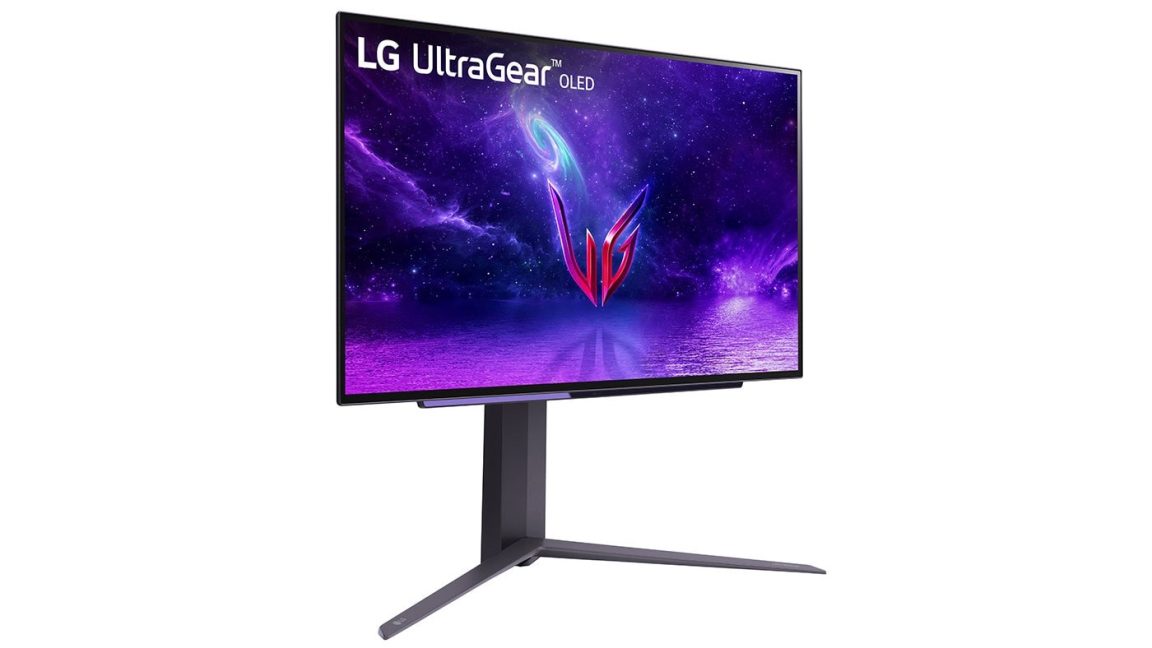
LG is reportedly pulling a McAfee pop-up ad from a controversial app that some of its monitors have stealthily installed on connected computers.
The app, LG Monitor App Installer, installs itself through a Windows Update alongside monitor driver updates. LG Monitor App Installer then pushes ads for a 30-day free trial for McAfee, as well as other software, via a pop-up on affected systems, multiple users have reported.
This has drawn negative attention recently, with complaints surfacing on Reddit and a subsequent video from YouTube channel Gamers Nexus. In the video, editor-in-chief Steve Burke said that the publication paid $1,200 for an LG UltraGear 3GX900A-B gaming monitor (the monitor’s price dropped to $600 two days later, Burke said) for testing and replicated the behavior “several times” across “multiple” Windows 11 systems.
After LG Monitor App Installer was installed, a pop-up appeared on the screen’s lower-right corner “on every single boot,” Burke said. Most of the time, the pop-up was a McAfee ad. The publication also reported seeing ads for LG Switch, LG Calibration Studio, LG Dual Controller, and LG Channels on rare occasions.
Following Gamers Nexus’ video, a Microsoft representative stated that the LG Monitor App Installer will no longer show pop-up ads for McAfee. In response to a social media post about the app, Pavan Davuluri, EVP of Windows and devices at Microsoft, said this week:
We’ve connected with the team at LG and as an immediate next step, they have agreed to disable the McAfee pop-up from their app. We appreciate LG working with us toward a shared goal of a better experience for our mutual customers. We will keep improving here with our ecosystem partners.
As mentioned, some LG monitors appear to have been installing LG Monitor App Installer onto Windows computers for months. Publication Windows Latest noted that the app recently got an update, “and its changelog mentions McAfee as an additional app,” which could be what prompted more people to see the ads…and then complain about them.
However, the removal of McAfee doesn’t address the problem of a peripheral installing ad-pushing software onto people’s computers.
Users have been finding LG Monitor App Installer and its ads on their systems without LG ever showing a prompt or asking for permission. LG has some of the most expensive computer monitors available. Paying, in some cases, over $1,000 for a monitor that ends up forcing ads onto Windows is disruptive and a privacy concern. Once the app is installed, “LG technically possesses permission to use ‘all system resources,’” as well as to “collect geolocation, device data, online activity, contacts, user credentials, transactions, and more,” Burke said.
It’s also concerning that the practice has been going on for years and has seemingly expanded recently. Burke said he recently started seeing the pop-up ad on LG monitors he purchased three years ago.
The incident also brings questions about what Windows permits from peripherals’ companion apps.
LG Monitor App Installer’s description on the Microsoft Store states that the app is for users to “easily install and use apps supported by your monitor through LG Monitor App Installer” and lists McAfee as one of those apps.
Further, Microsoft allows Universal Windows Platform device apps “to automatically install when the user connects their device to the PC” if the user hasn’t opted out of Recommended Settings during installation and is connected to the Internet and signed into the Microsoft Store, per a Microsoft support page for Windows developers spotted by Windows Latest. The page reads:
The automatic installation feature does not provide a notification to the user when the app is installed. Some users may find this experience confusing and frustrating and give your app a bad rating.
Other hardware vendors have been criticized for their devices automatically installing unwanted software when connected to a computer. Examples include Razer (gaming peripherals), Logitech (gaming and productivity peripherals), Asus (motherboards), and Gigabyte (motherboards). Considering that most monitors don’t necessarily require a companion app and can be rather expensive, the forcible installation of LG Monitor App Installer may seem particularly egregious.
Ars Technica reached out to LG about the purpose of LG Monitor App Installer, affected monitors, and privacy concerns. A company representative acknowledged receipt of the questions but didn’t provide a response ahead of publication.
Citing user complaints, Gamers Nexus listed the following monitors as auto-installing LG Monitor App Installer onto PCs. But with Microsoft approving of the practice, there may be more monitors installing LG’s bloatware: