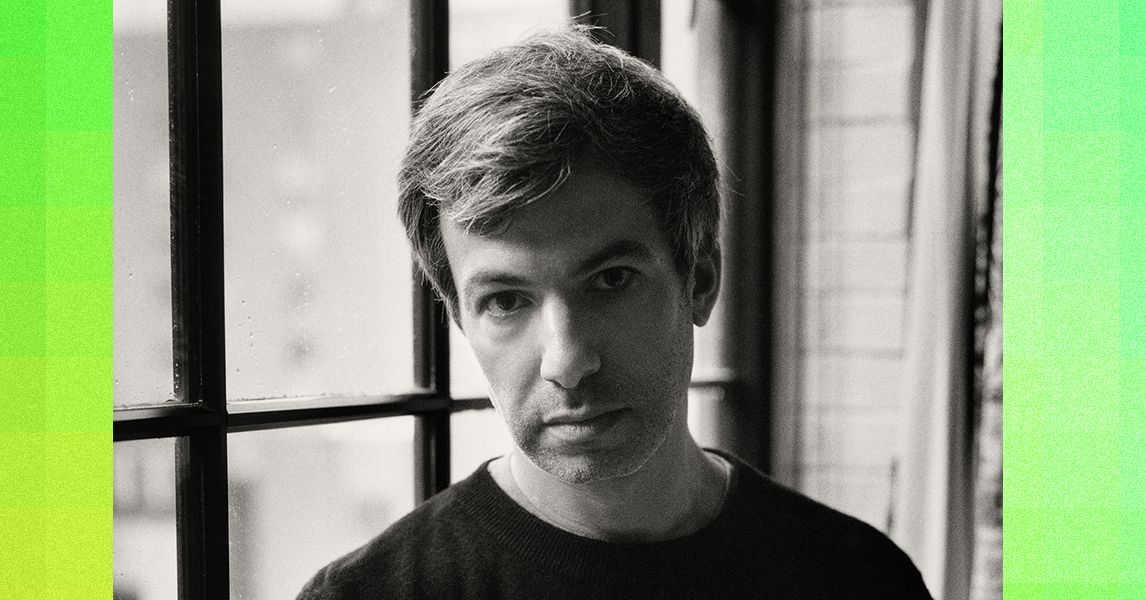
This week, Brian Barrett and Leah Feiger speak with WIRED global editorial director Katie Drummond to go behind the scenes of her viral interview with Nathan Fielder about his latest documentary, You Can See Everything. She tells us why she had to keep it a secret—and how it felt to interview a man who hates being interviewed. We also discuss why tech billionaires are feeling generous all of a sudden, from Anthropic’s pledge to commit 5 percent of its shares to a public benefit fund to Elon Musk’s promise to give a SpaceX share to every child in America. Plus, a WIRED investigation found that election offices in at least 32 states received suspicious letters, some containing white powder, just two weeks before the midterms.
You can follow Brian Barrett on Bluesky at @brbarrett, Katie Drummond on Bluesky at @katie-drummond, and Leah Feiger on Bluesky at @leahfeiger. Write to us at [email protected].
You can always listen to this week's podcast through the audio player on this page, but if you want to subscribe for free to get every episode, here's how:
If you're on an iPhone or iPad, open the app called Podcasts, or just tap this link. You can also download an app like Overcast or Pocket Casts and search for “uncanny valley.” We’re on Spotify too.
Note: This is an automated transcript, which may contain errors.
Brian Barrett: Well, welcome to WIRED's Uncanny Valley. I'm Brian Barrett, executive editor.
Leah Feiger: And I'm Leah Feiger, director of politics and science. This week, we're diving into the behind the scenes of our interview with Nathan Fielder. WIRED's global editorial director, Katie Drummond, was among a small group of people who saw Fielder's latest documentary, You Can See Everything, way before its release. She spoke with Fielder at length and will be joining us to share what stayed with her after their interview.
Brian Barrett: We'll also get into Anthropic and Elon Musk pledging to share their riches with the public. Anthropic announced that it would commit 5 percent of company shares to a public benefit fund, and Musk followed suit by promising he would give one SpaceX share to every child in America. We'll discuss the motivations behind these pledges and the chances that they'll actually happen?
Leah Feiger: And we're also going to take a look at the harassment campaign that has hit election offices across the country just two weeks before the midterms. A WIRED investigation found that election offices in at least 32 states have received suspicious letters, some of them containing white powder. We'll talk through what happened and how election officials are responding.
Brian Barrett: If you've been online this past week, chances are you've heard about Nathan Fielder and co-director Lance Oppenheim's latest documentary, You Can See Everything. The documentary follows Fielder, a graduate of Canada's top business schools, fun fact, as he spends a month inside Elizabeth Holmes' home in the weeks before she went to prison. Holmes was convicted back in 2022 for defrauding investors with Theranos, her blood testing startup. Turns out the speedy and accurate blood tests were fake. Innovative tech didn't actually exist. More importantly, though, the film was kept secret for three years. Only a few dozen people saw it before it debuted at the Telluride Film Festival. One of those people, WIRED's global editorial director, Katie Drummond. She had signed an NDA to hear what the film was about, got Nathan Fielder to be on WIRED's cover, and sat down with him for almost an hour and a half. Katie, thank you for joining us.
Katie Drummond: What a wonderful introduction. You made me sound so special. Thank you, Brian. I'm so happy to be here.
Brian Barrett: Yeah, I'm also excited genuinely because this is, I think, our first Uncanny Valley crossover episode?
Leah Feiger: Katie, what were your first thoughts when Fielder's publicist reached out? Tell us everything.
Katie Drummond: I'll tell you. You can hear everything. I was on my way to dinner with a very good friend and I was in an Uber and I got an email from him that said, "Do you have a few minutes to talk about Nathan Fielder?" And if you know me at all and my taste in comedy and the kind of TV I watch, you would know that I have many minutes to talk about Nathan Fielder and I would talk about Nathan Fielder anytime. I'm genuinely a big fan. I think his stuff is so, so brilliant and so clever and … I don't want to say genius because I just think that's a step too far, but I think it's very, very good. I'm a big fan. So I wrote back and said, "I have all the time in the world." And we talked that night, and he just said, "Nathan has this project coming out. Only a few dozen people know what it is. And I can't tell you anything else about it until you agree to sign an NDA, but would you be interested in him for a cover, and do you have a cover that you could put him on this fall?" And to be honest, I had no idea if we had a cover that we could put him on this fall. I couldn't even remember if we had another print issue coming out this year. But I was just like, "Yes, of course. We totally have a cover." I lied and then immediately texted Reyhan, who runs the print magazine, and was like, "Do we have a cover available this fall?" And then it turned out that we did, and I signed an NDA, and she signed an NDA as well. And only after we signed the NDAs did they even say it's a movie. I thought it could have been anything. That's how little they were willing to share with us until we agreed not to talk about it.
Leah Feiger: Were you hesitant at all? Could this have been a bit?
Katie Drummond: There were times when I was sort of like, "Are we somehow being incorporated into the joke?" When they did The Rehearsal season two … I don't know if listeners have seen it. If you haven't, you should. I think it's incredible. But Nathan did this CNN appearance with Wolf Blitzer …
Wolf Blitzer, archival audio: Here with us now, comedian, 737 pilot, and host of The Rehearsal, Nathan Fielder.
Katie Drummond: … where he very seriously talked about aviation safety in a way that I think CNN was happy with, but if I, in my role running WIRED, if that happened to me, I don't know that I would be happy about being part of the joke. So I definitely worried about that. But once we saw the movie and talked to them more about what they wanted to do, it was pretty clear that this was just a good faith, earnest attempt to get Nathan to do some press, which he does not often do.
Brian Barrett: It wasn't a bit, turned out to be a real interview, but one thing I thought was really interesting about it was he turned the tables on you at some point. It felt like he started trying to interview you. And I guess, what was that like in the moment and were you … You sort of catch yourself. It's sort of a fun moment, I think, in the interview. You say, "Wait a minute, you derailed me. That was rude." What was it like actually trying to interview someone who was so used to being on the other end of it?
Katie Drummond: It was a tough interview. He was very pleasant. He was totally lovely, and it was a very good faith conversation. But he doesn't like being interviewed. I mean, he says that in the interview. He says, "I hate this. I hate that this is happening to me right now."
Katie Drummond: Yes. I think he genuinely doesn't feel very comfortable expressing himself with words. I think he has talked before in interviews about how that is a real weakness for him, and so I think he feels uncomfortable trying to do it. And I think he did not want to share his feelings about what he experienced making the film because he didn't want that to inform the opinion of someone going in to see the movie. If they think like, "Well, Nathan thought this about Elizabeth and he thought this about Elizabeth's partner and he thought this and this about Theranos," he didn't want that to color how people saw the movie, and so he felt much more comfortable asking me questions about what I thought about the movie. And I think genuinely he is still trying to figure out what happened to him in the three years that he was making it, and asking people what they thought is helpful for him.
Leah Feiger: And I suppose this is a good time to say for all of our listeners that if you haven't seen the film yet, there's no spoilers in this interview. Both of you did a really good job of skating around that. But you did talk about seeing the film twice and having different reactions each time. Your conversation with him, as spoiler-free as it was, as difficult as it was to keep him on track, to get him to share his own viewpoints here, did it change at all how you saw the film?
Katie Drummond: Oh, that's interesting. The conversation and then reading the interview back, which I had to do many times as we edited it and got it ready to publish it, and then looking at the questions I asked him and thinking about why I asked certain questions in the moment did make me reflect on the movie more. There was one thing I said to him in the interview where I said, "We don't really know, Nathan, what you are thinking in the film and how you feel about these people." And then I thought more about that afterwards and disagreed with myself in the end where I'm like, no, it actually is pretty clear in his facial expressions or how he talks to people, or even knowing that he was a co-director on the film. So he made decisions about what they included and what they didn't include and how they frame and set up certain subjects. So obviously with all of those things combined, we do get a sense of what his point of view is. You can tell what the filmmaker's point of view is to some extent as you're watching the movie. So it did make me think a lot about the film. I mean, I will say I have thought way too much about this movie just because I've been getting ready for this interview, doing the interview, editing the interview, getting ready to publish it. I am ready to stop thinking about it. I would like that to happen.
Brian Barrett: I was going to say, but Katie, the interview's gotten a lot of attention since it published. You've gotten a lot of attention since it published for the interview. What's it been like? I think as journalists, the adage is you don't want to become the story, not that you've become the story here, but I feel like there's been a lot of demands on your time. You've been on TBPN, a lifelong goal of yours. You're on Uncanny Valley, another lifelong goal. What has it been like processing being wrapped up in this sort of engine of attention that the documentary's been getting?
Katie Drummond: I pivoted from being a reporter to being an editor for exactly this reason, which is that I really didn't like getting attention on the internet. I found it very unpleasant. I continue to find it unpleasant. So in that regard, I don't like it. I like to talk to commenters and sort of respond to good faith things, but then you also, it's 8:30 at night and you're on Reddit and you read a thread, and people are like, "This is some of the worst writing I've ever seen," and you're like, "Oh, wow, OK. That person doesn't like me," and that's hard. I think I just want to hopefully genuinely encourage people to see the movie. And I don't mean that because I'm being paid to do an advertisement for them; I'm certainly not. It's just a really interesting project. And so I'm just really proud that we were able to play a teeny tiny part in it. If I could clear up one thing that has generated some public attention since the interview came out is that my Google search results now lean heavily toward Katie Drummond felon, Katie Drummond criminal, Katie Drummond conviction. I just want to be very clear, it can be hard to read tone in writing sometimes, that was a joke.
Brian Barrett: But in the eyes of AI overviews, you are forever a felon.
Katie Drummond: And that's how this movie ruined my career. Yeah. Yep.
Leah Feiger: That's really the subject line. Not only did you release this interview, WIRED released a slate of stories related to Nathan Fielder. And in one piece, former WIRED editor, Adam Rogers, discusses how the magazine was one of really the first outlets back in the early 2010s to praise Theranos, to give them all of this public attention. So there's this real reckoning that happens in that story. I'm really curious, I would love to hear from you about the decisions that went into even publicizing this mistake and this clearly new, this division between old era and new era.