
Affiliate links on Android Authority may earn us a commission. Learn more.
2026 has been a tough year for many across the globe. Severe forest fires and extreme heat have hit many, while hurricanes, crazy storms, flooding, and drought conditions have hit many others. Almost all have been without power in their homes for extended periods, a problem for which there is a solution: The Anker SOLIX E10 Whole Home backup system provides infinite power.
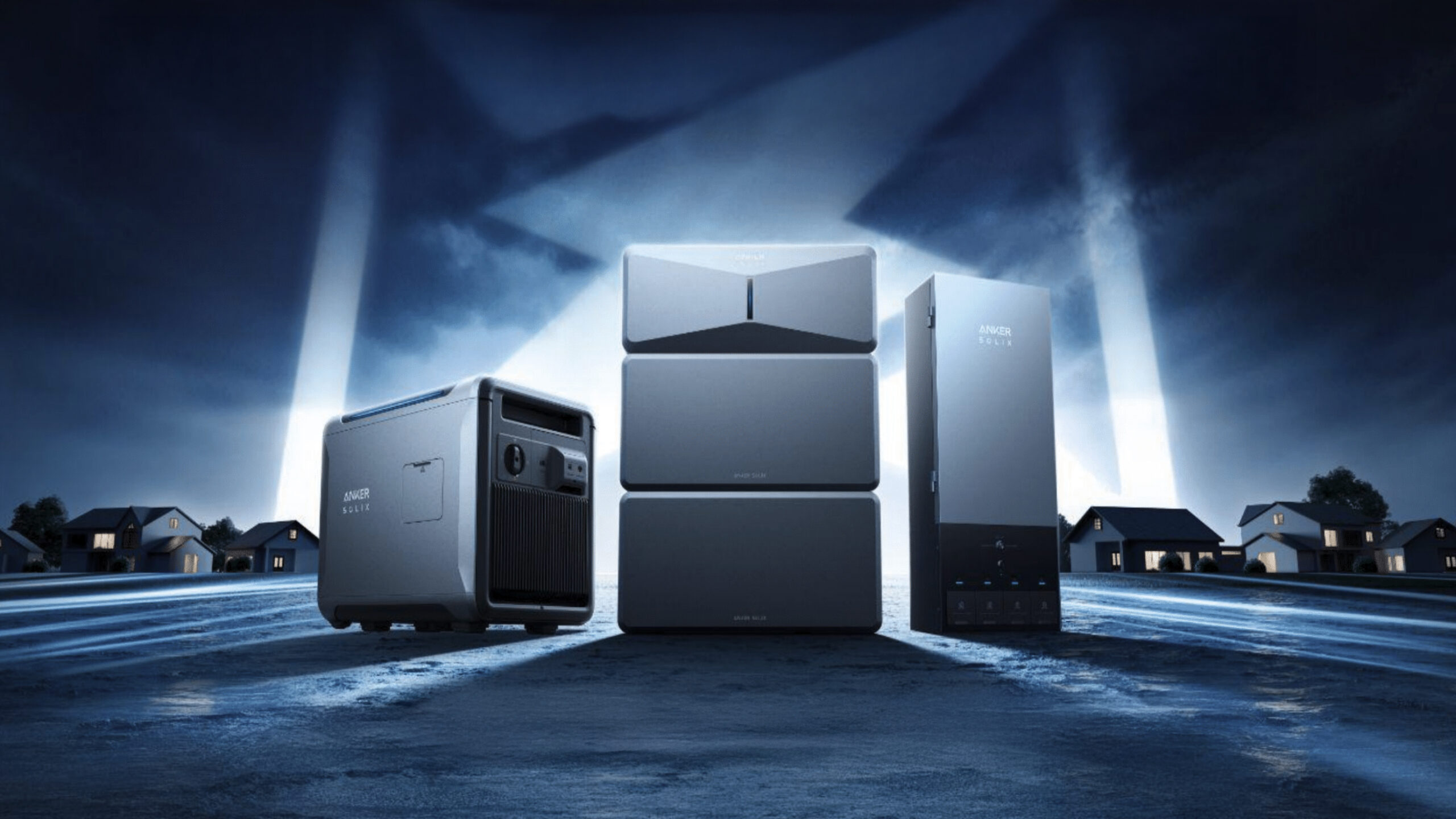
The E10 Whole Home backup system is a multi-part system that includes batteries, solar input, a multi-fuel generator, and more.
The primary component to the SOLIX E10 system is the Power Module. This unit is the brain that makes infinite power possible. The Power Module stacks directly on top of up to five Battery Modules, then you connect solar input and the SOLIX Smart Generator. Each battery is packed with 6,000Wh of capacity, and this system can either connect into the greater E10 Whole Home system, or operate as a standalone battery system – like a massive UPS.
The SOLIX Smart Generator 5500 is a tri-fuel generator. Run on gasoline, propane or natural gas with as little as a flip of a switch. You may operate this as a normal generator, to push AC power to directly connected appliances, or push power into your home or RV, or you may plug it into the E10 Power Module in order to add smarts and provide the infinite power to your home.
Bringing it all together for the home, the SOLIX Power Dock connects the Power Module, with batteries and charger, to your home. The Power Dock is a smart breaker box in itself, able to operate as a primary or secondary power panel for your home. Connect 240 volt input from the grid, and output 120V or 240V to your home. The Power Dock accepts input from up to three E10 Power Modules, adding up to 90kWh of battery capacity to your home.
Anything! Well, almost anything. As a whole home backup system, the Power Dock has twelve standard 120V breaker slots. Slots can be combined into 240V circuits, plus slots 1&2 and 7&8 are specially designed for solar and generator systems. There is also a 240V accessory load connection, made to forward power to a secondary circuit breaker.
With 200 Amp maximum grid connection, 200 Amp maximum throughput to the sub-panel, 60+ Amp for each of the 120V circuits, and 125 Amp circuits for the batteries, and more, the average household will have no issue at all connecting everything.
The SOLIX E10 system has up to 66kW of Surge power, which is designed to run both 5-ton and 3-ton Central A/C units simultaneously.
Your mileage will vary based on your household connections, appliances, and more, but a single stack of five batteries is designed to offer as much capacity as the average household consumes in a day. That’s 30kWh for five batteries, and you can connect up to three stacks for a maximum of 90kWh. If your outage lasts long enough that the batteries start to get low, the Smart Generator 5500 automatically kicks in to power your home and refill your batteries simultaneously.
If you break it down to some basics, most modern LED ceiling lights consume around 30W of power, a television consumes around 300W, and your home Wi-Fi router can consume about 50W of power. With loads like this, plus a fridge cycling and other small items in your home plugged in, each battery attached to your E10 system should provide up to six hours of power before the generator kicks in.
Pushing things to the limit, if you are blasting a 4,000W air conditioner in addition to your home’s base-load, you can expect about an hour and a half per battery.
In a recent power outage, I was without power for 48 hours.
The power went out around 11pm. It took less than 20ms for the system to kick in, I didn’t even notice the swap from grid to battery power. It was a comfortable temperature that night, without the A/C running I made it until 8am before the battery drained to below 45%. In my configuration, the Smart Generator kicks in at under 45%, which it did flawlessly. Half a tank of gasoline brought my system back up to 85%.
I went about my day as normal. My hot water heater kicked in several times, I fired up my big work PC, and eventually the A/C turned on. By mid-afternoon the generator kicked in again. The generator charged the house and topped up the batteries. Power from the generator first routes to the home, and all additional power is used to charge the batteries.
The Anker app allows you to set the Smart Generator run modes: Quiet, Eco, Turbo. Each mode outputs different amounts of power, so you can adjust based on your current needs.
I was able to fall into a comfortable routine by the end of day one that continued for day two of the outage. At the end of day one, before going into Quiet mode, the system automatically topped up the batteries. This, again got me through the night.
It was around 7am on day two that the generator kicked in again. And my day continued the same as day one, requiring a mid-day top-up, and then filling fully before hitting quiet time in the evening. Luckily, the power returned late in the evening of day two.
My outage proved the most important thing with the Anker SOLIX E10 whole home backup system: as long as I have fuel for the generator, I have unlimited power! Just as important, with minimal effort, the system focuses on keeping quiet when possible. The strategies for battery usage and charging mean I can go all night without the generator having to run, which the neighbors appreciate as well.
I also learned that I like Eco mode for the Smart Generator. It consistently produces 3.99kW of power, and is much quieter than Turbo mode. A great balance of power to noise.
There are two major financial strategies you can take advantage of with the SOLIX E10 system. First is basic solar input, the next is the Time Of Use mode.
The E10 system accepts up to 27kW of solar input. That’s up to 9kW per Power Module and battery stack. You can likely totally power your home with that much incoming solar power.
The Time Of Use mode is subject to your provider as well. Many providers offer time of use rates, often charging you more money during peak hours. You can compensate for this by making sure you charge up your E10 batteries when your provider rates are lowest, and run your house off of your batteries when rates are the highest.
Users have saved up to 80% off their old electrical bills!
Generators have been the standard for home backup power for a long time. They are predictable, reliable, and produce enough power to keep a household going in emergency conditions. There are multiple ways in which the Anker SOLIX E10 Whole Home backup system proves superior.
Clean power output. With the Power Module acting as the master control, it provides consistent power to the home, and does not fluctuate like a generator might.
Battery power is silent. A generator must be running at all times, which produces exhaust emissions, noise, and uses fuel.
No electrical waste. As we witnessed with the Smart Generator powering the E10 system, it outputs 2kW, 4kW, or 4.5kW. Most combustion-engine generators have similar power modes. During times when your house is drawing just a few hundred watts, the remaining power generated is simply lost if you do not have batteries to capture it and store it for later.