Microsoft is expanding ‘biomimicry’ at its data centers as it faces more pushback from locals over construction, pollution, and noise.
San Antonio City Councilmember Ric Galvan remembers when data centers first arrived in his city in the 2000s, looking like relatively unassuming office buildings. But that’s changed in recent years, as data centers have grown into massive “hyperscale” facilities spanning millions of square feet and housing the physical infrastructure for AI.
There are now more than a dozen data centers in Galvan’s roughly 55-square-mile district, and he expects that number to grow to around 20 over the next few years if proposed projects are completed. They’re clustered along two main roads, concentrating nuisances in the same neighborhoods: traffic and trees cut down during construction, followed by constant bright lights and noise when the data center is operating.
A lot of the area used to be green fields, he explains, allowing many residents to feel close to nature. Now, he says, “that [feeling] gets taken away pretty quickly when you make a gigantic data center.”
“That [feeling] gets taken away pretty quickly when you make a gigantic data center.”
Across the US, more and more communities are rising up against these hulking data warehouses — protesting the effects they could have on quality of life, pollution, water, and electricity bills. Tech companies have responded with promises to mitigate any potential harm by paying for infrastructure upgrades needed in local water and power systems.
Microsoft is also taking a different approach to soften the impact its data centers have. It announced plans to make its data centers less jarring to local communities and the environment through what it describes as “biomimicry.”
Biomimicry is sort of a catch-all term for many of the ways technologies take inspiration from nature, from “painless” needles that imitate a mosquito’s proboscis to naturally ventilated buildings modeled after termite mounds. In Microsoft’s case, biomimicry involves “blending our datacenters into the natural landscape” to “create resilient ecosystems that support biodiversity, strengthen community ties, and help our datacenters become better neighbors.”
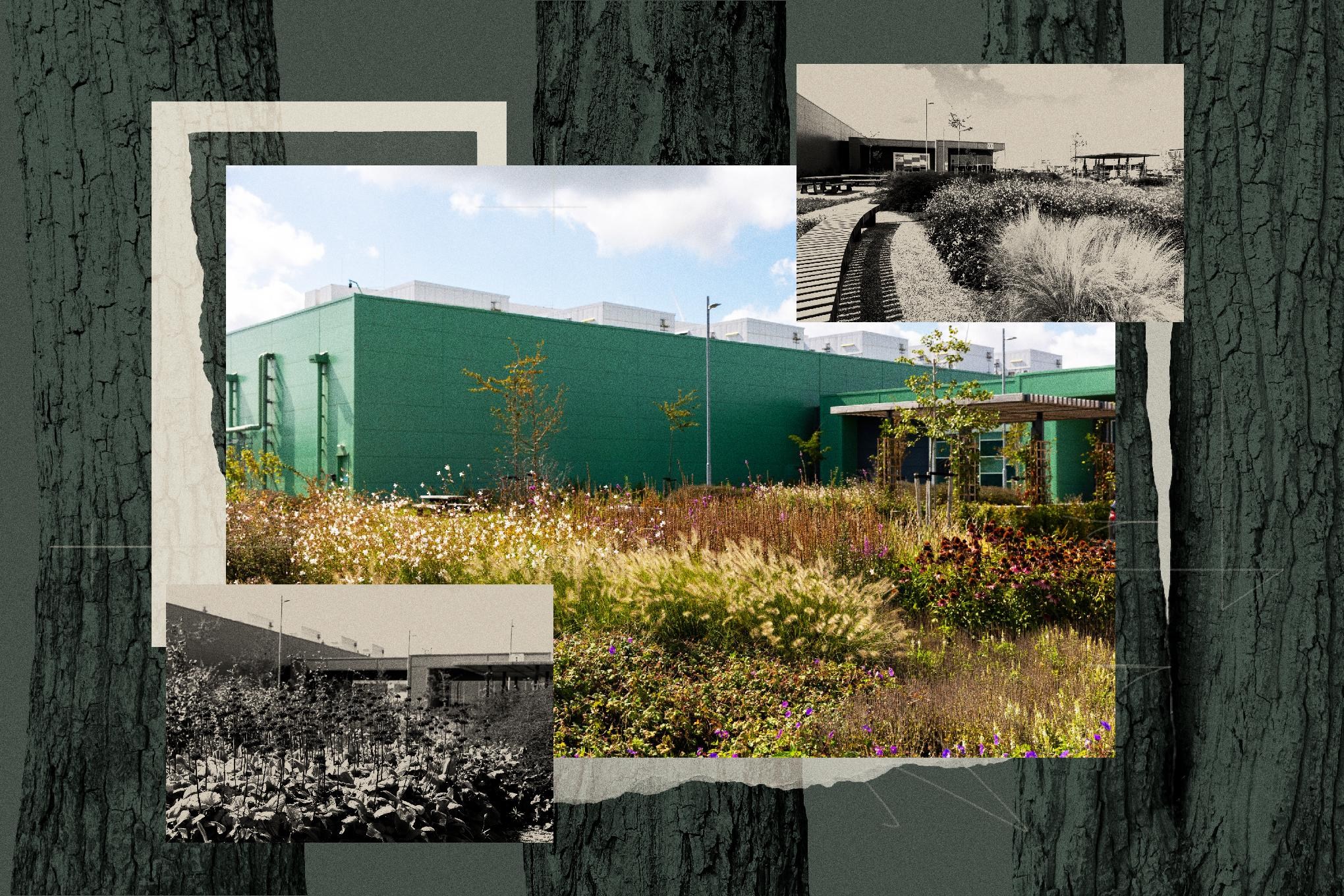
Essentially, Microsoft wants to make its data centers greener, literally, with more gardens and native trees on-site. It’s also promising to invest in projects that repair damaged ecosystems where it has data centers. The company thinks these efforts will limit problems its facilities have caused for neighbors, like noise pollution and the loss of green space.
It’s a nice gesture, advocates and sustainability experts tell me. Microsoft has tried to set itself apart from its rivals by engaging more with communities where it builds data centers. The strategy has appeased some local concerns — depending on whom you ask.
But these data centers are expanding so fast that they’ve simultaneously razed thousands of trees, and Microsoft’s greenhouse gas emissions are growing with the energy demands of AI. Advocates and residents near these data centers want to see more from the company to limit its larger impact on communities and the environment.
“Maybe … they’re trying to just make sure that they’re covering their bases,” Galvan says. “But also, I think if that’s the case, that’s fine,” he adds — as long as Microsoft and other data center operators are actually addressing concerns residents have brought up for years around pollution, water use, and the destruction of natural green spaces.
Microsoft has operated data centers in the Greater San Antonio area for almost a decade, and is spending hundreds of millions of dollars to build several more. In 2022, the company upset residents in San Antonio when it cut down more than 2,600 trees across a 33-acre expanse to build a data center. That — along with Microsoft’s requests for a zoning change and tax incentive — was a big controversy, Galvan says.
“We’re very proud of our trees here,” Galvan says, pointing out that the tree canopy also helps to mitigate heat, which in Texas is a growing problem. “So it was very frustrating to see that completely decimated.” (In an email, Microsoft spokesperson Jennifer Lyons that the company is “investing in enhancement projects that includes 400+ acres of woodland and pollinator prairie restoration” in San Antonio with a goal of leaving “land more productive than we received it.”)
Microsoft says it has more than 300 data centers in more than 34 countries and started biomimicry projects at a data center in the Netherlands in 2022. Now it plans to bring “nature-inspired solutions to restore and enhance natural ecosystems” to more than 20 sites in the US and Germany, and says it will do the same for all new projects in the US and “a growing number around the world.”
“We’re actually customizing the solutions to fit in with the local habitat and enhance what’s already there and restore what might have been lost in the past,” Kaitlin Chuzi, director of global land strategy at Microsoft, says.
In its September announcement, Microsoft references successes it has had in Mount Pleasant, Wisconsin, where the company is repurposing the shuttered Foxconn LCD factory property for its own data centers. In 2023, Microsoft funded a $4.2 million project to restore the flow of a creek that runs through its property, working with the Root-Pike Watershed Initiative Network (Root-Pike WIN) to do so — an example of the company working with locals to restore ecosystems.
Root-Pike WIN executive director Dave Giordano was also pleasantly surprised to see Microsoft outfit stormwater ponds on its property with forebays to prevent sediment from escaping. “That’s rare around here,” he says. “Not all data center companies are the same. Not all of them think like Microsoft.”
Councilmember Galvan also acknowledges that Microsoft has made itself more approachable by employing a local representative for the company who responds to community concerns. “That’s very different than other data centers in our city,” he says. In January, Microsoft introduced a five-point plan called “Community-First AI Infrastructure” meant to prevent its data centers from overwhelming a locale’s ability to cope with the company’s energy and water demands.
“Not all data center companies are the same.”
In San Antonio, Microsoft is also considering planting pollinator gardens to help monarch butterflies during their annual migrations. Another tactic Microsoft is considering at more sites as part of its biomimicry initiative is to create buffers of plants around its data centers to muffle some of the noise from humming servers and generators and to “minimize the visual impact on communities near our data centers,” says Chuzi.
In other words, it seems Microsoft aims to make its data centers less ugly and intrusive. But the mismatch between Microsoft’s smaller-scale nature-based proposals and the company’s broader impact on the environment and already limited resources leaves some advocates unsatisfied.
“I have nothing bad to say about nature-based solutions that are sensitive to the native ecosystem,” says Adrian Shelley, Texas director at consumer advocacy group Public Citizen. “All of that is good and is positive. However, I think that it’s, you know, basically lipstick on a pig.”
Shelley is particularly upset about pollution from new gas plants built to power data centers. In June, for example, Microsoft inked a 20-year agreement with Chevron to power a new AI data center campus in West Texas. The project is expected to be “among the largest co-located natural gas power and data center developments” in the nation, according to Chevron.
“I cannot really see any level of biomimicry investment that makes a gas plant a desirable neighbor,” Shelley says.
Proposed data centers are driving up electricity demand, spurring the development of new gas infrastructure. But Shelley is afraid Texans will be left to foot the bill for abandoned energy projects if the AI bubble bursts.
With Public Citizen’s backing, Galvan proposed a moratorium in August on any new data center development in San Antonio. Since August, Texas Gov. Greg Abbott has also imposed statewide moratoriums on data center projects seeking to connect to the power grid pending audits on their electricity and water use.
“[Microsoft] is proposing to locate in regions of the state that just, from a larger perspective, cannot really handle this level of resource demand,” Shelley says, adding that the state ought to “severely restrict” these facilities’ access to drinkable water. Data centers often use water in cooling systems needed to keep servers from overheating. But the larger part of the facility’s water footprint typically stems from its electricity generation since fossil fuel and nuclear power plants need water for their own cooling systems.