
Affiliate links on Android Authority may earn us a commission. Learn more.
I used to be a dedicated Duolingo user. I logged in every day, hit my daily quota, and became a little more proficient at a new language.
About a year ago, though, I gave up on the language-learning app. Duolingo became a shell of its former self; its lessons became redundant and the daily tasks repetitive. I didn’t feel like I was learning anything new, which defeats the purpose of a language tutor. I eventually uninstalled it. Sadly, this meant losing my 500+ daily streak.
In preparation for an upcoming trip to Europe, I decided to give Duolingo another go. I had to brush up on my German, and I needed the green owl to guide me. What greeted me instead was an even more bloated version of the app. There were more ads than before, along with new features completely unrelated to language learning.
I struggled to pick up where I left off, and ultimately I looked for an alternative way to learn German.
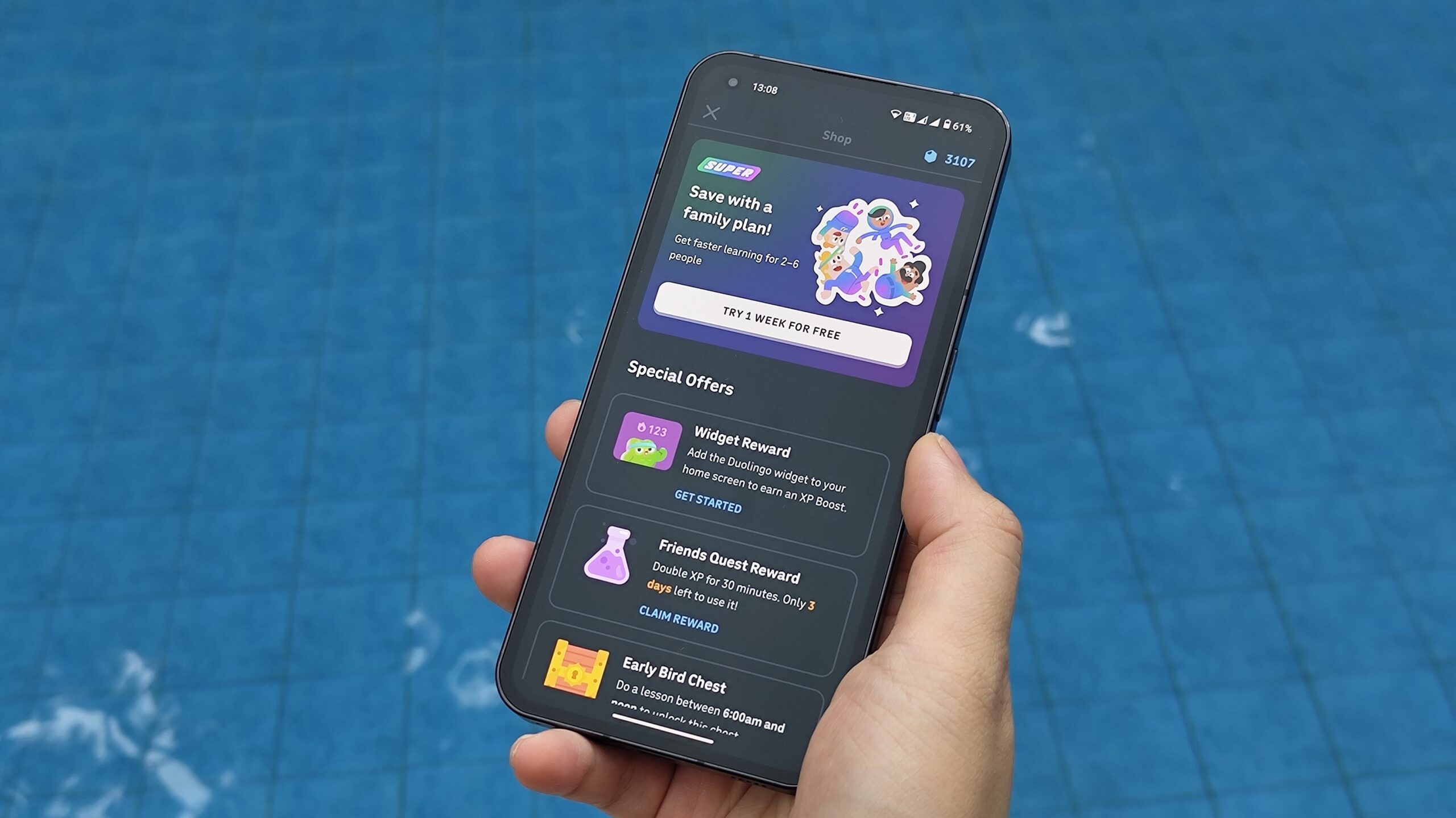
Duolingo pushes its paid subscription tiers more than ever. After logging back in to my old account, I was met with the app’s insistence that I subscribe to its Super version before I could even check my previous progress. I just wanted to know my current level of German before committing to anything. I then did a refresher course and was encouraged to download an unrelated app.
The app was Brawl Stars, a mobile game by Supercell, the same publisher as Clash of Clans. Apparently, it has an ongoing collaboration with Duolingo. I’d have to complete Duolingo tasks to earn rewards on Brawl Stars. Again, I simply wanted to assess my current proficiency in German.
I finally entered the home page after going through dozens of screens. I was given 25 energy to start. This was only enough for two to three lessons at a time. If I made mistakes, I would lose more energy, and I’d have to recharge to continue. Recharging is done either by watching an ad or by using gems I accumulated from completing lessons or challenges.
Although the gem system has always been a limiting factor for free-tier users, it’s even more restrictive today. Previously, I could complete at least five lessons before the 25 charges ran out. I considered that enough for daily lessons with my busy work schedule. Now, I’m lucky to get three lessons without using gems or watching ads.
There are workarounds to avoiding third-party ads, but those would be replaced by Duolingo’s in-house ads. The app constantly reminds me to upgrade to Super or Max to continue learning. I gave the Super trial a shot to see if it truly improved the experience. While it did allow me to learn without limits, Duolingo pushed me to maintain streaks and reach higher ranks using the unlimited energy. Gamifying the modules took priority over actual learning.
After my seven-day Duolingo Super free trial ended, I decided to return to my previous go-to language app, Gemini. I chose it over other AI bots like ChatGPT and Claude because of Gemini Notebook and its built-in presets. Gemini had always been more beginner-friendly to me. I also have Gemini’s AI Plus tier since it’s bundled with my Google One subscription.
There are many ways to get started on Gemini. You could start by asking it to create a study plan for you right off the bat. It would then ask for your goals and current language proficiency. From there, you can customize the schedule or add some challenges in between. The strength of Gemini is its responsiveness. Unlike Duolingo, you can ask follow-up questions or tell Gemini if the difficulty doesn’t suit you.
I personally started with Gemini Notebook. I named the notebook “Learn German” and set it to Study and Learn. Gemini brought up my past chats about visiting Berlin and learning conversational German. The Notebook gradually filled up with my priorities and practice quizzes. It allowed me to choose where to start. If I wanted more or less of a certain lesson, I told Gemini to make the adjustments.
Gemini doesn’t pressure me to study every day. I can learn when and how long I want. There are days when I can completely forget about learning German. Other days, I spend a solid hour studying on Gemini to make up for lost time. Best of all, I don’t have to deal with streaks or energy. There’s no anxiety when making grammatical mistakes, followed by losing charges for another lesson.
There are a couple of downsides to using Gemini exclusively. First, I have to formulate my own curriculum. If I hadn’t had prior knowledge from my German classes in college, I’d have no idea whether what I was learning on Gemini was appropriate for my proficiency level. Second, Gemini is poor at voice lessons. While it can handle back-and-forth conversations, the chatbot doesn’t correct my pronunciation or word choice.
I chose to keep Duolingo in spite of its flaws. It fills in the gaps of the features Gemini lacks. Its modules serve as a guide to each proficiency level, and the occasional game or voice lesson is visually more pleasing than whatever Gemini offers. There are a few tricks to make Duolingo more playable.
One tip is to use Duolingo on a web browser. Using it on a browser with ad blocking already solves one issue. Another obstacle it helps resolve is energy. You instead get hearts that are consumed for each lesson. When you run out, you’re allowed to accept a practice lesson to gain more. Once those are empty, you can go back to the mobile app and use a full energy bar.
Another trick is to disable leagues and leaderboards. This eliminates the stress of keeping up with other users. This can only be done on a web browser, however. You have to log in to your account, go to the privacy settings, and set your profile to private. It automatically removes you from competitive play,
I’ve learned to use Duolingo and Gemini together. My workflow is to finish Duolingo’s daily tasks until I’m out of hearts and energy, then switch to Gemini for more interactive lessons. Duolingo is the teacher, whereas Gemini is, in a way, the helpful seatmate.
Combining Duolingo and Gemini in learning a foreign language gives me the best of both worlds. I have Duolingo’s lesson structure and a deeper understanding of the language with Gemini. This works well when Duolingo skims over an important grammar lesson. I ask Gemini to expound and provide more context.
The goal is to learn without added stressors. Each platform has its own downsides, but combining their strengths gives me an all-around tutor. I no longer succumb to the pressure of completing tasks for the green owl.
Thank you for being part of our community. Read our Comment Policy before posting.