Affiliate links on Android Authority may earn us a commission. Learn more.
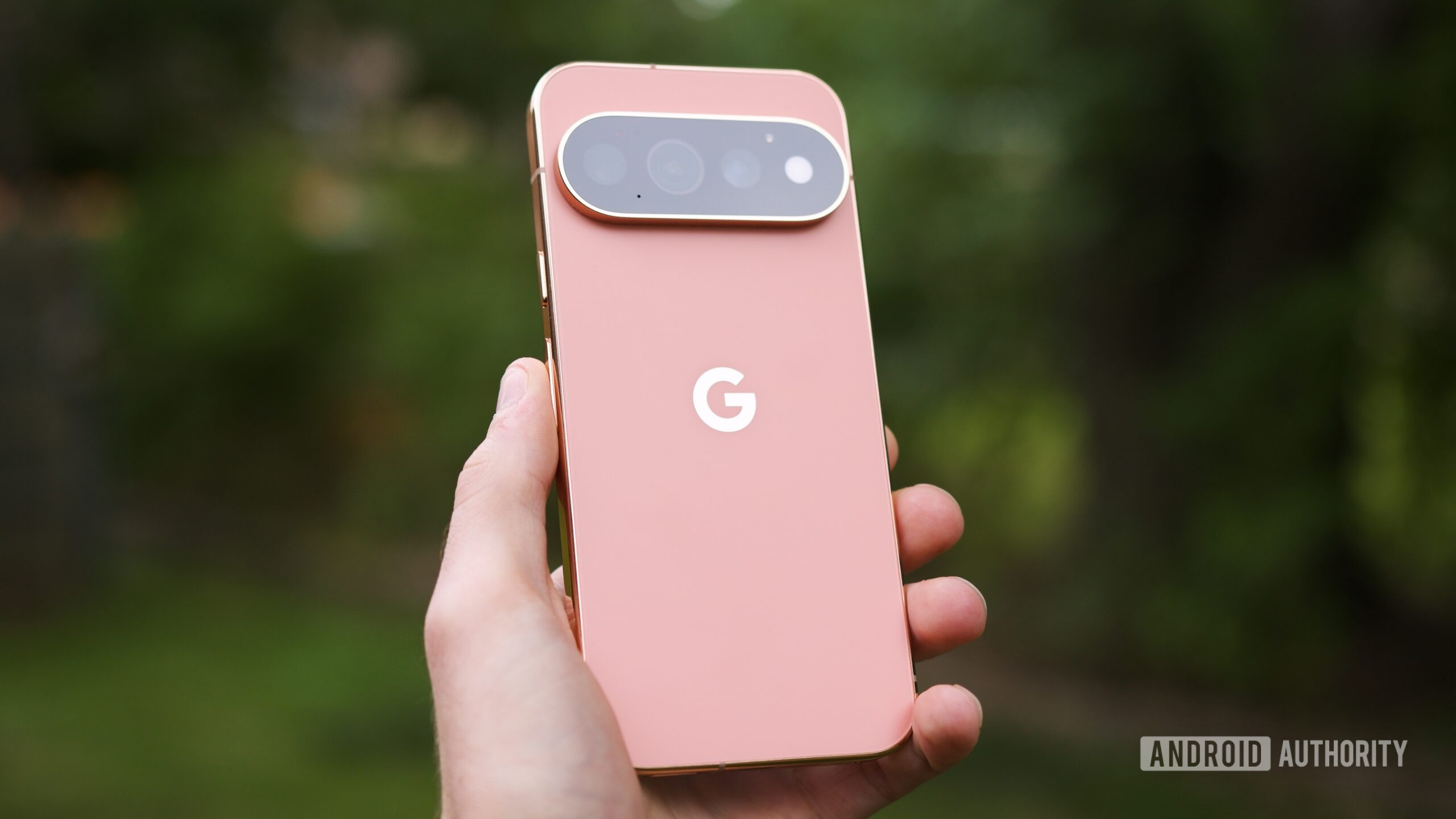
I wasn’t expecting much from the Pixel 11 Pro. I didn’t plan to buy the phone, let alone love it. In fact, the original idea for this article was to discuss how Google hasn’t earned the right to make small iterations of its phones the way Samsung and Apple have, and that I was going to keep my Pixel 10 Pro.
In the end, I changed my mind, and after almost a week with my Pixel 11 Pro, I can say that Google has (barely) done enough this year, and I’m glad I upgraded.
As I alluded to before, I didn’t plan on buying a Pixel 11 Pro. I loved my time with the 10 Pro, but it had been plagued by issues, mostly related to the outdated modem. There were parts of my town that I never got signal, but my Z Fold 7 or Razr Fold would. It would frequently drop calls and, most of all, get uncomfortably hot. The modem drank battery juice at an alarming rate, too.
In the Pixel 11 series, Google has finally upgraded to a new modem. That was the first thing that had me curious, and all of the new camera upgrades and tweaks had my attention. Still, my plan was to wait another year and see how others got on with the phone before upgrading to a Pixel 12 next year.
Google had other plans, though. I managed to combine four pre-order discounts and offers, and by trading in my 10 Pro, I got the 11 Pro for less than £200. At that price, my curiosity overpowered my restraint.
The new modem in the Pixel 11 Pro makes me equally happy and angry. I’m happy that it has addressed almost all of my major problems with the Pixel, and angry that Google waited so damn long to fix them. Fans have been begging Google to change the modem for years, and waiting this long is the bare minimum of effort Google should’ve put into Tensor.
It’s early days. Every phone impresses when it’s new, and I know I can’t speak for how the Pixel 11 Pro will age. Even so, the differences I’m seeing in this phone versus my Pixel 10 Pro are impossible to ignore. I have signal everywhere I didn’t before. Over the last week, I’ve purposely driven to parts of my local area where my 10 Pro didn’t get service, and the 11 Pro has maintained a connection in all of them. Clear phone calls over my car’s hands-free system that haven’t dropped out as I drive into a new area, and a strong, reliable 5G data connection are things I’d given up on getting in a Pixel.
General performance and battery life will fluctuate as a phone ages, but the ability to maintain signal shouldn’t, and on that metric alone the Pixel 11 Pro has passed every test. Even in more remote areas where all phones have shaky signal, the 11 Pro kept up with my Galaxy Z Fold 7 and didn’t get even remotely warm as it searched for a connection.
Even with how Pixel performance and battery life can fluctuate over time, I’m satisfied with where we’re starting this year. Even at its best, my Pixel 10 Pro would regularly get toasty, especially in apps like Instagram, where it was having to decode so many image and video files. The Pixel 11 Pro doesn’t change temperature at all, at least not to the touch. In fact, this phone has only gotten warm once in my week with it, and that was using wireless Android Auto with GPS navigation. Every phone I’ve ever used has gotten warm under those conditions, but instead of becoming unbearably hot as the 10 Pro did, the new phone feels like it matches a Galaxy S26 Ultra’s thermal performance.
Battery life varies widely from person to person, and I haven’t done any reliable testing to provide endurance numbers. What I can tell you is that it lasts longer than my Pixel 10 Pro ever did, especially when idling. I haven’t had to charge before bed yet, usually going from 8 am to 11 pm with 20% left. I’m hoping that’s something I can still say in six months’ time, but we’ll have to wait and see.
The upgrades made to the camera are more noticeable than I expected. The new telephoto sensor can focus on subjects that are closer to it than before, which makes pictures like the first one possible. Getting a bleary-eyed photo like this on my 10 Pro would’ve meant getting a lot closer to the subject with the primary camera, which would come with the risk of him moving.
Camera Looks are everything I wanted them to be. Ever since Apple added Photographic Styles to the iPhone, I’ve been begging for an Android manufacturer to do something similar, and Google has. I’ve set “Vanilla” as my default with some tweaks to darken shadows and add some contrast.
Equally as impressive is how fast the cameras are now. Google claims Night Sight is 3x faster, and I believe it. Photos that would usually be blurry from a moving subject are now razor-sharp because the capture is so quick, and the Pixel 11 Pro is even faster at focusing on Bandit despite his dark fur. The Pixel 10 Pro was already quick to focus, especially compared to Samsung phones that are somehow totally unable to see black cats, but the 11 Pro is even faster. If you take a lot of photos of pets, children, or other frequently moving objects, then the Pixel 11 Pro may be the best phone camera you can buy.
I’m not going to gush over this phone without talking about its flaws. The Pixel 11 Pro has impressed me far more than I’d expected, but that doesn’t mean it’s perfect, nor does it mean my initial reservations were unwarranted. When I saw the phone on paper, my immediate thought was that Google hasn’t earned the right to iterate in such small ways. Samsung and Apple make small upgrades each year, but a small improvement to a great phone leads to a greater one. Small upgrades to a mediocre phone only make it less mediocre.
Satisfied as I am with the phone and how it does everything I want it to, I still think it should do more at this price. Samsung has adopted silicon-carbon (Si-C) batteries for the Z Fold 8 and Fold 8 Ultra and will likely do the same for the Galaxy S27 series. Motorola is using the technology across the entire Razr lineup this year, too, and both Moto and Samsung offer much faster charging on their phones than the Pixel.
Wireless charging is especially painful. 25W Qi2.2 on all models instead of just the XL is nice, but Google has done nothing to make older wireless chargers work. The Galaxy S26 Ultra supports Qi2.2, but it can also charge at up to 15W on old Qi1 chargers, too. The Pixel 11 Pro won’t, rendering practically every wireless charger I own or come across in a car, restaurant, or anywhere else useless.
Even though I’m happy with the performance that Tensor delivers, that doesn’t mean everyone else should be. I don’t game on my phone, but plenty of other people do. If I’m paying the same price for this as I would for the competition, it should match them in power, even if I’m not going to use it.
To me, the Pixel 11 Pro and the Tensor G6 feel like a new foundation for future Pixels. It seems the heat issues have been fixed, and the new modem has all but eliminated connectivity issues. It’s a solid base on which to build going forward, which could be great for the Pixel 12, but it doesn’t make the Pixel 11 a better value than the competition.
Google has given the camera some much-needed character, made sure the phone can maintain a phone call, and ensured it won’t cook your hands. Next year it needs to work on everything else.
Thank you for being part of our community. Read our Comment Policy before posting.