
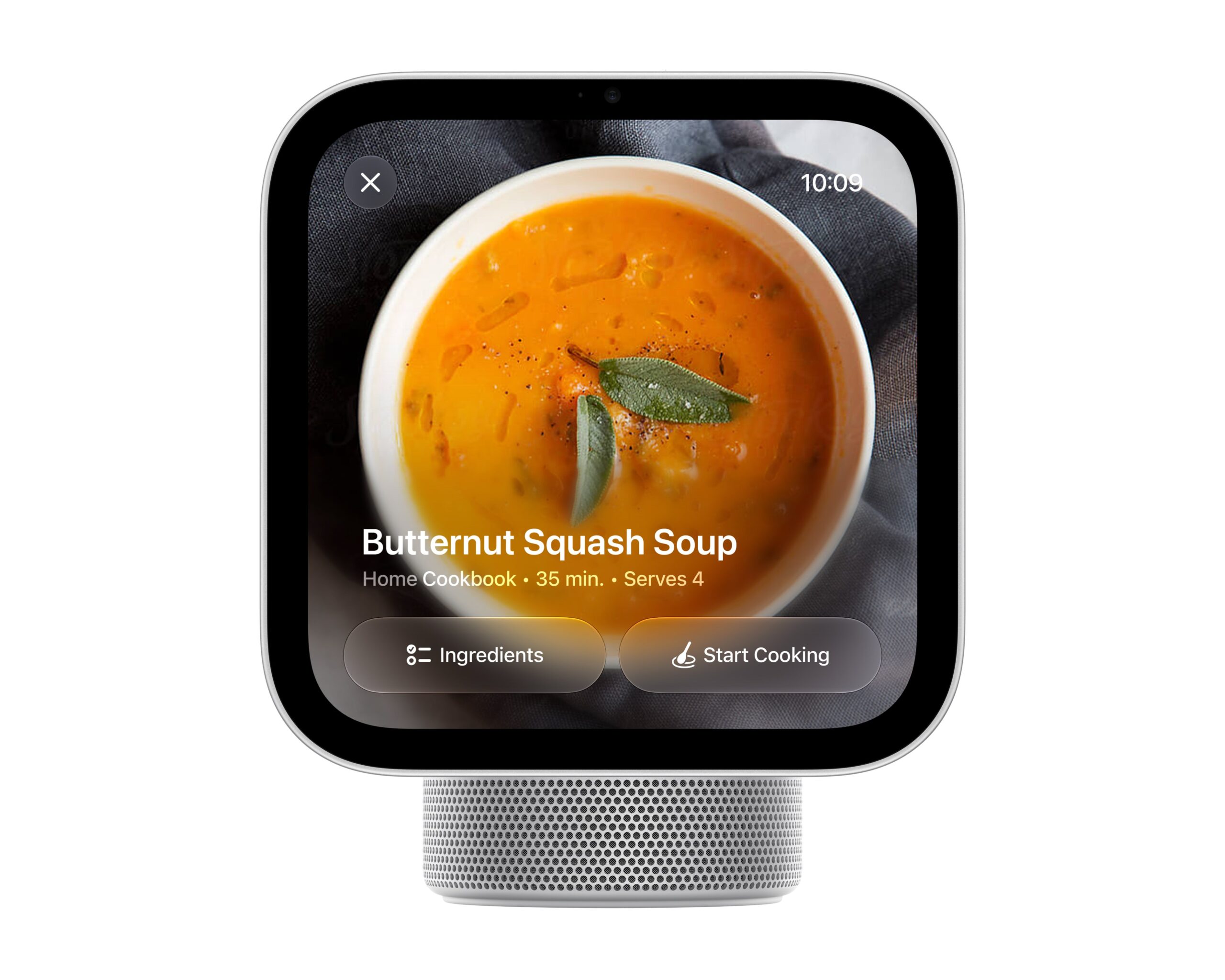
Its simplified, hands-free instructions strip out much of what’s essential to online recipes.
Its simplified, hands-free instructions strip out much of what’s essential to online recipes.
When Apple revealed the HomeView to the world, it did so with an unusual ad for the company: Instead of pristine, polished tech in immaculate rooms, it’s a three-minute look at the messy, frantic morning routine of a family of five. Apple’s new smart display sits in the center of the chaos on the kitchen table, helping the family check their calendars, send messages, and pull up a French toast recipe in seconds, with simple, step-by-step instructions.
The HomeView is just the latest in a long line of websites, browser extensions, and smart home gadgets with the same promise: that it can take an online recipe and strip it down to the essentials. Instead of scrolling a lengthy webpage that might range from helpful cooking instructions to seemingly irrelevant personal anecdotes, with the recipe itself way down at the bottom, you simply get ingredient lists, cooking instructions, and timers, all navigable hands-free with voice controls and Siri AI. No distractions, no unnecessary text, and no need to deal with a touchscreen while you’re wrist-deep in a chicken carcass. The appeal is obvious.
The good news for recipe writers is that Apple’s approach guarantees at least one visit to their original web page. To load a recipe onto the HomeView screen you have to first open it either on your iPhone or through Safari on the HomeView itself, ensuring you’ll see its ads at least once. That’s welcome, but for website owners it’s still a lot less valuable than the repeated ad impressions that come from someone scrolling down the page and staying on it while they cook.
“Nearly every food blog has a ‘jump to recipe’ button right up at the top, so you don’t actually have to scroll. So if you’re still out here complaining about these essays, you’re just an asshole.”
It’s not just bad for the writers, either — readers and home cooks may be missing out too. “The additional information around recipes can sometimes be really helpful when it comes to troubleshooting problems that could come up while cooking or addressing things like ingredient swaps,” says Makalintal. Apple’s simplified steps may make some recipes easier to follow, but others might become harder without crucial context included elsewhere on the page.
And as common as gripes about recipe intros are, they’ve long been easy to skip if you really insist. “Nearly every food blog has a ‘jump to recipe’ button right up at the top, so you don’t actually have to scroll,” says Jaya Saxena, one of the founder-owners of the food website Ravenous. “So if you’re still out here complaining about these essays, you’re just an asshole.”
Apple is far from the first company to attempt to streamline online recipes. In 2021 startup Recipeasly promised to “fix” online recipes by removing the ads and “life stories.” It barely lasted a weekend before online backlash forced its founders to take it offline. Bigger tech companies have been able to plow through that resistance. Amazon’s Echo Show displays offer similar hands-free cooking features to the HomeView’s, though only with partner sites like Allrecipes or Epicurious. Google’s Nest Hubs used to as well, though Google ultimately removed the step-by-step recipe feature from its Nest Hubs in 2024, along with other “underutilized” features. Apple’s approach, which it says will work with any online recipe that uses Google’s search-friendly recipe formatting, is unique among the current smart home hubs. Perhaps most egregious of all, Google Search now uses Gemini AI to amalgamate online recipes, presenting a streamlined version right on the search page, saving users from ever needing to click through to the original sources at all.
Saxena says that for established writers, this is “more like a continuation of the threats they’ve already seen.” Unless Apple sells vast quantities of HomeView displays, its recipe function is still likely to be used by far fewer people than Google’s AI search recipes, let alone recipes from other AI assistants and tools, which are also more egregious in how they take advantage of online content. “I would put the threat level below AI summaries,” says Makalintal, because their “opaque” sourcing “really is erasing labor.”
Some version of paid-for content may be the only answer going forward, though, for creators both big and small. Tech companies like Apple will have to grapple with how their tools work when access to free content gets trickier, and the rest of us may have to get used to paying for recipes again.
“A good, creative recipe that has been tested to ensure it really works takes time and effort and money,” Saxena says. “It is a real skill to communicate how something is made when you’re not physically with that person, and buying all the ingredients needed to test things multiple times is expensive. People should probably be more comfortable paying for that.”