
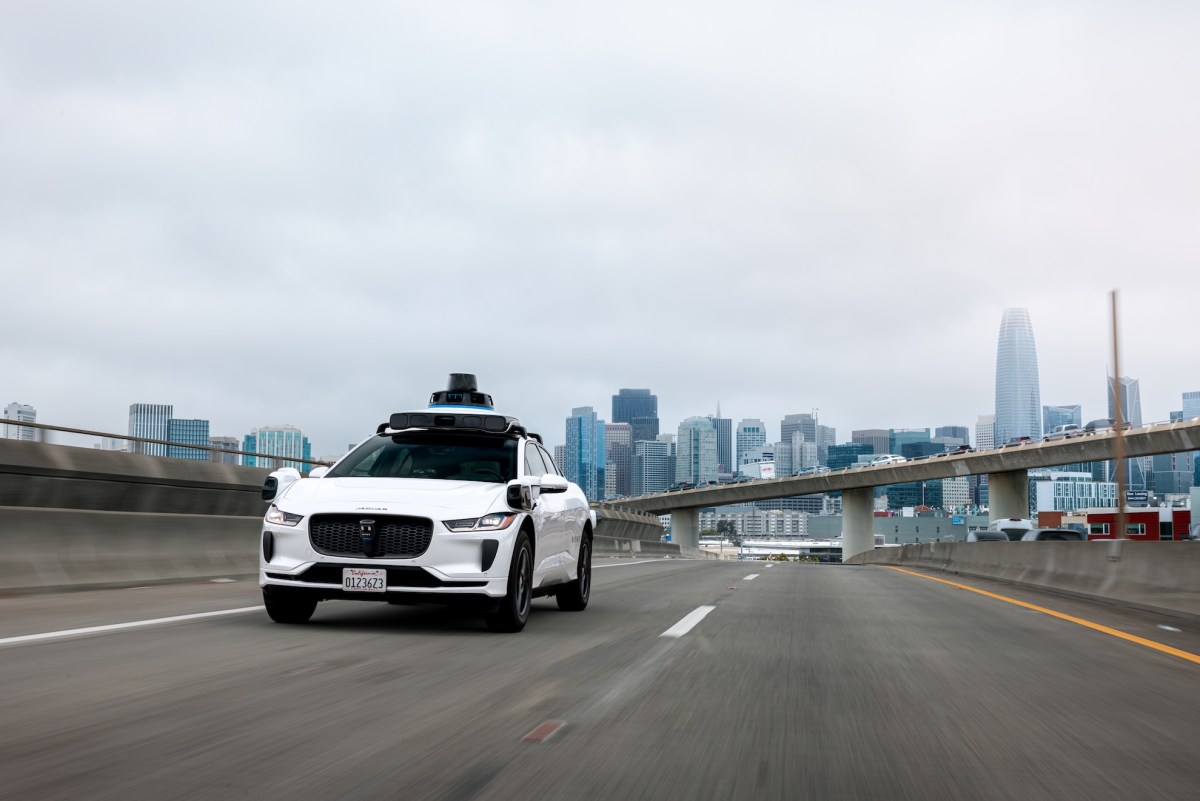
Waymo is slowly adding freeway routes back to its service area more than two months after the company stopped driving these high-speed roads due to how its robotaxis behaved near construction zones.
Waymo announced Wednesday in a post on X that it would gradually add freeway routes, starting with Phoenix — the company’s first driverless ride-hailing market. More cities, including Los Angeles and the San Francisco Bay Area, would follow in the coming days, a Waymo spokesperson told TechCrunch.
In an emailed statement, Waymo said it was “resuming freeway operations across its entire service area, including areas with construction, after implementing software updates designed to improve performance around freeway construction zones.”
Those software updates included enhanced scene recognition and routing, according to the company.
The freeway pause — and its restart — comes amid increased scrutiny into Waymo and other robotaxi operators, particularly over how these self-driving vehicles behave in certain high-traffic situations and around emergency responders. Earlier this week, Rep. Kevin Mullin (D-Calif.) proposed a bill that would direct federal regulators to establish minimum national safety standards for autonomous vehicle operators following a number of incidents in which autonomous vehicles blocked ambulances and fire trucks, drove into active crime scenes, and failed to recognize safety signals such as traffic cones and flares.
Waymo started offering robotaxi rides that used freeways across San Francisco, Phoenix, and Los Angeles in November 2025, a critical expansion for the company as it sought to attract riders with shorter commute times and faster access to airports. It would later add freeway routes in Miami.
The expansion proved to be popular, and when it suddenly disappeared in May, riders took to social media to ask why. At the time, Waymo told TechCrunch it wanted to improve the performance of its robotaxis in construction zones, noting that it was in the process of integrating “recent technical learnings into our software and expect to resume these routes soon.”
Weeks later, Waymo voluntarily recalled its fleet of nearly 4,000 robotaxis after identifying at least 13 instances of its robotaxis driving into highway sections that were closed for construction, according to a filing submitted in June with the National Highway Traffic Safety Administration. A Waymo spokesperson said there were no injuries or collisions reported in connection with these events. However, after reviewing the incidents, the company said it decided to temporarily restrict freeway operations.
This was Waymo’s sixth recall of its robotaxis. Previous recalls included software fixes after its robotaxis drove into flooded roads and behaved illegally around school buses.
When you purchase through links in our articles, we may earn a small commission. This doesn’t affect our editorial independence.
Scale faster. Grow your portfolio. Gain practical expertise. No matter your goal, Disrupt can empower you.Save up to $330 today!
Librarians are hosting viral ‘Avoiding AI’ workshops for people who are fed up with Big Tech
SpaceX launches new V3 Starlink satellites but suffers another booster failure
Prentis, new AI lab co-founded by Reid Hoffman, Mark Pincus in talks to raise $100M
US accuses American of allegedly wiping his phone using a ‘duress’ password during border search
Anduril reportedly in talks to raise funding at $100B valuation, more than 3x last year’s mark
OpenAI makes ChatGPT Health available to all US users