
For hard-tech startups, manufacturing is a pricey endeavor. Now, Thea Energy has a leg up courtesy of a Department of Energy grant.
The fusion power startup told TechCrunch Monday that it has received a $20 million award from ARPA-E to help manufacture its modular high-temperature superconducting (HTS) magnets.
HTS magnets are costly but important components in any magnetic confinement reactor, one of the two main ways startups are attempting to harness fusion power for commercial purposes. In magnetic confinement reactors, powerful magnetic fields contain and compress plasma, helping to heat the particles until the fuel can fuse and release large amounts of energy.
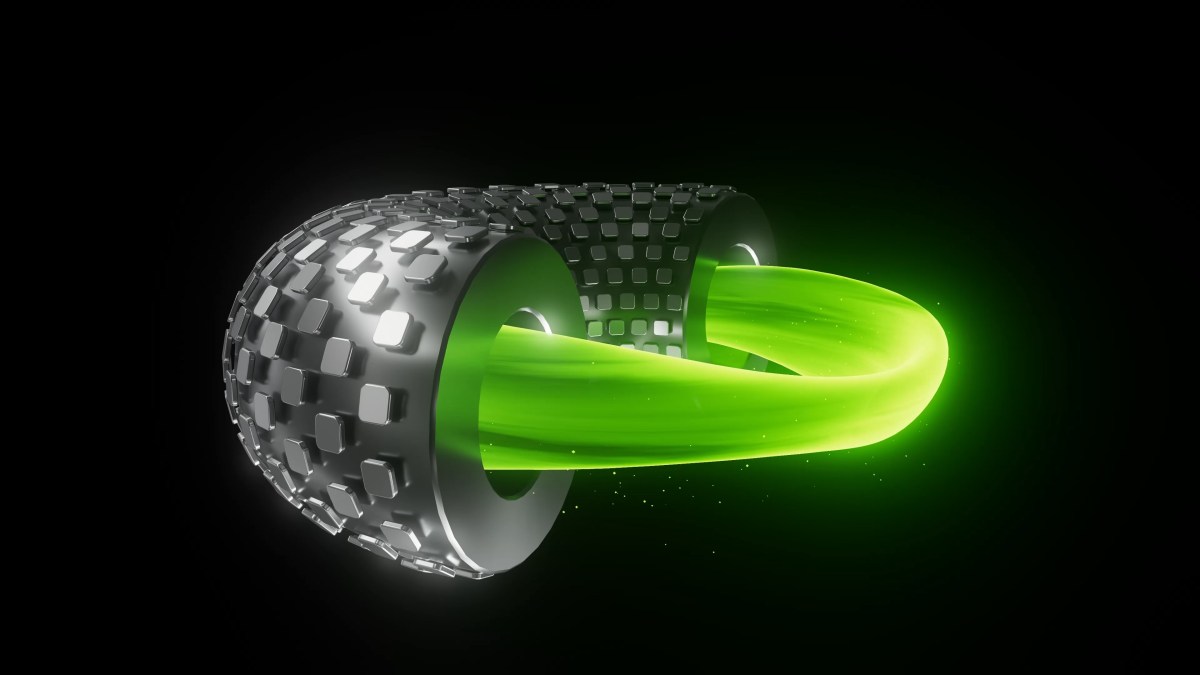
Thea’s reactor is based on a design known as a stellarator. Stellarators look like inner tubes that have been twisted and squeezed in ways that help it confine the plasma more effectively. Most stellarators use magnets that are built to mimic those twists and turns, which makes them expensive to manufacture.
To minimize manufacturing costs, Thea uses fewer variants. The 12 large magnets that do the heavy lifting are made from four different templates, and the more than 300 smaller magnets used to fine tune the plasma are all identical. They’re arrayed around the periphery of the reactor, similar to how pixels are distributed across a computer display.
The small magnets are controlled by software, an arrangement that should allow for more forgiving construction tolerances, which could lower costs, Thea says.
Thea is among the top funded fusion power startups, having raised $100 million in May on top of a $20 million Series A it raised in 2024. Like many of its peers, Thea has plans to build a commercial-scale fusion power plant in the mid-2040s.
When you purchase through links in our articles, we may earn a small commission. This doesn’t affect our editorial independence.
Tim De Chant is a senior climate reporter at TechCrunch. He has written for a wide range of publications, including Wired magazine, the Chicago Tribune, Ars Technica, The Wire China, and NOVA Next, where he was founding editor.
De Chant is also a lecturer in MIT’s Graduate Program in Science Writing, and he was awarded a Knight Science Journalism Fellowship at MIT in 2018, during which time he studied climate technologies and explored new business models for journalism. He received his PhD in environmental science, policy, and management from the University of California, Berkeley, and his BA degree in environmental studies, English, and biology from St. Olaf College.
You can contact or verify outreach from Tim by emailing tim.dechant@techcrunch.com.
Scale faster. Grow your portfolio. Gain practical expertise. No matter your goal, Disrupt can empower you.Save up to $330 today!
SpaceX launches new V3 Starlink satellites but suffers another booster failure
Prentis, new AI lab co-founded by Reid Hoffman, Mark Pincus in talks to raise $100M
US accuses American of allegedly wiping his phone using a ‘duress’ password during border search
Anduril reportedly in talks to raise funding at $100B valuation, more than 3x last year’s mark
How OpenAI’s human mistake led to the AI-powered hack on Hugging Face
Jack Dorsey is taking on Slack with Buzz, a group chat platform for teams and their AI agents