Affiliate links on Android Authority may earn us a commission. Learn more.
Soaring memory and chip prices have been having an adverse effect on hardware prices for a few months. Apple already raised its streaming box’s prices some time ago, but the long-anticipated Apple TV 4K 2026 recently launched with an even higher, eye-watering price tag of $299, bringing it right on par with the Nvidia Shield TV Pro after its recent hike. For comparison, the previous Apple TV 4K used to start at a much more palatable $129. Not too long ago, there were rumors that Apple might release an even cheaper variant next — but it went the opposite way.
$300 is way too much money to watch Netflix while you scroll on your phone — you can get a full-blown TV for that kind of price these days. If you don’t mind stepping outside Apple’s walled garden, you can easily snag a much better deal where you not only get premium hardware and all the associated perks, but also save tons of cash upfront.
Here are the best streaming boxes that you should consider instead of the new Apple TV 4K 2026.
Despite being a couple of years old, not many streaming boxes have been able to catch up to the Google TV Streamer 4K in one key area: RAM. Google’s Apple TV 4K alternative comes with a generous 4 GB of RAM, which gives it enough headroom to last you a good few years without feeling sluggish. And that’s when the entire industry is scrambling to save on memory chips.
Google’s streaming box also felt the heat of rising component prices, and its sticker price went up from a more palatable $99 to $149 recently. That is still half of what Apple is asking for today, without losing any of the premium features. The Google TV Streamer left us impressed with its snappy performance while supporting nearly all standards under the sun, including Dolby Vision, Atmos, HDR10+, HLG, Matter, and Thread. So, you are covered no matter what kind of TV you own.
I have purposely included the Fire OS-powered Amazon streaming stick instead of this year’s model with the new Vega OS, which comes with a handful of limitations and is yet to prove its mettle. It is better to stick with the product that is more widely used and trusted. And don’t worry, though, getting last year’s Fire TV Stick 4K Plus doesn’t mean you lose out on Amazon’s recent innovations, including Alexa+.
The Plus variant specifically supports Dolby Vision, which is a lot more pleasing to look at than standard HDR10, so it’s worth the extra spend. However, I would suggest you don’t buy the stick at its full price because Amazon frequently slashes up to 50% off its price — anything under $40 is good to go.
While Amazon’s streaming sticks don’t come with the slickest-looking operating system, they fit perfectly well into an Alexa-powered smart home, allowing you to control your TV with an Echo speaker or use your smart home devices right from the Fire TV.
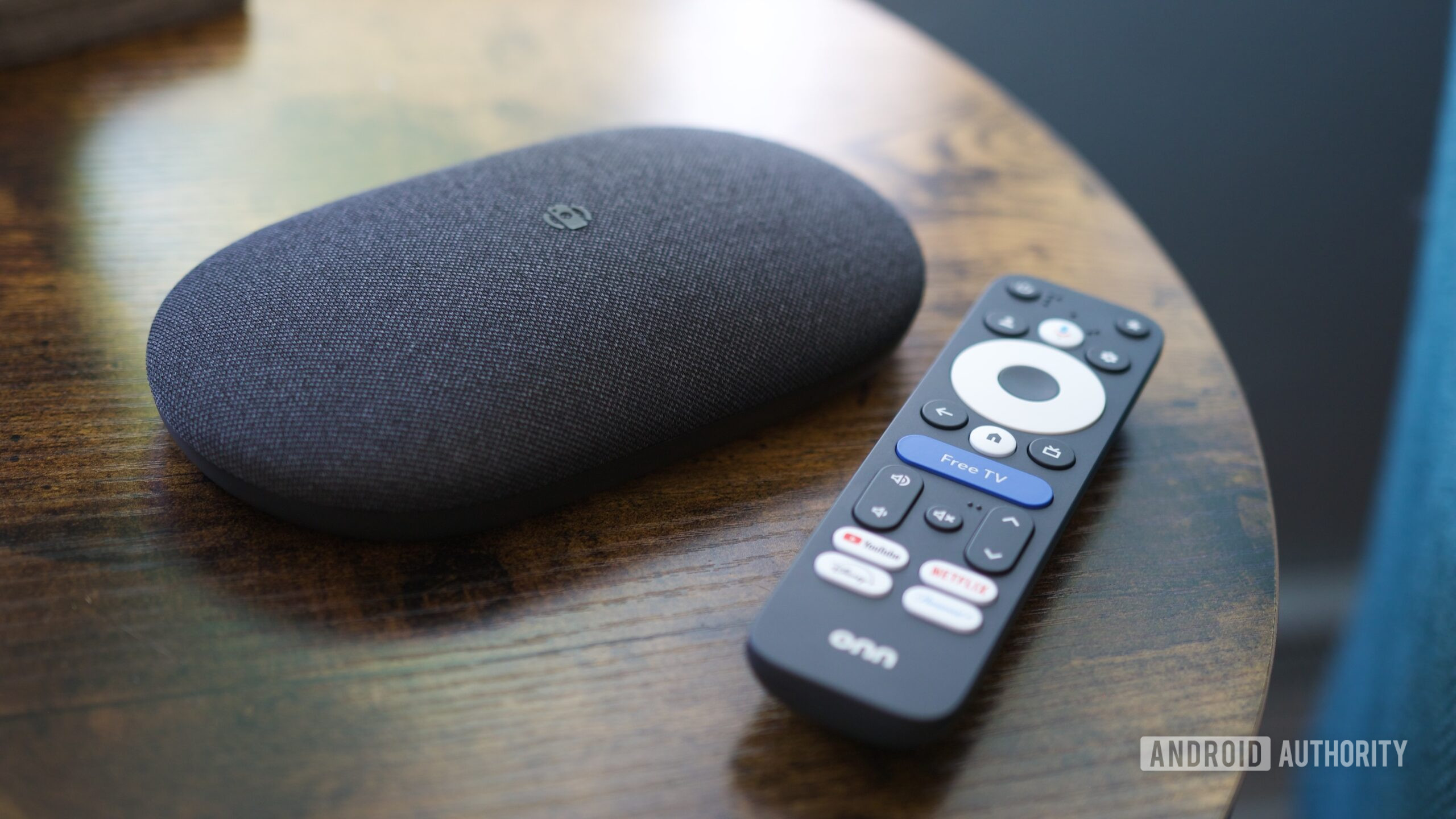
The Onn 4K Pro was a nice entry this year, mostly because of how much it offers while being so affordable in this economy. It looks similar to the Google TV Streamer and supports all the bells and whistles, including premium Dolby Vision and Atmos standards, USB-A and Ethernet ports. If that wasn’t enough, the Onn 4K Pro has a backlit remote with a remote finder, and the box even has hands-free Gemini support, something Google’s own hardware doesn’t.
It runs Google TV, so you will never run out of apps to use, and comes with a generous 3 GB of RAM, which is good enough for the tasks it is designed for. When my colleague Joe Maring spent some time with it, he found the interface to be both responsive and reliable across the board. It’s honestly surprising that Walmart is able to offer so much at an MSRP of just $60. We could always ask for more features and better performance, but for the asking price, it’s an absolute steal.
The latest Xiaomi TV Box S is definitely not winning any performance awards with its basic Amlogic processor and a meager 2 GB of RAM, but it’s a no-nonsense, no-frills, smart-looking streaming box that runs Google TV and gets the job done. It covers the basics and more, with a USB-A port on the back to connect peripherals, along with support for Dolby Vision, Atmos, and HDR10+. Plus, there is 32 GB of onboard storage, which is fine for storing dozens of media apps.
If you’re coming from an older Xiaomi streaming box, you will notice a performance uptick, though do not expect Google TV Streamer-like performance from this $100 Xiaomi TV Box S. It is a great tool for everyday, non-demanding use, such as on a spare TV in the guest room; it’s, in fact, a bargain for that kind of use, or if you fancy streaming local media, which happens to be one of its strongest use cases among consumers.
As an ultra-cheap option, the Roku Streaming Stick HD stands out, often going as low as $20, making it a no-brainer if you want a compact, minimal device to plug into your hotel TV while traveling or give your old HD TV a new lease on life. It comes with straightforward software that works with all major streaming services, while Roku also bundles its free ad-supported TV channels for when you can’t find anything to watch.
Not being in either Google’s or Amazon’s camp, Roku fits seamlessly into your existing smart home setup, be it based around Gemini, Alexa, or Siri. It comes with a decent remote that can replace your TV’s controller and has everything you can ask for and then some. While it may sit at the opposite end of the spectrum compared to the Apple TV 4K, it serves a particular purpose at the lower end of the segment and more than justifies its asking price, especially on sale. Pick it up almost instantly if you find it retailing for under $30.