
Year-old startup Flapping Airplanes has wowed Silicon Valley with an impressive founding team and a mission to find ways to train large models with less data. On Wednesday, the company announced it had raised a $1 billion Series A round, co-led by Index and Lux, reportedly at a $6 billion valuation.
The round comes just nine months after the company launched with a $180 million seed round from GV, Sequoia, and Index. That seed round had valued the company at $1.5 billion, so its valuation just quadrupled.
Other participants in the new round included earlier backers Sequoia, GV, and Kleiner Perkins. Valor, Atreides, Kleiner Perkins, A*, and Nvidia are also investors in the company.
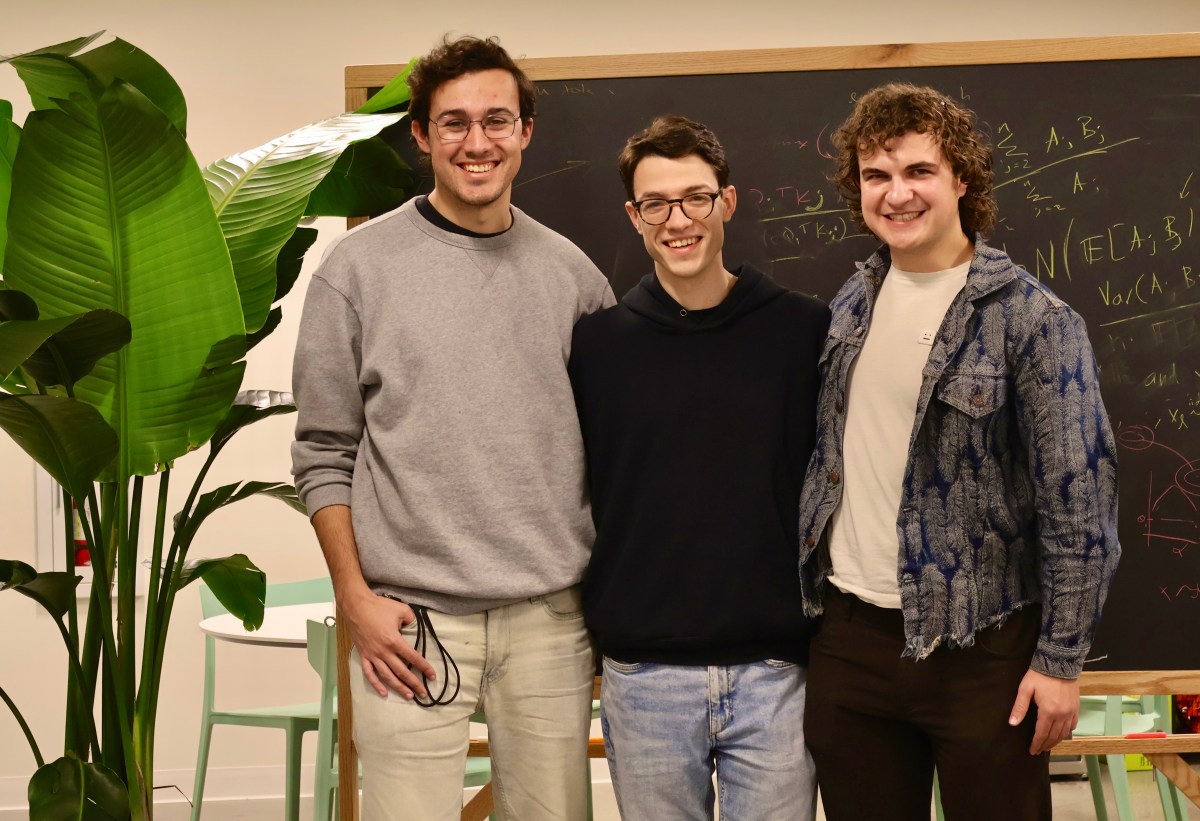
Flapping Airplanes was founded by Aidan Smith and brothers Asher and Ben Spector. Smith is a former founder and Thiel fellow who worked at the brain implant company Neuralink during college. Asher Spector was a statistics PhD at Stanford, while Ben Spector was a computer science PhD student at Stanford and founded Prod while at MIT.
Prod is an almost secret-society, five-year-old student-run startup accelerator that has “become one of the most powerful talent incubators in Silicon Valley,” wrote Sequoia partner David Cahn, a Flapping Planes investor, in a post earlier this year explaining why he invested. Together, the founders “are building the ‘young person’s AGI lab,’” as Cahn described it.
The founders describe their work as “the world’s most complete megakernel framework. It can perform entire training runs, serve inference, play video games, and even do all three simultaneously in a single kernel.” (A kernel is a program that runs on a GPU, and a megakernel bundles many tasks into one program.)
The founders claim the framework “can overlap memory-bound inference with compute-bound training,” meaning it can run a task that spends most of its time waiting for data to be fetched alongside one that spends most of its time doing math, so the chip is rarely sitting idle. The premise is that AI has barely scratched the surface of what GPUs can do, and they believe it can create intelligent systems “without ingesting half the internet.”
The goal is systems that cost less to train and run. “A model that’s a million times more data efficient is probably a million times easier to put into the economy,” Asher Spector told TechCrunch shortly after the startup launched.
They now have a fresh $1 billion to hire and attempt to turn that goal into reality.
When you purchase through links in our articles, we may earn a small commission. This doesn’t affect our editorial independence.
Buy One Pass, Get a Second FreeCover more ground at TechCrunch’s ultimate founder bootcamp of the year by bringing your co-founder or partner for freeBook before the BOGO deal expires
Airbnb limits chores for guests, sparking backlash from hosts
The internet is having a very bad cybersecurity day
People are using AI to make their smart TVs dumb again
Anthropic says its workforce has become less junior and is spending more time in meetings
Replit makes OpenAI its default over Anthropic, CEO says
Mark Wahlberg wants to take on the longevity-startup crowd with an affordable gym concept
Tesla reveals SpaceX-powered Roadster that flies and falls with style