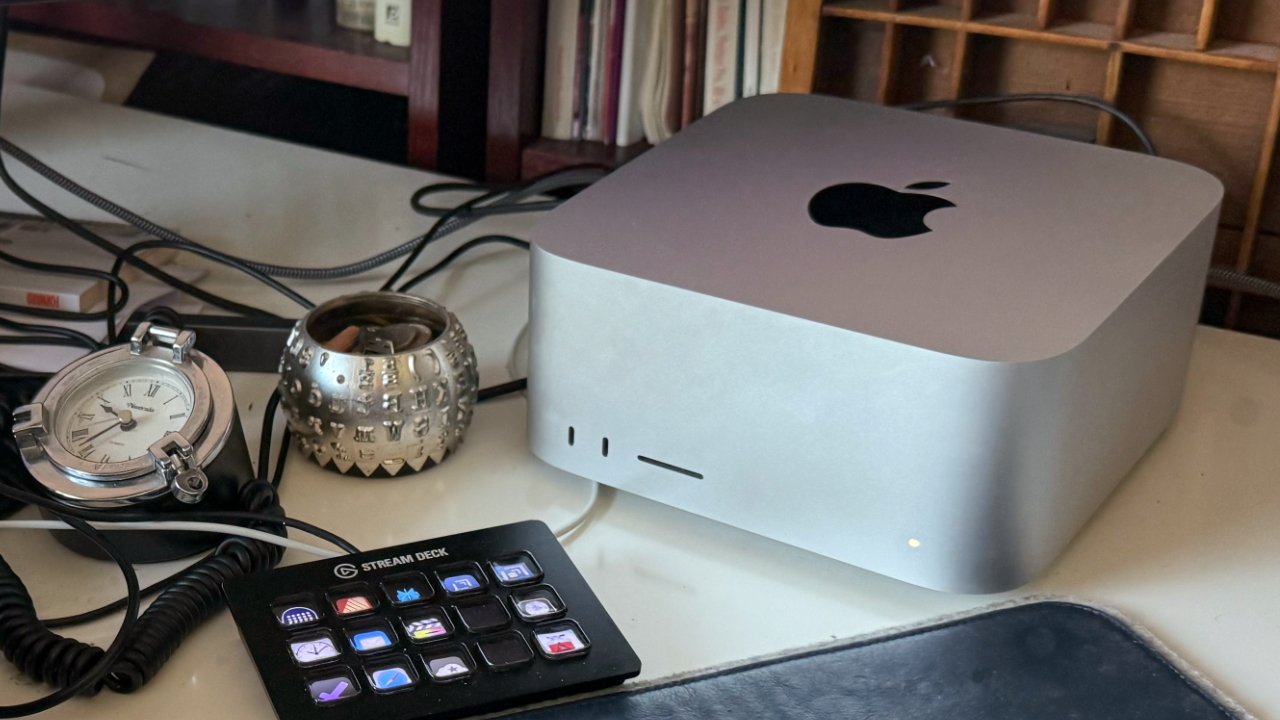
No one will admit that iPhone and Mac pricing is going to go up again, but the rest of the industry is clear that it's inevitable sooner, rather than later.
This isn't a sales post. We can't say what we're about to say any more clearly.
If you are in the market now for any Apple device at all, or you expect to be soon, do not wait. Retail pricing will not get cheaper any time soon.
Back in July 2026, Apple's attempts to keep prices steady took their first stumble. Prices of Macs and iPads went up significantly, and only really the iPhone was immune — for a brief time.
It was all very specifically because of the global chip shortage and how extraordinary demand from AI firms made it more expensive to buy processors and RAM. In August, the Micron CEO Sanjay Mehrotra said that things would not get better until 2028.
"Even as we expect industry supply to improve gradually in 2028, we currently do not have line of sight as to when memory supply will be able to catch up with increasing demand," said Mehrotra. "AI is driving the demand, and that's where the value of memory is really high because it enables the performance of AI."
Flash forward to today when all Apple devices cost more than they did, and the company is believed to have been forced to pay double for some components. On October 1, 2026, Mehrotra was back to report that things were worse for consumers, but better for Micron from a profit standpoint.
Mehrotra says that Micron expects "memory and storage supply-demand conditions to be much tighter in calendar 2027 and 2028 than they were in 2026."
"The majority of our discussions with customers today are already around 2028," he continued in Micron's latest earnings. "Customers want assurance now even beyond [a] 2030 time frame."
Apple picked a bad time to introduce a $2,000 iPhone that is only likely to get more costly soon
He said that in an earnings call where he also reported that over 75% of Micron's 2027 output has already been sold to AI firms. It's not like consumer technology firms are likely to get the remainder, either, as Micron has been concentrating output to AI companies since in 2025, since the company makes the most money that way.
Apple has ongoing contracts with Micron, just as it does with TSMC, the firm that makes most of its processors. Neither are eternal.
For example, in July 2026, TSMC raised its prices by 10%. Apple took the hit.
All the way back in June 2026, when he was still Apple's CEO, Tim Cook described the AI-driven chip shortages as being like a 100-year flood. "We're doing our best to mitigate the huge increases that are being passed to us," he said, "and we've been trying to shield our customers from the increases, but the situation has become unsustainable."
"Unfortunately, price increases are unavoidable," said Cook. That was in June. Apple raised prices just a few days later.
Since then, everything Cook described appears to have become worse. Apple has reportedly agreed to pay $2 per gigabit of DRAM for 2027 devices, for instance, up from $1.50 per gigabit.
So the industry is saying there's no relief. In October 2026, the situation is worse and so there's no question.
Apple will raise prices again and it is only a matter of time. We're guessing there will be another product-spanning hike before the end of March.
Looking further ahead to when the AI demand falters or production capacity catches up, though, there is a further issue. No business ever lowers prices unless it believes it has to, so there is a very strong chance that prices are going to stay high forever.
Which means that Apple's current prices, as inflated as they have been, may not be coming back down. They will, instead, be going up.
Consequently, if you need any Apple devices, the time to buy is as soon as you possibly can. It's tempting to wait, especially when there are always new Apple devices expected, but this is a time for practicality.
If you need a Mac, an iPhone, or an iPad, and the currently shipping models will do what you want, don't wait.