A decade of Pixel, it’s only in the last few years that we have seen Google settle into a rhythm with smartphones. It hasn’t been smooth sailing, though.
Look back at the line-up, and it’s still hard to believe we’ve had a decade of Pixel. If you asked me back in 2016 whether Google’s in-house hardware experiment would stick around long enough to reach fully custom 3nm silicon, I’m not sure I’d have believed you.
To say that Google was late to the market is an understatement. By 2016, Apple and Samsung were already well into the swing of things. To be fair, that still is the case a decade later, but now with an even tighter iron grip over the space. I was personally distraught when the Nexus lineup was canceled to the point that I actually went with the Galaxy S8 rather than wait to see what Google had in store next.
Google’s answer to the ‘big two’ was Pixel. A phone not “officially” made by partners, but still sort of relying on OEMs while the production pipeline or groundwork was laid.
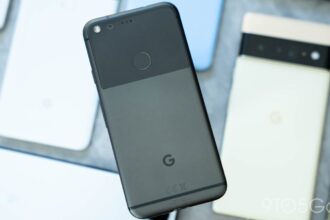
The original Google Pixel was built in a close manufacturing partnership with HTC, featuring a wedge-shaped profile that famously tapered down to eliminate any camera bump.
Let’s be real, the hardware wasn’t tearing up trees, and it looked more than a little similar to the iPhone 7/8 series. It was a conservative design, but pretty darn self-assured.
The main thing that helped differentiate the device was its built-in Google Assistant integration and HDR+ image processing pipeline for photos. Rightly or wrongly, this simple formula has more or less defined the Pixel for the past decade of Google’s mobile computing efforts.
Smart, simple software and artificial intelligence have been at the forefront from the very beginning and will remain so over the next 10 years.
With the second generation, Google finally figured out design. The LG-made Pixel 2 XL gave us the iconic “Panda” colorway with its stark black-and-white glass back and the bright orange accent power button. You’ve told us time and time again that it’s a personal favorite for Pixel fans. It also debuted the Pixel Visual Core, Google’s first attempt at custom co-processing to let apps like Instagram use HDR+.
Add single-lens Portrait Mode that put dual-camera rivals to shame, squeeze-to-activate Active Edge, ambient Now Playing track identification, and the persistent At a Glance widget, and the Pixel 2 series genuinely felt like magic in your hand.
The first major problems started to appear, though. The blue shift on the 2 XL meant that viewing from an angle is not recommended. Screen burn-in was also something people suffered.
The Pixel 3 era was peak camera software dominance mixed with a few just flat-out bizarre hardware choices.
That Pixel 3 XL “bathtub” notch was an absolute eyesore and was thoroughly roasted by the tech community and reviewers alike. I think in some ways, once you fired up the camera, all was forgiven. I’ve taken some incredible photos with the Pixel 3. Pictures that I still look at very fondly 8 years later.
This was the first Pixel to come with Night Sight, which arrived via a software update and single-handedly changed low-light smartphone photography forever. It wasn’t the first, but it was one of the best implementations.
You could shoot in near pitch-black conditions and walk away with a clean, detailed photo without ever touching the flash. Pair that with yet more AI-powered functions such as Call Screen, which handles telemarketers and spam in real time, and the software was doing all the heavy lifting.
In trademark fashion, the Pixel 3 had issues with RAM management and poor battery life. It was a mixed bag, but it was followed up by something truly interesting because the Pixel 3a is one of the best midrangers ever. It set the stage for a change of pace…but that wasn’t for a couple of years.
Let’s be honest, Google swung for the fences with the Pixel 4, but it didn’t quite land.
It is almost the least Pixel-y of the entire lineup because it stands apart from all that have since followed. The black sheep in many ways. It ditched the trusty rear fingerprint scanner, they threw Project Soli into a chunky top bezel for wave-to-snooze Motion Sense gestures and 3D Face Unlock.
We also got a silky smooth 90Hz display and a telephoto lens rather than the industry-preferred and marginally more flexible ultrawide. It felt like a zig to everyone else’s zag.
Alas, it was a big risk and one that ended up compromising the most. The small Pixel 4 had a tiny 2,800 mAh battery that struggled to get through an afternoon, let alone a full day. High launch prices and Soli radar frequency restrictions in key markets meant commercial success was hard to come by, and the negatives really held back the lineup. It actually triggered a reshuffle in Google’s hardware team.
Faced with global disruptions in 2020 due to the emergence of COVID-19 and maybe due to some, at the time, unknown future plans, Google completely pivoted with the Pixel lineup. The Pixel 4 was a big swing, but the follow-up series went in a very different direction.
The mid-range Pixel 4a launched at just $349/£349 and became an immediate hit because it kept that flagship-grade camera performance in an understated, no-nonsense plastic body. This was an appetizer for what was to come.
Then came the flagship Pixel 5, but this wasn’t the premium phone that many expected. It skipped top-tier Qualcomm silicon entirely for the upper-mid-range Snapdragon 765G. It was the same chip used by many cheaper phones and even the more affordable Pixel 4a 5G, which was basically a bigger, bolder version of the 4a.
The 5 was coated in a bio-resin finish over a recycled aluminum frame, it brought back the rear fingerprint scanner, swapped the telephoto for an ultrawide lens, and gave us uniform bezels with reliable battery life. It lacked raw processing grunt, but it earned a cult following for simply being a reliable, compact everyday phone.
On one hand, it was good to see Google right some issues with the previous generation. On the other hand, it was confusing as it sort of signaled that maybe Pixels were not high-end phones. It was a reset.
After a fairly unassuming and, arguably, boring preamble, 2021 was without a doubt the biggest turning point in Pixel history.
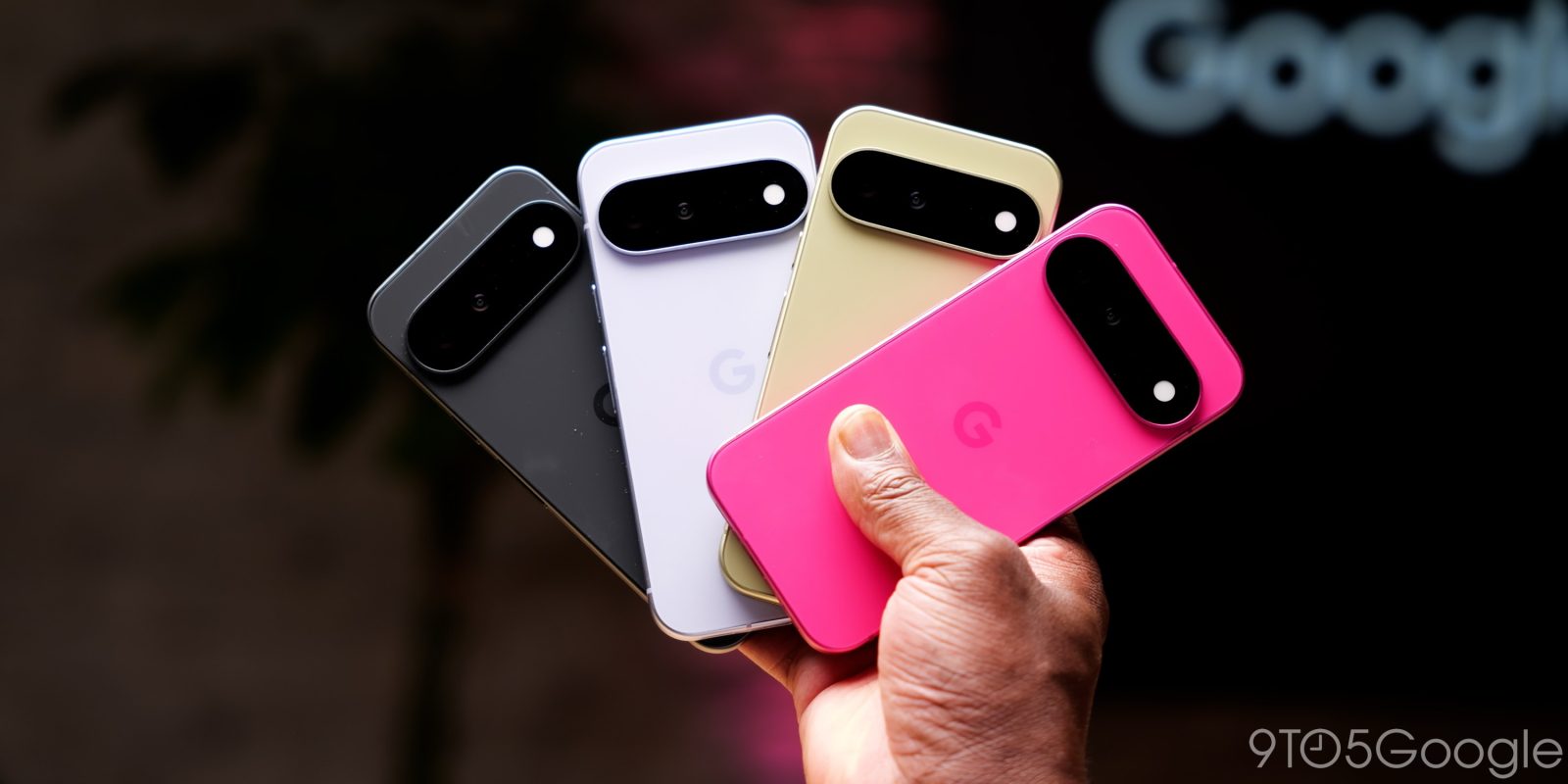
Google overhauled the design, introducing the now iconic camera bar running across the back, creating a silhouette you could spot from a mile away. We were given a proper two-tier lineup with a Pro phone that packed in a triple camera system, a larger 120Hz display, and a cheaper but still competent base model.
Most importantly, though, was the debut of original Tensor (now G1) silicon. Moving away from standard Qualcomm chips meant Google could tailor hardware directly for on-device ML—powering features like Magic Eraser, Live Translate, and Material You dynamic color themes.