Affiliate links on Android Authority may earn us a commission. Learn more.
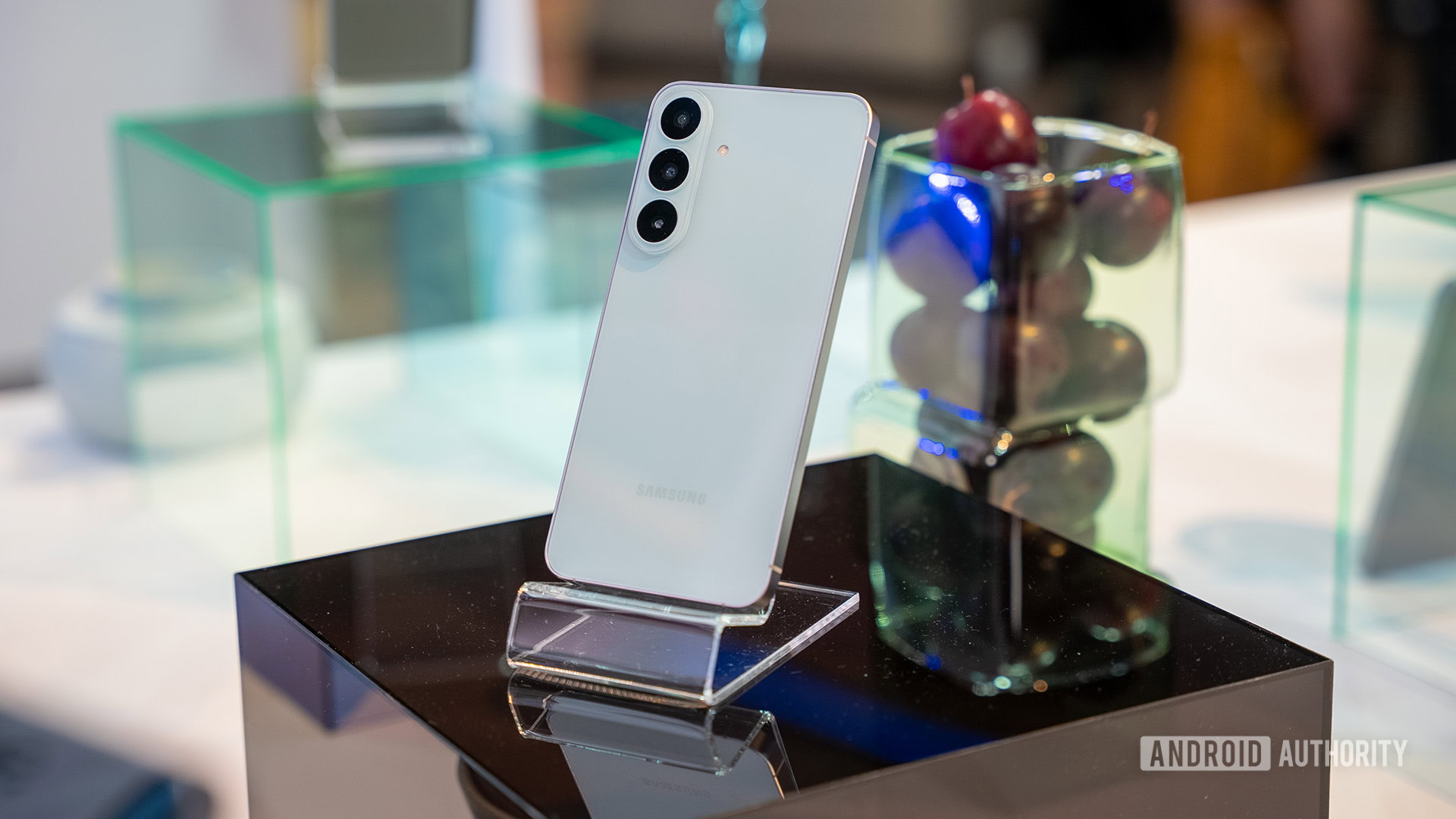
The Samsung Galaxy S26 FE continues Samsung’s tradition of offering a device with flagship-level performance while downgrading a few aspects, such as build materials, to hit a lower price point. The big difference this year is that many of its key specs remain unchanged from its predecessor, even as the price rises by $50 — with the S26 FE now starting at $700.
While the Galaxy S26 FE will still likely prove to be a solid device overall, it’s not without real competition. Before you drop your money on the Galaxy S26 FE, you should really consider some of its best Android alternatives first.
The Google Pixel 11 is one of the best Android flagships of 2026, though it is also far from a massive jump over its predecessor. Priced at $900, it might cost around $200 more than the Galaxy S26 FE, but you’ll also get a more premium experience.
The Pixel 11 is the only phone with built-in magnetic charging, which is a huge perk. It also comes with all the conveniences of Google’s Pixel software experience and will be first in line for any future software updates.
The Galaxy S26 FE has a triple-lens configuration: a 50MP main camera, an 8MP telephoto camera, and a 12MP ultrawide shooter. On paper, that’s not too different from Google’s configuration of a 48MP main shooter, 10.8MP telephoto lens, and 13MP ultrawide camera. In reality, Google tends to do a better job with software optimization, so you can expect a more upscale experience.
The Tensor G6 onboard the Pixel 11 is where things start to get a bit more complicated. Despite being a flagship processor, it’s actually a fairly modest chip that prioritizes battery efficiency and AI performance over raw power. Samsung’s Exynos 2500 pushes a bit harder in the gaming and raw performance lanes, though in day-to-day use, you probably won’t notice a major difference.
Ultimately, the Pixel 11 is a more flagship-level device, but a smaller 6.3-inch display and a less powerful SoC might be dealbreakers for some.
The Google Pixel 10a might not have as premium a design or as new a Tensor processor as the Pixel 11, but it’s still one of the best mid-rangers on the market. It’s also $200 cheaper than the Galaxy S26 FE.
Like its big brother, the Pixel 10a has a smaller 6.3-inch display, and the Tensor G4 isn’t quite as powerful as the Exynos SoC on board the Galaxy S26 FE. The good news is that battery life will be comparable or slightly better with the Pixel, and you’ll get most of the same amazing software features as you would on newer Pixel flagships, including cutting-edge AI features.
Indeed, the Pixel 10a won’t upstage the Galaxy S26 FE, but the day-to-day performance gap will also be pretty small in practice. Same with stuff like build materials, display quality, and more. Even the dual-camera package won’t outshine the Galaxy S26 FE, but it remains one of the best camera experiences you’ll find at such a low price.
If you care more about saving money than having marginally better specs “on paper”, the Pixel 10a is absolutely worth a closer look.
If you’re already willing to spend the $700 asking price on the Galaxy S26 FE, you might want to put down the extra $100 for the full flagship experience. While the Samsung Galaxy S26 shares the same general design and construction as the Galaxy S26 FE, there are notable upgrades.
On the design front, the two phones are quite similar, but the Galaxy S26 has a premium matte finish that stands out from the glossy rear of the Galaxy S26 FE. The camera cut-out is also a bit different as well.
When it comes to major upgrades, the chipset is the most obvious here. The Qualcomm Snapdragon 8 Elite Gen 5 for Galaxy chip is a strong performer and a big step up from the Exynos 2500 SoC found in the S26 FE.
The Galaxy S26 FE also has a larger battery that packs an extra 600 mAh of capacity. However, the S26’s Snapdragon SoC is likely more power-efficient, so the real-world difference may not be as substantial as it seems at first glance.
The rest of the experience shouldn’t be all that different. For example, the cameras are fairly similar. That said, the Galaxy S26 has a stronger 10MP telephoto lens versus the 8MP shooter found in the Galaxy S26 FE.
The Galaxy S26 FE also packs a larger display that’s closer to what you’d get with the Galaxy S26 Plus, though its resolution isn’t as high. The other big upgrade to the S26’s display is its peak brightness, which will improve its performance in outdoor light (up to 2,600 nits, compared to 1,900 nits on the S26 FE).
In the end, the Galaxy S26 might have a lot in common with the Galaxy S26 FE, but for $100, you get quite a few notable upgrades.
We’ve had fairly mixed opinions about Motorola’s 2026 lineup, and that holds true for the Motorola Edge (2026) as well. While not a perfect device, the Edge remains one of the better mid-rangers on the market. It’s also a tad cheaper than the Galaxy S26 FE, priced at $600.
Both phones are pretty similar in size and weight, though the Motorola Edge has a smaller footprint thanks to its 6.3-inch display. As you may have noticed, at least outside of the S26 FE, that’s pretty much the most common size you’ll find in the $500-$800 range. The display might be smaller, but it’s a heck of a lot brighter at 5,200 max nits.
The MediaTek Dimensity 7450 won’t outshine the Exynos chip in the S26 FE, but for day-to-day use, you’ll find it handles just about every game or app you’ll throw at it.
While the Samsung Galaxy S26 FE has a solid camera, Motorola’s isn’t bad either. Motorola packed a 50MP main camera, a 10MP telephoto, and a 50MP ultrawide lens into the Edge 2026. The smartphone also has a 50MP selfie camera.
If you care about battery and charging, you’ll find Motorola doesn’t disappoint here at all. You’ll get a 5,000mAh battery with 68W wired fast charging, helping you top it off in a hurry.
Ultimately, the Edge is a great alternative if you want to save a little money and prefer a cleaner software vision that’s closer to Pixel than Galaxy. Most of the drawbacks above won’t really matter much in day-to-day use, but software updates will. This is where Motorola is at its weakest, as it only offers three years of guaranteed Android OS upgrades.
Every other option on this list might have some real advantages, but that might not matter much if you are absolutely set on a larger display. In that case, you might want to consider the Nothing Phone 4a Pro.
Priced at just $500, the Nothing Phone 4a Pro is powered by the Snapdragon 7 Gen 4. While this chip won’t outpace the Exynos 2500, it is still a very capable chip that will largely beat out other options on this list like the Tensor and MediaTek competitors.
The Nothing Phone 4a Pro might not have massively better specs, but its unique retro-like design stands out more. The real star of the show is the Glyph technology. This unique feature delivers notifications and more with a simple visual indicator on the back of the phone.