
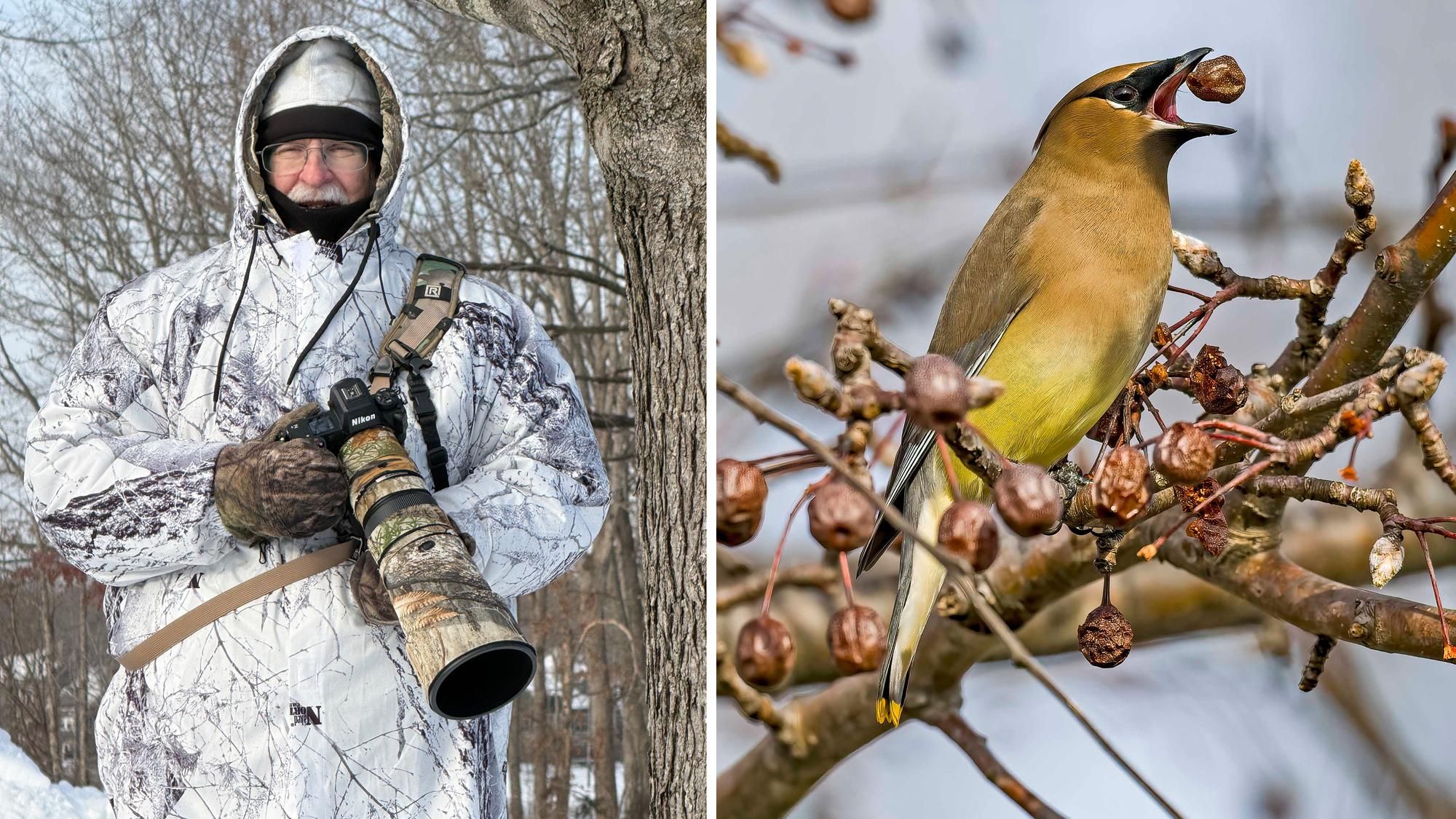

When I started at Spectrum 25 years ago, a senior editor suggested that I find a “rabbi,” by which he meant someone who could mentor me in how EEs approach problems and evaluate potential solutions.
I didn’t find one right away. Then in 2005 we decided to do a special report, focusing on the challenges of enterprise software development. I suggested we invite IEEE Life Senior Member Robert N. Charette, a self-described risk ecologist, prolific book author, and leading authority on risk management and software engineering, to explore in our pages the myriad reasons software projects fail. His seminal article “Why Software Fails” is still read in university engineering classes today.
 IEEE Life Senior Member Robert N. Charette is one of IEEE Spectrum’s most prolific authors.Robert N. Charette
It was, as they say, the beginning of a beautiful friendship. I had found my rabbi, one who shared my love of writing. We settled into a rhythm that would last more than 20 years, talking on Friday mornings about a range of topics including the growing ubiquity of software in our lives.
So when I became Spectrum’s website editor in 2007, he was the first contributor I tapped to start a regular blog (remember those?). The Risk Factor was born and over the course of more than 10 years and 1,750 posts, Bob chronicled hundreds of software debacles, culminating in “Lessons From a Decade of IT Failures,” which won a Jesse H. Neal Award for Best Infographics in 2016. Ironically, yet predictably, those infographics were created in a software package that is no longer supported and thus are lost to the bits of time.
 “I like the expression on the fish just before it’s going to be swallowed by the heron.”Robert N. Charette
Bob, however, was not a one-trick pony. In between his full-time job running his two management consultancies and raising a future biochemist and a future civil engineer, his daughters Maura and Megan, he also wrote many deeply reported and insightful articles. These include last year’s “The Doctor Will See Your Electronic Health Record Now,” the eye-opening 12-part series and e-book The EV Transition Explained, and my personal favorite “Automated to Death,” about the deadly consequences of the automation paradox as manifested by the cyberphysical systems that pilot planes, trains, and automobiles.
 “The young bald eagle I photographed in September 2024 had bands that I could read which identified it as a female born in May 2024, near Lexington Park, St. Mary’s County, Maryland, about 65 miles away from where I live.”Robert N. Charette
His main goal all along has been to make software visible, as he told me one Friday in July. “Software is all around us, but we don’t recognize it at all,” he said. “I really wanted my stories to help people better understand complex software systems. You can’t see software, you can’t touch it, you can’t taste it. You may feel the consequences of software failure, but you never see the reason itself.”
When he told me that he was hanging up his hat as a contributing editor to focus on nature photography and to write a handful of fictional trilogies, including one entitled “The STEM Murders” featuring an engineer-turned-detective and his rabbi, I asked him which of his Spectrum articles had the biggest impact.
 “The hummingbird I caught with the yellow of a road curb behind it.”Robert N. Charette
He singled out the 2013 feature “The STEM Crisis Is a Myth.” “Spectrum gave me a platform to question the assumption that we needed more STEM graduates. Until then, people didn’t really realize how much of the STEM crisis was a mythology that was perpetuated by employers and the academic community and was foisted on the IEEE community,” he said.
Charette made a career of questioning assumptions. The best way to mitigate risk, he told me as our Friday chat drew to a close, is to be careful making assumptions in the first place. “My main risk maxim is assumptions made are risks accepted.”