
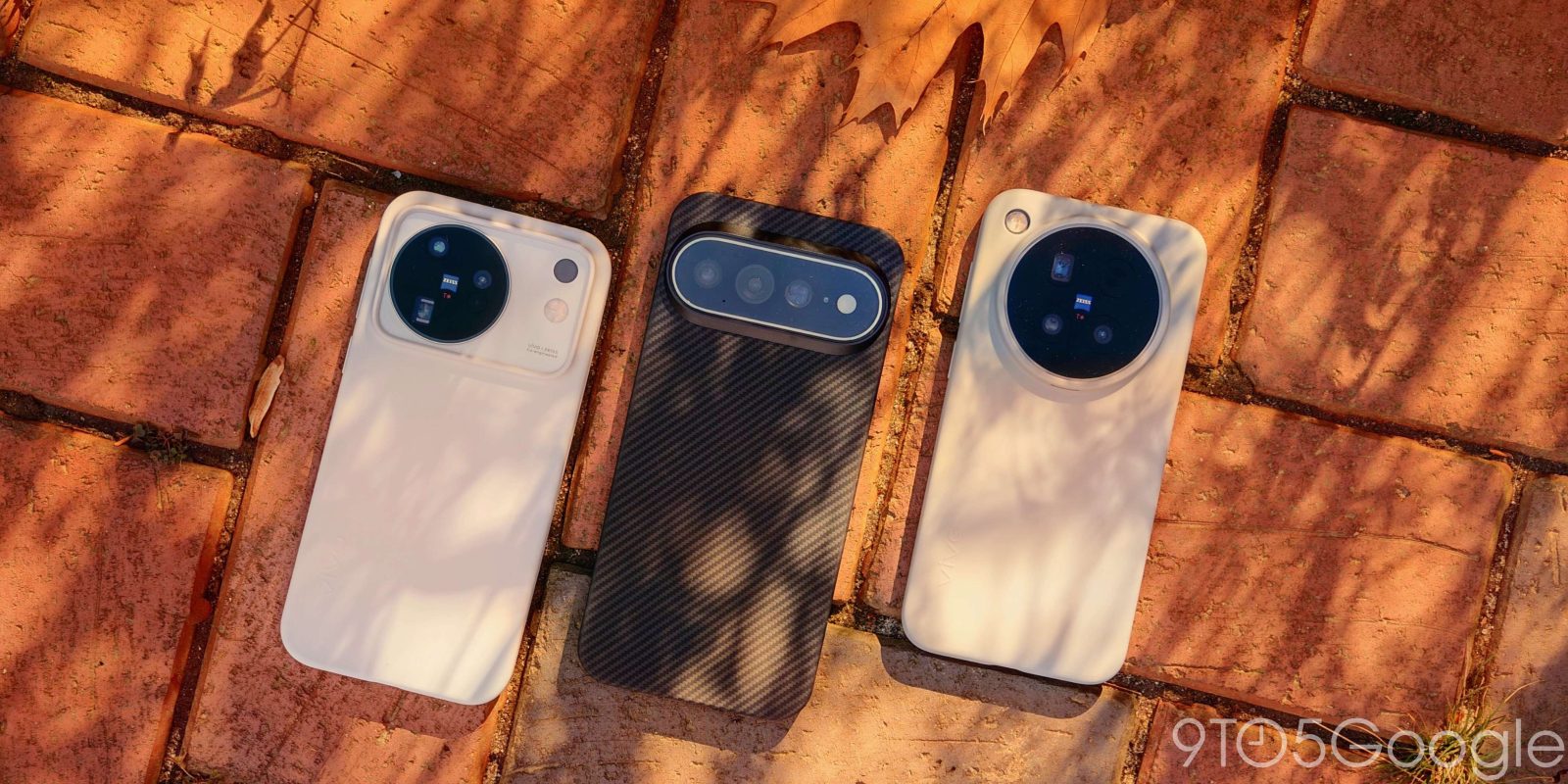
The compact Vivo X500 Pro has some camera downgrades compared to the Pro Max, so are you better off saving money and getting the base Vivo X500 instead?
Over the past few years, Vivo has made a name for itself as the camera powerhouse smartphone company. The first time I used a Vivo X100 Pro blew my mind in a way smartphone cameras hadn’t for a few years, but does the company’s 4th iteration — yes, Vivo skipped the X400 — of the X series still impress?
The answer is mostly yes. The Vivo X500 series includes five models: the base X500, the X500 Pro, and the X500 Pro Max. Unlike some other phones, all three of these models feature different camera hardware that takes advantage of the physical size differences. The X500 Pro Max’s hardware is the best of the bunch, but that phone is substantially larger and heavier as a result.
So I’m comparing the more reasonably sized models to see which semi-compact Vivo phone you should consider this year. I tossed the Google Pixel 11 Pro into the comparison since Google also offers a compact flagship camera phone.
Most camera specs between these phones are surprisingly comparable, so the differences you’re about to see are largely caused by some pretty massive differences in processing. I already covered Vivo’s wild new AI camera mode, so let’s go for something a little closer to normal smartphone camera use: a day at the Biltmore.
Perhaps the biggest difference between these phones is Vivo’s pursuit of “perfection,” while Google seems to embrace a more “natural” look. At 10x and 5x, the photos from both Vivo phones are essentially noise-free, have clear sharpening applied to them, and are generally quite vibrant. Despite having similar specs, the Vivo X500 Pro’s more advanced Sony LYT telephoto sensor pulls out more detail.
Google’s images are notably softer, although not in a low-resolution sort of way. They look more like they’re taken from a standard camera rather than a smartphone, which some people may prefer. While telephoto image quality between the Vivo X500 Pro and Google Pixel 11 Pro is mostly down to preference, Google’s phone is substantially faster while taking the actual photo. In all of the darker shots, the Pixel 11 Pro took the picture instantly. Both Vivo X500 models took a 2-3 second exposure shot, making me stand there for longer than I’m used to.
Ultrawide performance is where I feel we see the largest gap between these phones. Both the Vivo X500 and X500 Pro cameras offer bright, well-balanced shots that are vibrant but not unrealistic. The light sources in the room emit a lovely warm glow, yet the bulbs themselves aren’t overblown. The X500 Pro’s slightly warmer image across all three scenarios looks best to me.
The Pixel 11 Pro’s ultrawide images are often underexposed and lacking in dynamic range. The staircase shot exhibits this problem the most. This can come off as natural in some scenarios, as modern smartphone photography is notorious for brightening dark areas too much, but too often the Pixel 11 Pro’s ultrawide shots just feel unnaturally dark.
The main camera is much more balanced, although it’s fun to push these phones to find their weaknesses. One of the best examples of differing priorities is in the wreath shot, which was quite dark in real life thanks to the bright sunlight outside. The Pixel 11 Pro valiantly tried to brighten up the shadows so you could actually see the wreath (since it’s clearly the subject), causing the rest of the scene to look forcefully bright.
The same issue cropped up in the image of the wine rack, where both Vivo phones captured a nicer-looking shot. The image of the trellis walkway is a tie, but the photo of my ridiculous bowl of ice cream looks best on the Vivo X500 Pro, once again.
Portrait mode is where I think the Vivo X500 Pro is the clear loser, but it’s not for any of the reasons in the other categories above. Rather, the X500 Pro seems to have some weird warping happening in the bokeh processing that’s not present on the base Vivo X500. This is in both front-facing and rear camera portrait shots, so it’s not a lens issue or some weird setting.
Google cleaned up its portrait shots so much this year that it’s borderline ridiculous. Pixels had the worst portrait mode for years, but this year’s overhaul of the portrait algorithm made all the difference in the world.
Overall, the Vivo X500 series is another solid release for Vivo, and while neither the base nor Pro models offer the same top-tier camera specs as the Pro Max model, it’s clear Vivo pulled off something great. The Vivo X500 Pro retails for €1,399 in the EU, while the base X500 global model is a little harder to find, but should be quite a bit cheaper if you can get your hands on it.
FTC: We use income earning auto affiliate links. More.
Check out 9to5Google on YouTube for more news: