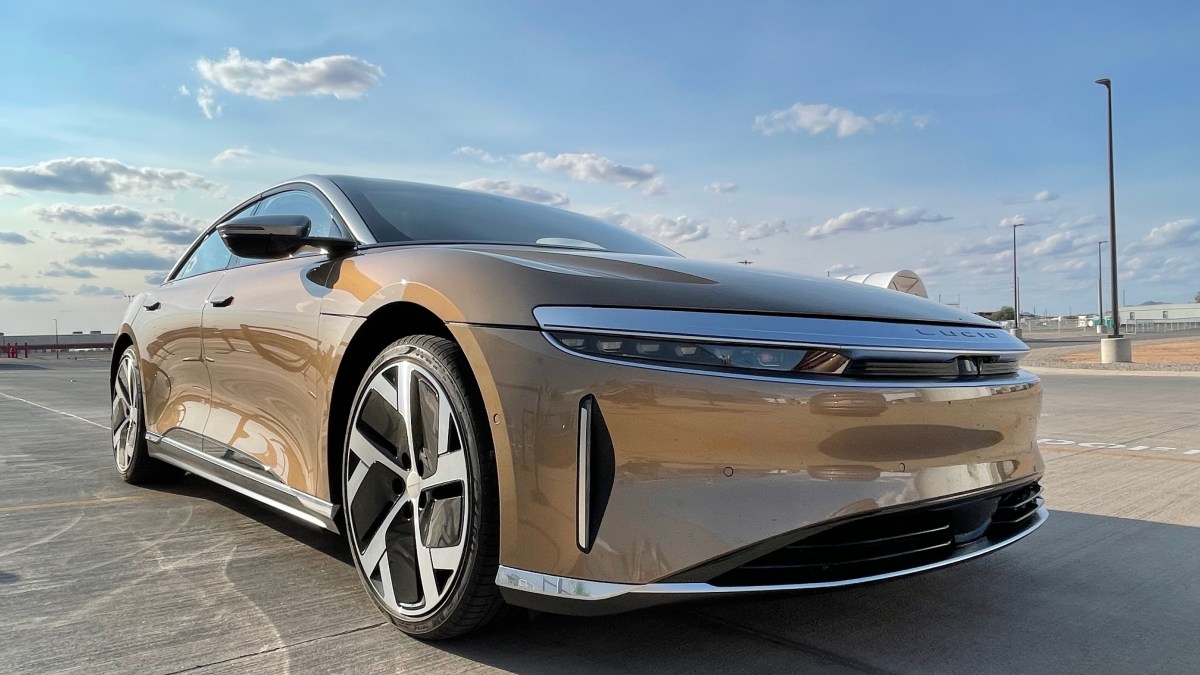
Prince Al Waleed bin Talal Al Saud, a member of the Saudi royal family, has purchased a 5% stake in Lucid Motors, increasing the Kingdom’s overall ownership of the electric vehicle company.
A new filing with the U.S. Securities and Exchange Commission published Tuesday shows that the billionaire prince recently purchased a little more than 19 million shares. In a post on X, he wrote that his investment office made the purchase when Lucid’s market cap was below $2 billion.
That happened on July 14, when an electric vehicle blog published a report claiming that Lucid was considering either filing for bankruptcy protection or being taken private by Saudi Arabia’s sovereign wealth fund. Lucid strenuously denied the reports, and the company’s stock price has since rebounded.
“We don’t comment on individual investments, but we are aware and appreciate the independent vote of confidence,” Lucid Motors’ chief communications officer Nick Twork said in a statement to TechCrunch.
The share purchase comes in the middle of a major restructuring effort kicked off by Lucid’s newly appointed CEO, Silvio Napoli, who cut 18% of the workforce in June in an effort to “simplify the company.” That followed a similarly large layoff earlier this year before Napoli took over.
Lucid Motors has been majority-owned by the wealth fund — known as the Public Investment Fund, or PIF — since its initial investment in 2018. That investment came after Saudi Arabia considered, but ultimately abandoned, plans to take Tesla private. The PIF has owned roughly 60% of Lucid Motors since the EV maker merged with a special purpose acquisition company in 2021, a transaction that brought it to public markets and raised $4 billion.
The Saudis have remained a major source of financial support for Lucid Motors since it went public, buying up shares and lending billions of dollars as the company has struggled to reach a mass market of EV buyers in the U.S. and abroad.
Prince Al Waleed bin Talal has a history of investing in U.S. tech. Through his holding company, he was a major shareholder of Twitter when it was still public. In 2022, he initially balked at Elon Musk’s attempt to buy the social media company. But he quickly reversed course and cozied up to Musk and became the second-largest shareholder of Twitter after Musk took it private. (It’s unclear whether he has retained that stake through the company’s evolution into X and its subsequent merger with xAI, and now into SpaceX.)
He also owns stakes in Snap and Deezer and is often referred to as the “Arabian Warren Buffett,” according to his website.
When you purchase through links in our articles, we may earn a small commission. This doesn’t affect our editorial independence.
Sean O’Kane is a reporter who has spent a decade covering the rapidly-evolving business and technology of the transportation industry, including Tesla and the many startups chasing Elon Musk. Most recently, he was a reporter at Bloomberg News where he helped break stories about some of the most notorious EV SPAC flops. He previously worked at The Verge, where he also covered consumer technology, hosted many short- and long-form videos, performed product and editorial photography, and once nearly passed out in a Red Bull Air Race plane.
You can contact or verify outreach from Sean by emailing sean.okane@techcrunch.com or via encrypted message at okane.01 on Signal.
Scale faster. Grow your portfolio. Gain practical expertise. No matter your goal, Disrupt can empower you.Save up to $330 today!
Librarians are hosting viral ‘Avoiding AI’ workshops for people who are fed up with Big Tech
SpaceX launches new V3 Starlink satellites but suffers another booster failure
Prentis, new AI lab co-founded by Reid Hoffman, Mark Pincus in talks to raise $100M
US accuses American of allegedly wiping his phone using a ‘duress’ password during border search
Anduril reportedly in talks to raise funding at $100B valuation, more than 3x last year’s mark
How OpenAI’s human mistake led to the AI-powered hack on Hugging Face