Affiliate links on Android Authority may earn us a commission. Learn more.
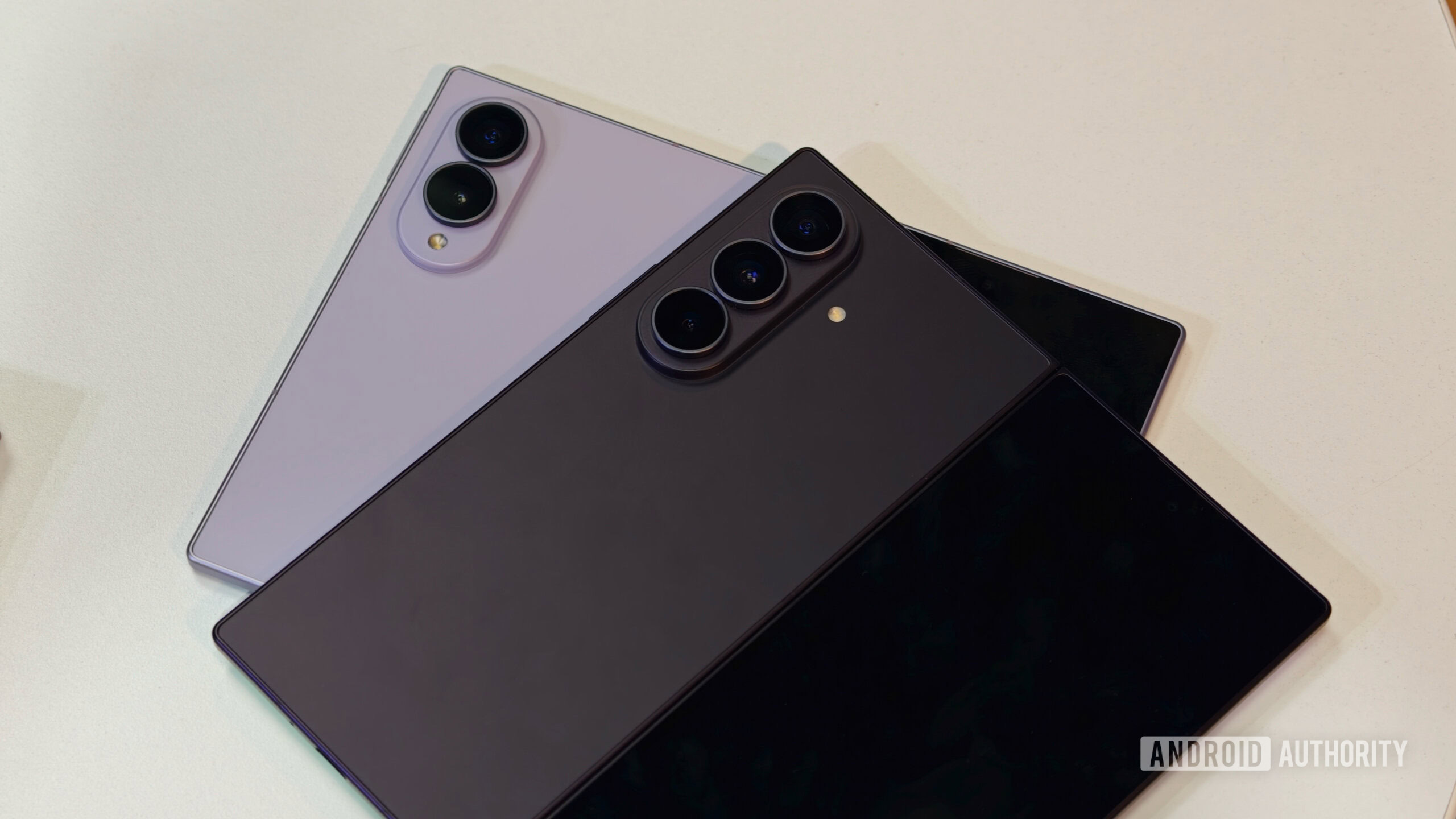
It’s not a secret anymore. The Samsung Galaxy Z Fold 8 series has arrived, and, as expected, Samsung has split its book-style foldable lineup into two this time. There’s the Galaxy Z Fold 8, the standard and wider model, and the Galaxy Z Fold 8 Ultra, which serves as the direct successor to last year’s Galaxy Z Fold 7 (albeit with the added Ultra moniker).
We appreciated last year’s Galaxy Z Fold 7 a lot, thanks to its much slimmer design and wider cover screen. And while Samsung has made some meaningful changes on top of that this year, my hands-on time with the Galaxy Z Fold 8 Ultra still left me wanting a little more.
Here are six things I think Samsung got wrong with its Ultra foldable.
Let’s start with the most obvious one: the price. The Galaxy Z Fold 8 Ultra now starts at $2,100, which is $100 more than last year’s Galaxy Z Fold 7. While a price hike would be easier to swallow if the phone felt like a major upgrade, that’s not quite the case here.
The reality is that the Galaxy Z Fold 8 Ultra looks and feels a lot like its predecessor. You get the same overall design language, a similar footprint, and much of the same in-hand experience.
Sure, there are meaningful upgrades under the hood, like the larger 5,000mAh battery and the improved 50MP ultrawide camera, but Samsung has also dropped the base RAM configuration to 12GB. Overall, it’s hard to shake the feeling that you’re paying more for something that barely feels new.
I know it’s a difficult time to be making smartphones in 2026, and Samsung is clearly feeling that. Memory prices are at an all-time high, and several companies have said it’s become increasingly difficult to secure RAM at reasonable prices.
I completely understand that some of those rising costs have to be passed on to buyers. But asking $2,100 for a phone that already sits at the very top of the market, especially when it doesn’t feel dramatically different from last year’s model, is a tough pill to swallow.
To make room for the new wide foldable, Samsung had to reshuffle its naming scheme. The new, wider model is now simply called the Galaxy Z Fold 8, while the former standard Galaxy Z Fold has gained an “Ultra” at the end. But that new branding oversells just how different this phone really is compared to last year’s Galaxy Z Fold 7.
Yes, there are some meaningful upgrades. The larger silicon-carbon battery, faster charging speeds, and a handful of camera improvements are all welcome additions. But many of the long-standing complaints that have followed the Galaxy Z Fold series for years are still here.
We’ll talk in depth about each of these in detail below, but the aging 10MP 3x telephoto camera hasn’t gone anywhere. There’s still no magnetic charging support, and Samsung has once again dropped S Pen support. It comes with an Ultra moniker, sure, but is it really deserving of one?
Samsung finally upgraded the primary sensor with the Galaxy Z Fold 7 last year, moving from 50MP to the same 200MP sensor we saw on the Galaxy S25 Ultra. And this year, the company has upgraded the ultrawide sensor too, jumping from a 12MP lens to a 50MP one.
But unfortunately, that 10MP 3x telephoto sensor, the very same one we’ve been seeing since the Galaxy Z Fold 3 that launched literally half a decade ago, is still here. Samsung hasn’t touched the telephoto sensor on the Galaxy Z Fold 8 Ultra at all, and it’s really starting to show its age.
If Samsung were still calling this the Galaxy Z Fold 8, I think that would’ve been fine, especially given the upgrade to the ultrawide camera. But now that the company is slapping “Ultra” on the name, I think the camera hardware should reflect that. Unfortunately, that’s just not the case here.
It’s still baffling to me that we’re almost halfway through 2026 and that only Google Pixel phones support the Qi2 (MagSafe) wireless charging standard. Samsung had a chance to give its users that major upgrade feeling by adding proper Qi2 magnetic profile support to the Galaxy S26 Ultra, but it didn’t.
And now, once again, the ultra-expensive Galaxy Z Fold 8 Ultra misses out on the Qi2 magnetic standard too.
That means you’ll still have to rely on a case for the Galaxy Z Fold 8 Ultra just to attach it to a MagSafe charger and hit full 20W wireless charging speeds. It’s great that there’s support for 20W Qi2 wireless charging, but Samsung, this is an Ultra foldable that starts at $2,100.
That’s an extremely high price, and there’s no way around it: the magnetic charging profile should have been here.
If you run through the spec sheet comparing the standard Galaxy Z Fold 8 and the Galaxy Z Fold 8 Ultra, you’ll notice something odd. The less tall foldable weighs just 201 grams, while the Ultra, which carries the premium moniker, actually tips the scales at 215 grams.
It’s not a huge difference, but it’s worth keeping in mind. You’d naturally assume the “Ultra” phone would come out on top in every category, but that isn’t quite the case here.
The final nail in the coffin, though, is the continued lack of S Pen support. Samsung removed S Pen support with the Galaxy Z Fold 7. At the time, the company said it had to drop the digitizer, the component responsible for supporting the S Pen, in order to make the phone thinner. Unfortunately, that same trend continues with the Galaxy Z Fold 8 Ultra.
It would have been perfectly fine had Samsung launched this as the Galaxy Z Fold 8 with no S Pen support. But slapping the “Ultra” moniker on it and still leaving out the one feature Samsung’s Ultra lineup is best known for sort of defeats the point.
So unfortunately, if you were hoping for a Samsung foldable that lets you use that large inner display for doodling, handwritten notes, or annotating documents on the go, you’re still out of luck. The Galaxy Z Fold 8 Ultra doesn’t support the S Pen either.
Overall, I’m not saying the Galaxy Z Fold 8 Ultra is a bad smartphone. Samsung has clearly listened to its users and finally made some meaningful hardware upgrades, like switching to a silicon-carbon battery with faster wired charging and improving the ultrawide camera, both of which help justify the Ultra branding.
But these are some of the omissions that stood out to me during my hands-on time with the Galaxy Z Fold 8 Ultra. Of course, we’ll have much more to say once we’ve spent more time with the phone, so stay tuned.
Thank you for being part of our community. Read our Comment Policy before posting.