A few upgrades to your desk setup can make long hours at your Mac significantly more comfortable and healthier, provided you know what's actually worth it.
If you're reading this, chances are you probably spend a little too much time sitting at a computer desk. Whether for business or pleasure, the science is pretty clear about it: sitting at a desk all day isn't great for your health.
Fortunately, there are options to make your time at the desk less detrimental. Most of it is just optimizing your gear to minimize the stress of sitting.
Here's our helpful guide to optimizing ergonomics, including ways you might be doing more harm than good without realizing it.
Let's start with what should ultimately be your biggest investment: your desk.
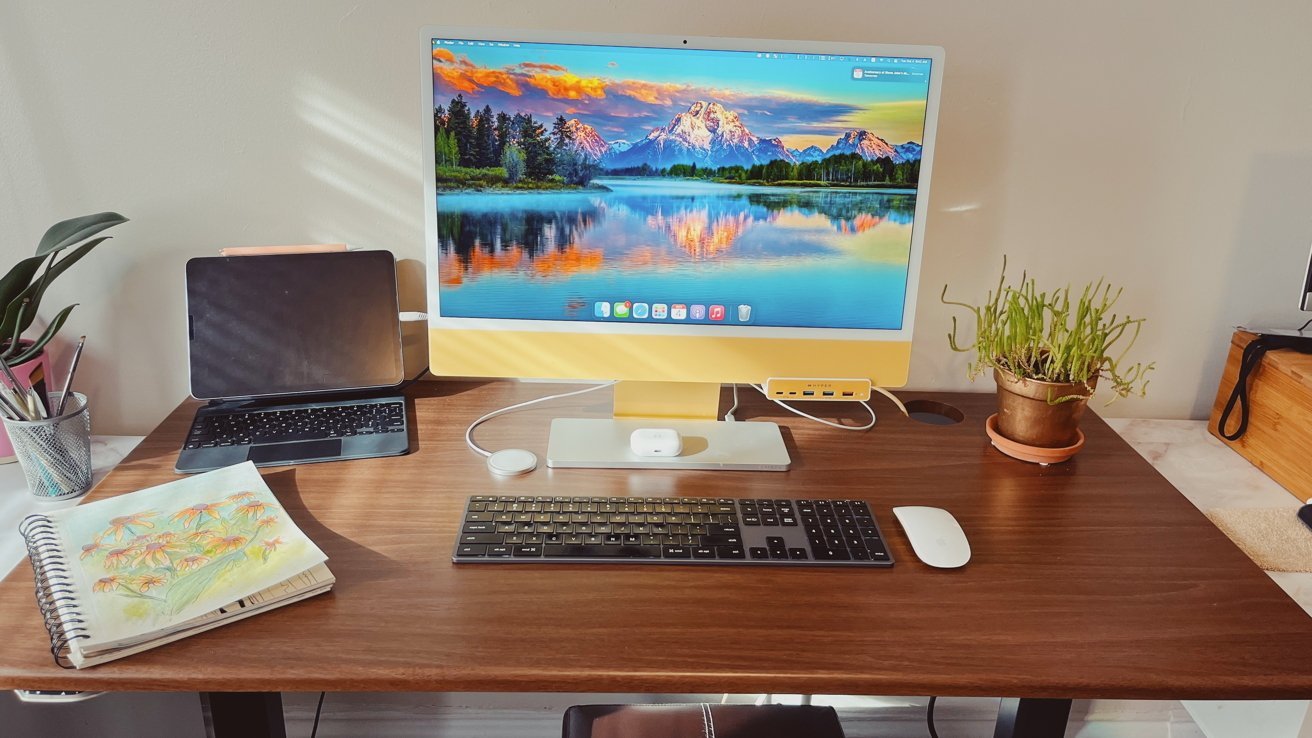
Ergonomists suggest that a proper desk should be deep enough that you can place your monitor at the correct distance from your face. For most people, that's about an arm's length away.
A good desk, like one from Flexispot, can be worth its weight in ibuprofen
Additionally, it will need to be high enough to ensure you can comfortably place your feet on the floor at a 90-degree angle. They also suggest that you not store anything under your desk that could potentially prevent you from being able to freely move your legs for routine stretching.
Ideally, your desk should be adjustable to some degree. A sit-to-stand desk, even if you never plan on using it for standing, is one of the better investments you can make.
Not only does a sit-to-stand desk offer you the option to stand, but it also allows you to bring your body in alignment with your keyboard. We suggest investing in a desk that has a memory feature, allowing you to save the correct height for whatever positions you plan on using your desk in.
What desk you choose ultimately is up to you, and it can be difficult to make a recommendation without knowing your needs. Still, if you just want a general-purpose desk that we've liked, Flexispot makes a great lineup of sit-to-stand desks, including its E6 Max Woodix line, which costs about $450.
Your chair is every bit as important as your desk. You have a little bit more freedom here than you do with a desk. Unfortunately, chairs are also harder to make work in the event that you don't immediately love them.
If you can, I suggest going to try out a chair in person. However, with the state of retail being what it is, I know that may not be possible; hell, I can't even remember the last time I saw an office supply store, let alone one that still carries preassembled furniture to test.
So, if you're forced to buy a chair sight unseen, try to get one that has adjustable armrests and good back support. If you find that back support isn't sufficient, you'll probably want to pick up a lumbar pillow to help keep your spine aligned for those marathon days at your desk.
Like a bed, a computer chair is one of those items you should actually invest in.
Our current pick is the Hon Ignition 2.0 chair, available for about $480 on Amazon. It's got lumbar support, adjustable armrests, and a cushion that is designed to keep your pelvis aligned properly to prevent core fatigue.
Footrests are another option you might want to look into. This is especially true if you tend to be on the shorter side.
A good footrest helps bring the tops of your thighs parallel to the floor, which helps keep your hips in alignment. If possible, estimate how many inches it would take to bring your thighs to where they need to be, and use that to make an informed decision on what would be best to buy.
Smaller footrests are better than larger ones, as they give you the option to move your feet on and off as needed. Rocking footrests allow you to move your feet back and forth for improved circulation.
A footrest can help keep your pelvis properly aligned, which is a must-have if you suffer from lower back pain.
Some footrests, especially those made of harder materials, can also be used to massage the soles of your feet if you choose to work sans shoes. While this isn't strictly necessary, it is a nice little bonus, and it does encourage fidgeting, which is actually good for you.
Once you've got your desk and chair situated, it's time to focus on your monitor height. According to the Mayo Clinic, your monitor's top bar should be at or slightly below eye level.
For some people, this won't be an issue because their monitors may already be at the correct height. For those with smaller monitors or laptops, you'll almost certainly want to place your monitor on a stand or riser.
If you wear bifocals or progressive lenses, odds are you may need to lower your monitor a few inches for comfortable reading. You may want to experiment with using books to find the correct height before you make a purchase.
As mentioned before, your monitor should be about an arm's length away. Smaller monitors will need to be closer, larger ones further back.
Now that we've set up the furniture on the desk, it's time to look at the actual interface devices. We'll start with the keyboard.
There are a lot of keyboard options, and much of it will come down to personal preference and what you're willing to experiment with. For users with small to average-sized hands, you can probably get away with most keyboards provided they have a slight angle to them, which helps prevent wrist strain.
Ergonomic keyboards, like this Keychron Q14 Max, can help lessen repetitive stress