The Apple Watch Series 12 and Apple Watch Ultra 4 are all about what’s happening underneath. Headlined by a new Health Sensing System, they bring some of the biggest improvements to Apple Watch health tracking in years.
I’ve spent the last week with the Apple Watch Series 12 and Ultra 4. Here’s everything you need to know.
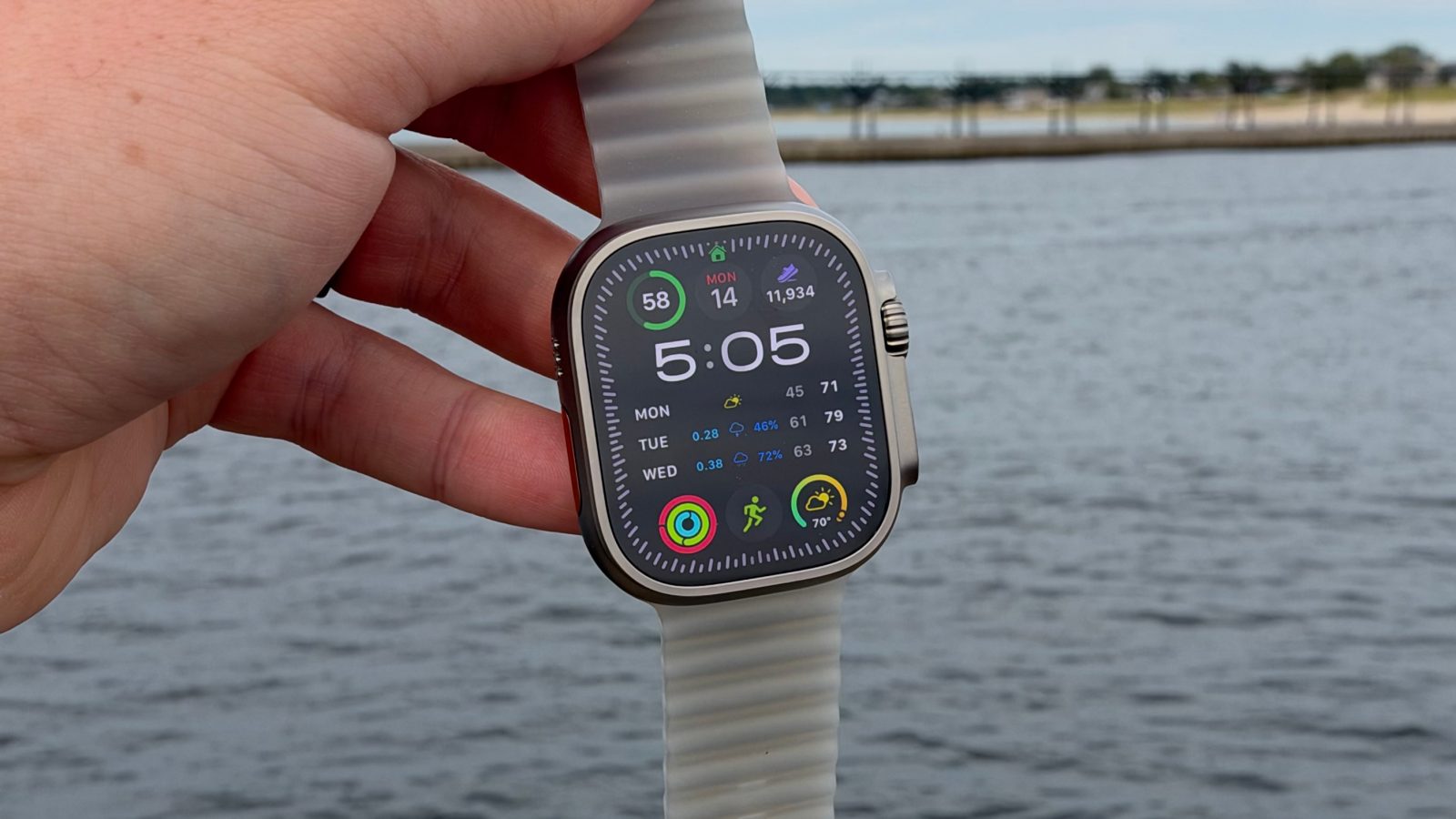
The Apple Watch Series 12 and Apple Watch Ultra 4 look the same as their predecessors. The Apple Watch Ultra 4 comes in the same two titanium finishes as before: Natural and Black. My review unit is the Natural finish.
For the Apple Watch Series 12, the real design story is in the colors and finishes.
First, there are some very minor changes in the dimensions of the Apple Watch Series 12. Apple’s tech specs page details that the display area is about 2% smaller than the Series 10 and Series 11. The overall pixel count, however, hasn’t changed. With that slight reduction in display area, the casing is about 1mm wider on the Apple Watch Series 12.
In practice, none of this is noticeable in the real world. The Apple Watch’s display still stretches near the edge of the casing. When you think about the revamped health sensing system (more on that below), it’s especially impressive Apple has maintained that design.
The Apple Watch Series 12 is available in three materials: aluminum, titanium, and ceramic.
Aluminum comes in four finishes: Dark Bronze, Light Gold, Black, and Space Gray. The aluminum version also switches from Ion-X to Ceramic Shield 2 for the front glass.
My Apple Watch Series 12 review unit is the black aluminum finish. Unlike last year’s Jet Black aluminum case, the black Apple Watch Series 12 is a matte finish. I think I’m partial to the Jet Black look personally, but I understand Apple switches things up on a year-to-year basis and it could return at some point in the future.
In my hands-on time with all the Apple Watch Series 12 aluminum colors last week, Dark Bronze stood out most. It’s an elegant finish that is unlike any previous aluminum Apple Watch. The Light Gold is also a really nice color for fans of gold. The Apple Watch Series 12 isn’t available in silver aluminum, but the space gray is light enough that I think it will tick that box for most people.
The Apple Watch Series 12 in titanium is available in two finishes: Radiant Gold and Natural. In comparison, the titanium Apple Watch Series 11 came in Natural, Gold, and Slate.
The Radiant Gold is striking. Based on the appearance and how it differs from last year’s color, I think Apple’s goal is clear: to make the titanium Apple Watch Series 12 look as much like real gold as possible, but without actually using real gold. People have a lot of strong opinions about what “real gold” actually looks like, but to my eye Apple has done a great job with the Radiant Gold titanium on the Series 12.
Saving the best for last, the Apple Watch Series 12 in ceramic is available in two finishes: Night Blue and Pearl White. The last time Apple released a ceramic watch was with the Series 5 in 2019, and it quickly became a fan favorite.
I only spent a few minutes with the ceramic Apple Watch Series 12 at last week’s Apple event. The Night Blue is nice, but I immediately gravitated towards the Pearl White. It’s not quite as white as the Series 5, with a very soft off-white glow to it depending on the lighting.
The big change to the Apple Watch Series 12 and Apple Watch Ultra 4 is the new Health Sensing System, which brings what I think is the biggest upgrade to the Apple Watch’s health suite in years.
This starts with a new design for sensing hardware. Apple outlines three aspects to this:
This enables the Apple Watch Series 12 and Apple Watch Ultra 4 to take more accurate and more frequent background heart rate measurements. That is, more heart rate readings when not doing a workout.
Previous Apple Watch models attempted to capture your background heart rate every five minutes when you were mostly stationary.
Apple says the new Health Sensing System delivers “the most accurate heart rate sensing in a wearable.” In a study of more than 1,000 participants, Apple says the Series 12 achieved statistically better overall accuracy than every competing wearable it tested across workouts and daily activities.
Apple Watch Series 12 and Apple Watch Ultra 4 offer a big improvement. They will capture your heart rate every five seconds, regardless of whether you’re moving or stationary. Having such frequent and accurate heart rate readings unlocks new levels of data and insight.
When measuring your heart rate once every five minutes while stationary, previous Apple Watch models had an inherent blind spot. They either didn’t capture moments where your heart rate increased while not working out, or they captured one or two arbitrary readings somewhere in the middle of those moments.
The Apple Watch Series 12 and Apple Watch Ultra 4 not only take more readings, they take readings while you’re in motion. You can see how things like hauling groceries, doing yard work, and shoveling snow impact your heart rate.
Apple has also added several new ways to view your heart rate data. First, the Heart Rate app on Apple Watch has been redesigned, so you can now see your heart rate and a graph of readings from the last two minutes.
There are also two new heart rate complications for your watch face that show your heart rate at a glance.
In my one week with the Apple Watch Series 12 and Apple Watch Ultra 4, I’ve found that added data very insightful. I’m learning more about how little things I do throughout the day impact my heart rate. For example, I can visualize the impact of a late afternoon cup of coffee, or the impact of a stressful moment at work.
Beyond simply giving you more raw data, Apple Watch Series 12 and Apple Watch Ultra 4 proactively use the more frequent heart rate readings to enable new features and improvements.
First, Apple says the data enables improved calorie estimates. I haven’t noticed much change in my data here, but it might become clearer once I’ve worn the new Apple Watch for more than a week.
One thing I had hoped to see was the more frequent heart rate measurements would improve automatic workout detection. At least in my testing so far, that doesn’t seem to be the case.