Affiliate links on Android Authority may earn us a commission. Learn more.
Every year, consumers are pressured into upgrading from last year’s phone to this year’s. With the launch of the Pixel 11 Pro, Pixel 10 Pro owners are now feeling this squeeze.
I’ll admit, Google’s alluring marketing and promise of progress are tempting. Wanting the latest and greatest product isn’t intrinsically a negative desire. But Android makers are struggling to deliver a steady stream of annual advancements, and this crunch is starting to show. There’s almost no more blood to be squeezed from this stone.
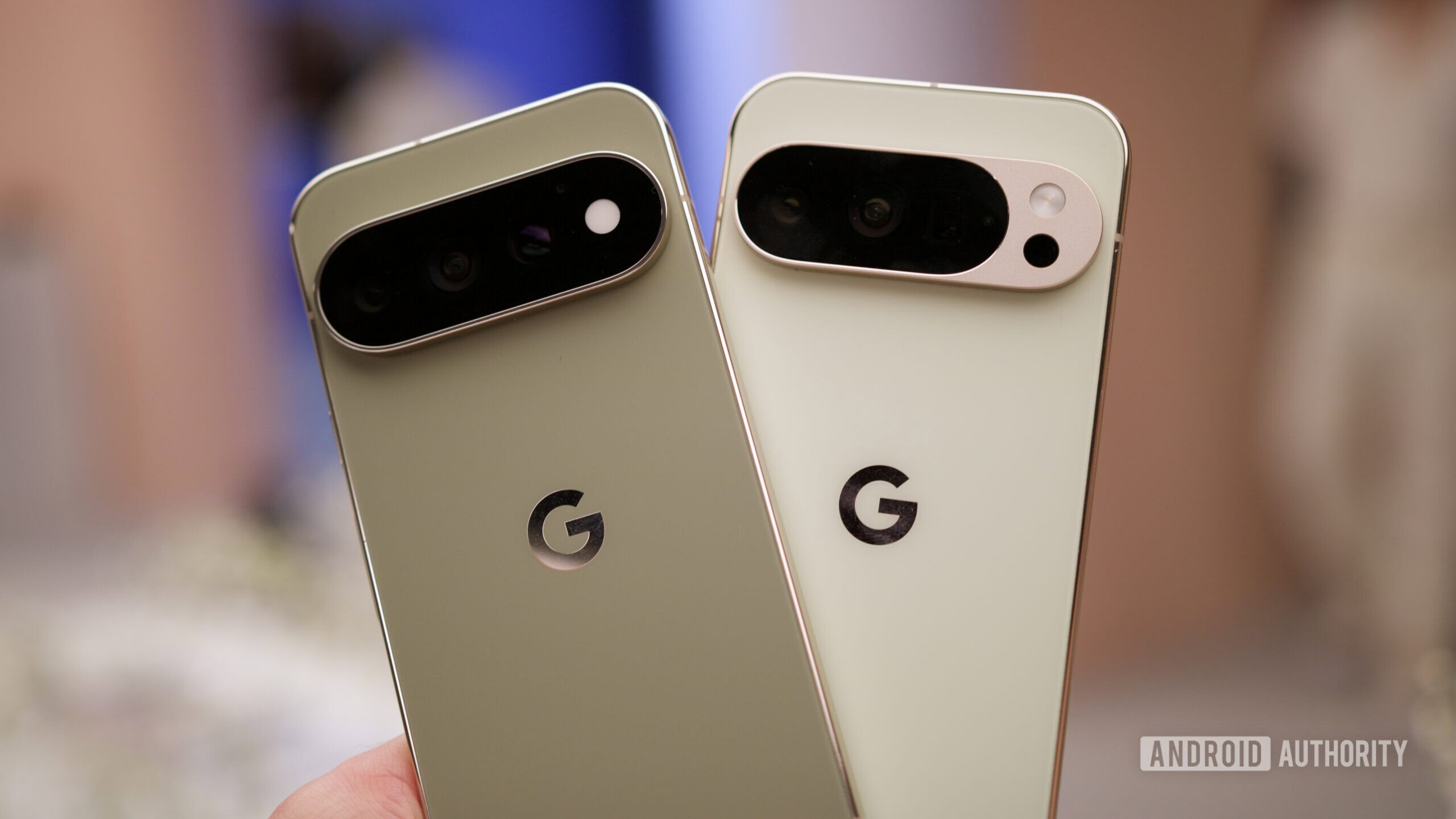
That’s how I see the Google Pixel 11 Pro. While it is certainly new, it lands with a few more lines in its specs and feature sheets, and packs some catchy aesthetic additions, there isn’t much more to be had if you already own a Pixel 10 Pro.
If you’re still rocking a Pixel 10 Pro, fret not. There’s plenty of life left in Google’s 2025 flagship. Here’s why you should hold onto it for now.
The tech world continues to grapple with the RAM shortage pickle. There’s not enough to go around, and the existing stock is costing manufacturers an arm and a leg. Unfortunately, the Pixel 11 Pro’s base model is a victim of this, and consumers will feel the pain.
While the cheapest Pixel 11 Pro now offers consumers 256GB of internal storage — double that provided by the lowest Pixel 10 Pro model — it packs 4GB less RAM. Granted, 12GB of RAM is still plenty for most users’ modest needs, but given that the Pixel 10 Pro packs 16GB across the board, comparatively, multitasking and RAM-hungry AI features will take a hit.
The downgrade is perhaps understandable given the global crunch, but I can’t support this year’s price increase, which has also arrived uninvited. The Pixel 11 Pro is $100 more than the Pixel 10 Pro. I don’t know about you, but 4GB less RAM and 128GB more storage doesn’t warrant that premium.
The wonderful thing about modern smartphones is the sheer length of the after-sales support consumers receive, specifically that software update window. Google phones have received seven years of Android upgrades and updates since 2023, and this broad span includes the Pixel 10 Pro.
Given it was launched in 2025, the Pixel 10 Pro will remain under the ambit of Google’s software support net until at least 2031 — that’s plenty of time to consider picking up the Pixel 11 Pro in the future, or even the Pixel 16 Pro if you see out the entirety of that window.
It’s also worth noting that many of the forthcoming software features debuting on the Pixel 11 Pro could still make it to the Pixel 10 Pro. We’re seeing Google hold back certain keystone features from previous models to encourage users to upgrade, but if you’re not enchanted by AI smarts, is it really such a bad thing if the Pixel 10 Pro doesn’t get the Pixel 11 Pro’s toys?
One of the Pixel 11 Pro and XL’s marquee features this year is a notification light. Yes, folks, it’s the early 2000s all over again. Initially referred to as Pixel Glow and officially called HiLight, it’s an LED circle that sits on the phone’s camera visor and lights up in various colors when you receive a notification or when Gemini is active.
At launch, the feature has an incredibly brief list of use cases, but Google notes that more capabilities are in the works. The biggest issue with HiLight is that it knocks another fan-favorite feature off Pixel phones.
The Pixel 11 Pro does not feature a thermometer. While this feature was itself maligned by many when it launched, it provides useful functionality to swathes of users.
Google argues that with each new launch, it works to ensure the Pixel offering is as “helpful to as many people as possible.” If you think the thermometer has more utility than a notification LED at the rear of the phone, stick with the Pixel 10 Pro.
There’s some great news for Pixel camera aficionados this year. The Pixel 11 Pro receives a “new image sensor“ for the 50MP main camera, and a new, larger image sensor with “30% improved light sensitivity,” 5x Portrait Mode, and 120x Pro Zoom for the 48MP telephoto snapper. This, along with a host of smarts thanks to the Tensor G6 and cloud processing, makes the Pixel 11 Pro a compelling imaging tool.
Despite its marketing hype, it remains far too early to tell whether these theoretical upgrades yield markedly better practical performance across all snapping scenarios.
The Pixel 10 Pro remains a stellar snapper, and no new phone will affect its results. Even if you don’t upgrade, you’ll be able to capture incredible scenes with the primary 50MP snapper and the 48MP telephoto. It’s also worth noting that the ultrawide doesn’t see any upgrade between the two phones.
We’ll certainly pit the Pixel 11 Pro against the Pixel 10 Pro in a head-to-head camera comparison, but I’d certainly practice calm if you’re stirred by Google’s early imaging marketing claims.
Alongside the Pixel 11 series, Google has launched the new Pixel Watch 5 and its first first-party location tracker in the Pixel Tag. Importantly, if you wish to use any of these products with your Pixel phone, you needn’t have a Pixel 11 phone in your pocket — they’re compatible with the Pixel 10 Pro and phones older than it, too.
The Pixel Tag, when used via the Find Hub network, is compatible with devices running Android 9.0 or newer and Bluetooth 6.0 or newer. This certainly includes Google’s 2025 smartphone.
The Pixel Tag goes on sale in November for $99. Remember that $100 premium I mentioned placed on the Pixel 11 Pro this year? I certainly think it’s better spent on a pack of Google’s new location tags.
Finally, I urge you to practice the one thing we, as tech enthusiasts, don’t do nearly as much as we should: waiting.
The Pixel 11 Pro is the latest Pixel — that’s undeniable, but it likely won’t be the last Pixel. It’ll hold this position for at most 12 months, until the Pixel 12 Pro arrives. Waiting gives you the advantage of viewing and understanding any hardware and software bugs that arise on the new device after launch, the prevailing feelings of those who have purchased one, and, more importantly, allows the phone to depreciate ever so slightly.
In a few months, you’ll be able to take advantage of any sales Google may offer and use Pixel 11 Pros dumped by those constantly clamoring for the newest Android handset. In short, you’ll be able to grab a Pixel 11 Pro below the list price if you wait to purchase one.
Of course, you can only really take your time if you don’t explicitly need a phone right now, but if you own a Pixel 10 Pro — a phone that, as I’ve demonstrated, still has plenty of life in it — it certainly won’t hurt.
The Pixel 11 Pro is here, but I do believe you should enjoy your Pixel 10 Pro while you have it. Do you agree? If you believe the new Pixel line is worth ditching 2025’s model for, do let me know why in the comments.
Thank you for being part of our community. Read our Comment Policy before posting.