On August 20, 2019, Apple officially launched Apple Card with any US citizen able to apply. Since then it's been a hit, but it's faced controversy over everything from low reward rates to alleged sex discrimination — and Apple's partner wanting to pull out.
In every sense bar one, Apple Card is typical of the products Apple has been most famous for making. First it was rumored for years, then it launched to fanfare and criticism, plus it was even thought of first by Steve Jobs. The difference is that apart from its titanium card, it's not hardware, and apart from its app, it's not really software either.
Apple Card belongs to the moment when Apple most clearly pivoted from being a hardware company that also did software, to one it's arguably a services firm. Apple was heading that way for a long time, and it's not as if its hardware and software are going away.
But Apple's March 25, 2019 special event marked a turning point. On that day, Apple eschewed its regular launching of new MacBooks, iPads or education products.
Instead, those products were hurriedly announced in press releases ahead of the event, so that the day itself could be devoted to services. Most of the event was the announcement of what was then called Apple TV+, but Tim Cook also confirmed that the rumored Apple Card was coming.
This is another departure from the Apple of old. It's now rare for the company to reveal anything and conclude with the words "available today," but most of that event left us waiting a long time.
While Apple News+ was announced and actually launched, Apple TV+, Apple Arcade, and Apple Card were all given the full launch treatment — bar an actual date.
We would end up waiting 148 days before Apple Card was available. But in truth, we'd really been waiting for something more like 15 years.
Following the departure of the GE Capital Apple Credit Card, used to exclusively buy Apple products, Steve Jobs proposed an Apple-branded credit card. It wasn't a casual thought, either, as the company went very far down the line of making it a reality.
Original marketing materials for what would have been an Apple Card in 2004. Notice the name on the card: Richard O Croswell was an executive at MBNA at the time.
According to Apple's then advertising agent, Ken Segal, plans were sufficiently advanced that an ad campaign was mocked up and ready to go. Seemingly Jobs couldn't get the terms he wanted out of card companies like Mastercard, and he dropped the entire plan.
Tim Cook may not necessarily have got exactly the terms Apple wanted either, but he did negotiate a deal with Goldman Sachs that at least appeared to work for both companies.
While Goldman Sachs had worked with Apple since Steve Jobs returned to Cupertino, it appears to have specifically begun negotiating about what would become Apple Card from sometime in 2018. The key difference between then and 2004, though, is that there was now Apple Pay.
Goldman Sachs reportedly wanted a consumer product, instead of its business-to-business financial offerings, and Apple had this extremely successful payment system. Launched in 2013, Apple Pay is still expanding and sees transactions across the US and more than 50 countries.
Based on the existing wide reach and high adoption of Apple Pay, the one group that didn't wait for the actual launch of Apple Card was the financial press. Investment banks such as HSBC predicted that the "large potential captive market" would mean a windfall for Apple and Goldman Sachs.
Jennifer Bailey, Apple's Vice President of Internet Services, and Apple Pay, announcing Apple Card
Basing calculations on the idea that around half of Apple's then 146-million adult users in the US could qualify, HSBC predicted net income up to $300 million in the first year and up to $1.5 billion by 2025.
Those were guesses, but what we learned for sure shortly after launch was that Goldman Sachs' investment in Apple Card was serious, working out at $350 per user.
And Goldman Sachs specifically told its investors in October 2019 that Apple Card had gone quite well. It was "the most successful credit card launch ever," said the company.
Tim Cook said much the same in an Apple earnings call in July 2020. Asked about how buyers had adapted to the coronavirus lockdowns, Cook said that it was clear from Apple Card how things had moved.
"We saw changes in consumer spending as the shutdowns occurred and store closures occurred, we could see that across the Card," he said. "It affected the categories that you would guess the most, like travel and entertainment etc."
"But overall," he continued, "if you sort of pull the lens out on the Apple Card, we're very happy with the number of people that have [one]."
"We believe based on what we've heard that it's the fastest rollout in the history of credit cards and so we feel very good about that," he concluded.
Back when that rollout was beginning, Apple may have opened applications to all US citizens in August, but there were many people using it before then. They consisted of various trial runs, some Apple staff, and selected beta users. And some of them had problems.
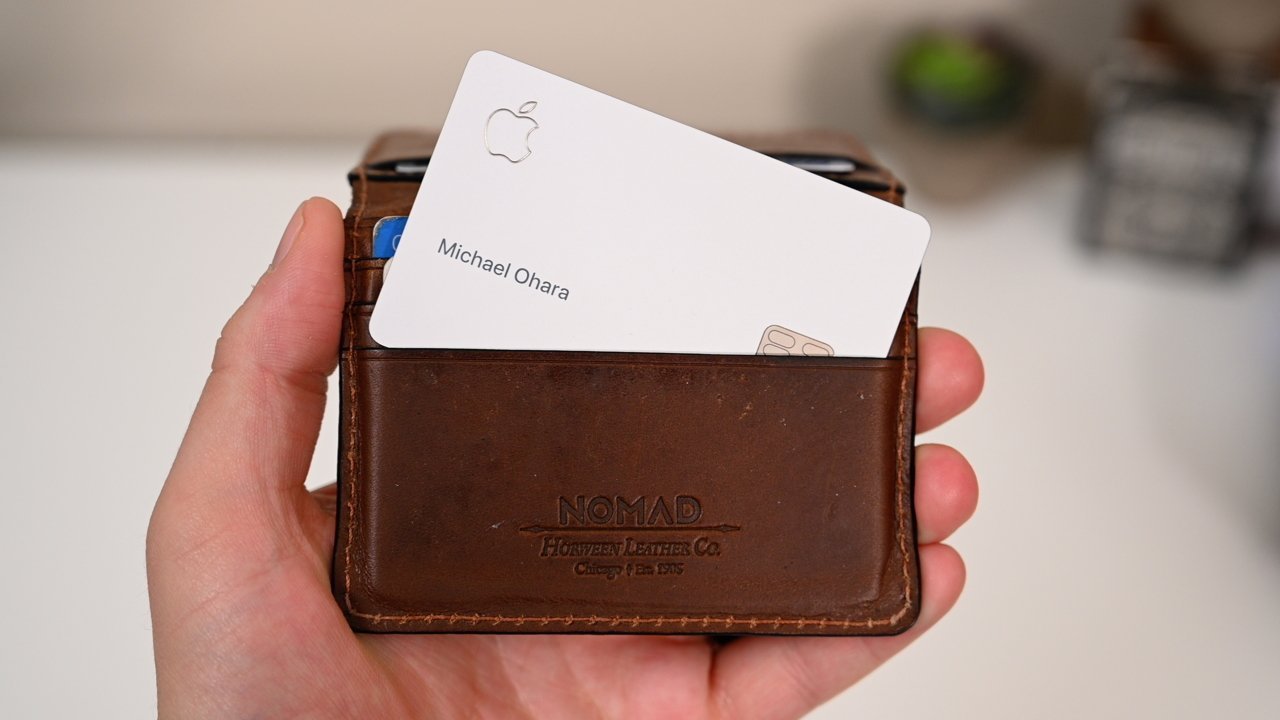
Specifically, very shortly after the launch, they were already able to say that after a month's use, the titanium Apple Card showed wear. Apple's legion of support documents for Apple Card user quickly added one about how to take care of it — and clean the titanium.
Speaking of titanium, though, it turned out that the card wasn't entirely made of that material, not absolutely entirely. For a start, the white finish is a coating, but people with a scanning electron microscope and not enough real work to do, dug further.
The University of Berkley reports that Apple Card is 90% titanium. The remainder is an alloy that chiefly comprises aluminum.
Vastly more serious was the controversy that began in November 2019 where Apple and Goldman were accused of sex discrimination. The first accusation came from David Heinemeier Hansson, then best known for creating Ruby on Rails, but now perhaps better known for complaining about the App Store and its treatment of his Hey email app.