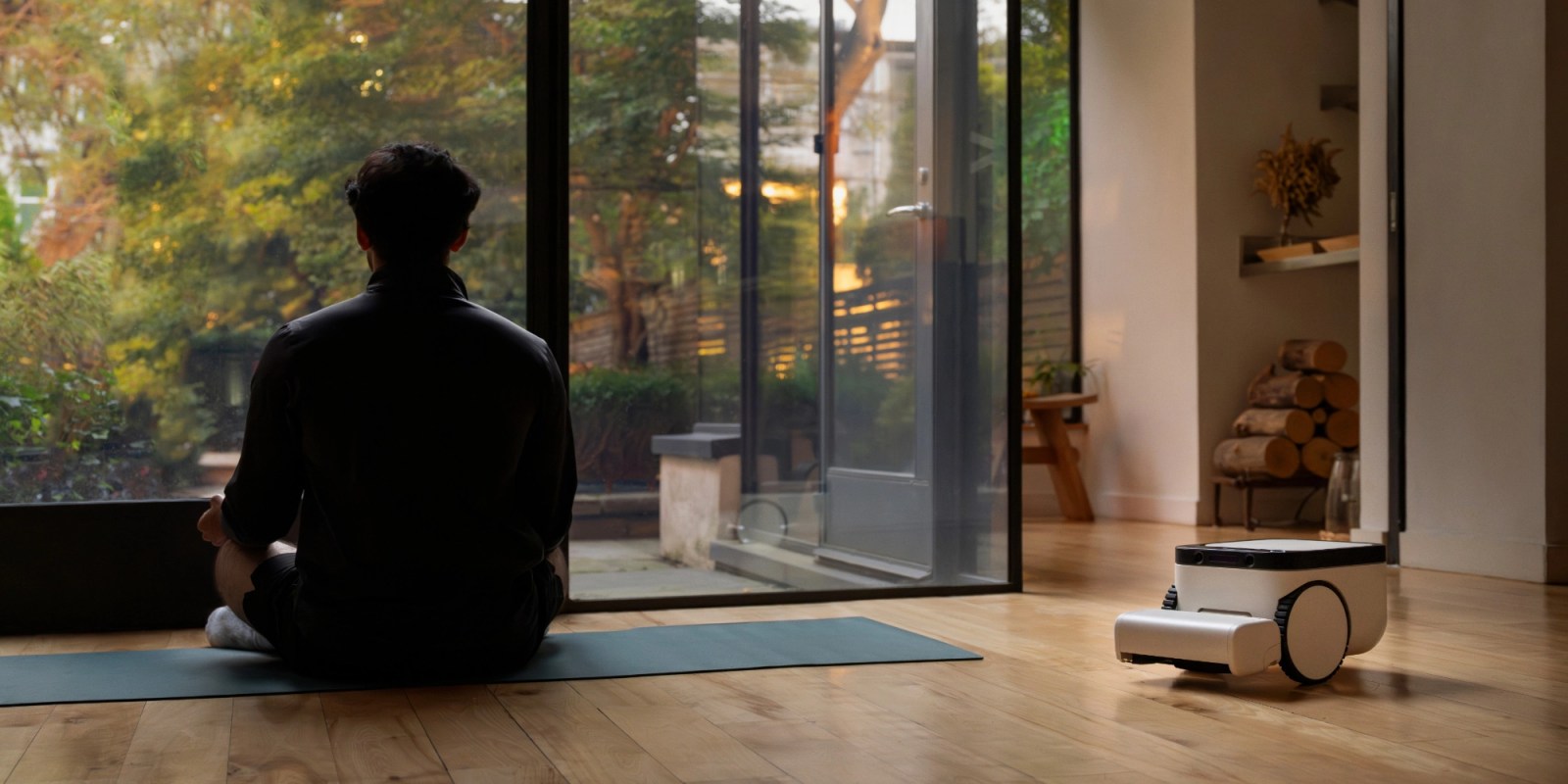
Matic has added voice and gesture control to its robot vacuum and mop through a software update called Matic Cues. After testing both features, the short and sweet of it is that voice control is really good.
Just say, “Hey Matic, vacuum the kitchen,” and Matic gets to work. There is no phone to unlock, app to open, or smart home intermediary involved. You speak directly to the robot, and it responds.
Matic Cues understands commands in more than 70 spoken languages. The feature is rolling out to every existing Matic through an over-the-air software update and will be included on all new robots.
Matic co-founder Mehul Nariyawala describes the feature as nine years in the making.
The team began pursuing natural voice and gesture interaction when Matic was founded in 2017, produced its first demonstration in fall 2018, and has now made the technology available using the hardware already inside customers’ homes.
“A truly intelligent robot should learn how humans naturally communicate, instead of asking humans to learn yet another interface,” Nariyawala tells 9to5Mac.
That ambition extends beyond convenience for app-savvy adults. Matic Cues is designed so children, grandparents, visitors, and people who do not speak English can operate the robot without learning another interface.
In Matic’s framing, the update “untethers” families from the app for everyday cleaning. The app remains excellent when you want precise control, schedules, maps, or cleaning history. Routine jobs, however, can now begin with a sentence.
Matic’s voice control is powered by Google Gemini, which is especially interesting following Google’s work with Apple to modernize Siri.
The commands are flexible enough that using the feature feels natural rather than like memorizing a list of approved phrases.
You can tell Matic to vacuum, mop, or do both. Commands can target a specific room or your entire home. You can also pause a cleaning job, send Matic back to its dock, or direct it toward another part of the house.
The robot understands commands including “Come here,” “Follow me,” “Go to the living room,” and “Come to the sink.” More specific requests work too, such as asking Matic to clean underneath the kitchen cabinets.
Most importantly, Matic reliably understands variations in how those requests are phrased.
Voice control requires permission and is opt-in, of course. The Matic app does a good job of explaining how the feature works and walking you through setup.
That matters because Matic has built its reputation around privacy. Its intelligence and visual processing run on the robot instead of in the cloud. Matic says nothing is sent to the cloud unless the owner explicitly opts in.
The robot is also designed and assembled in California by a team with deep experience in computer vision. Founders Navneet Dalal and Mehul Nariyawala previously worked on the security-camera team at Nest, and Matic’s five-camera vision system is built to understand rooms and objects in three dimensions.
In other words, there is already a level of trust here that I would not automatically extend to every internet-connected camera rolling around my house.
Gesture control is the more futuristic half of Matic Cues. Point toward an area that needs attention and say, “Hey Matic, clean this.” The robot combines what it hears with what its cameras see, determines where you are pointing, and cleans that area.
One particularly delightful detail happens before the cleaning even begins. Say “Hey Matic,” and the robot turns to look at you.
It is a small response, but it makes the interaction feel less like issuing a command to an appliance and more like getting the attention of something in the room.
I have used gesture control less than voice control, partly because Matic’s app is already so good. Its Draw to Clean feature lets you circle an area on the map and send the robot there for spot cleaning. That experience is reliable and precise.
Introducing Cues: Voice & Gesture control for MaticWe raised $115M and spent 9 years to make the world’s first intuitive home robotSay you spilled coffee: Point to the spill and say, "Hey Matic, clean this" and it will hear, see, locate in 3D, and go clean on its own.Matic… pic.twitter.com/tPsUnLh76v
Still, I can confirm that gesture control works. It is also probably the more impressive demonstration of what Matic’s existing hardware can do.
The interaction takes a little longer than issuing a voice-only command because the robot needs to combine visual and spoken information. It can also feel less natural than quickly marking a spot in the app.
However, gesture control could be especially useful for children, grandparents, visitors, or anyone who does not have the Matic app. Everyone in the home can interact with the robot without first learning how to operate it from a phone.
It also makes for a terrific demonstration. Point at a mess, tell the robot to clean it, and watch it work out what you mean.
Earlier this year, Matic added Apple Home and Siri support through Matter. That integration has worked well for me and has continued to improve.
The Mac Home app originally lagged behind the experience on iPhone and Apple Watch, but it is now solid as well. Siri remains useful when the robot is elsewhere in the house or you want to start cleaning from an Apple device.